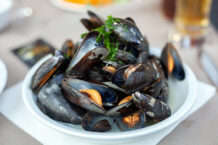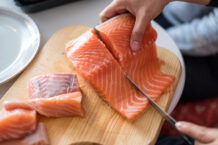
Typically, when we think of omega-3 fatty acids, we think fish. But if you don’t eat salmon, sardines, tuna, or other seafood, are there alternative ways to get these healthful fats in your diet? Yes, vegetarians can find a number of plant foods containing omega-3s—though getting enough is perhaps a little more difficult and complicated than simply sitting down to a salmon dinner.
There are two main sources of omega-3s—marine and plant. Fish and shellfish contain the long-chain omega-3s DHA (docosahexaenoic acid) and EPA (eicosapentaenoic acid). So, too, do algae (more on that below). In contrast, most plant sources contain ALA (alpha-linolenic acid), a short-chain omega-3 that the body converts to DHA and EPA. But this conversion, which occurs mostly in the liver, is quite inefficient—less than 15 percent by some estimates, and less than 2–10 percent by others.
Thus, it’s questionable whether vegetarians can consume enough ALA to get the equivalent amount of DHA and EPA that an omnivore or pescatarian gets by eating fatty fish. Tissue samples of vegetarians—and especially vegans—have been found to have lower levels of omega-3s than those of nonvegetarians. Some encouraging news is that ALA may provide some of the same health benefits on its own.
Why omega-3s?
These special polyunsaturated fats have been linked to a variety of health benefits, particularly for the heart. They may, for instance, help prevent arrhythmias (irregular heartbeats) and blood clots, reduce inflammation, and help lower triglycerides (fats in the blood) and blood pressure. Omega-3s are also vital for the brain development of infants and young children. There’s some preliminary evidence, too, that omega-3s may help alleviate some autoimmune diseases like rheumatoid arthritis, help maintain cognitive functioning, help treat depression, and even improve bone health, among other potential benefits.
Reeling in ALA, DHA, EPA
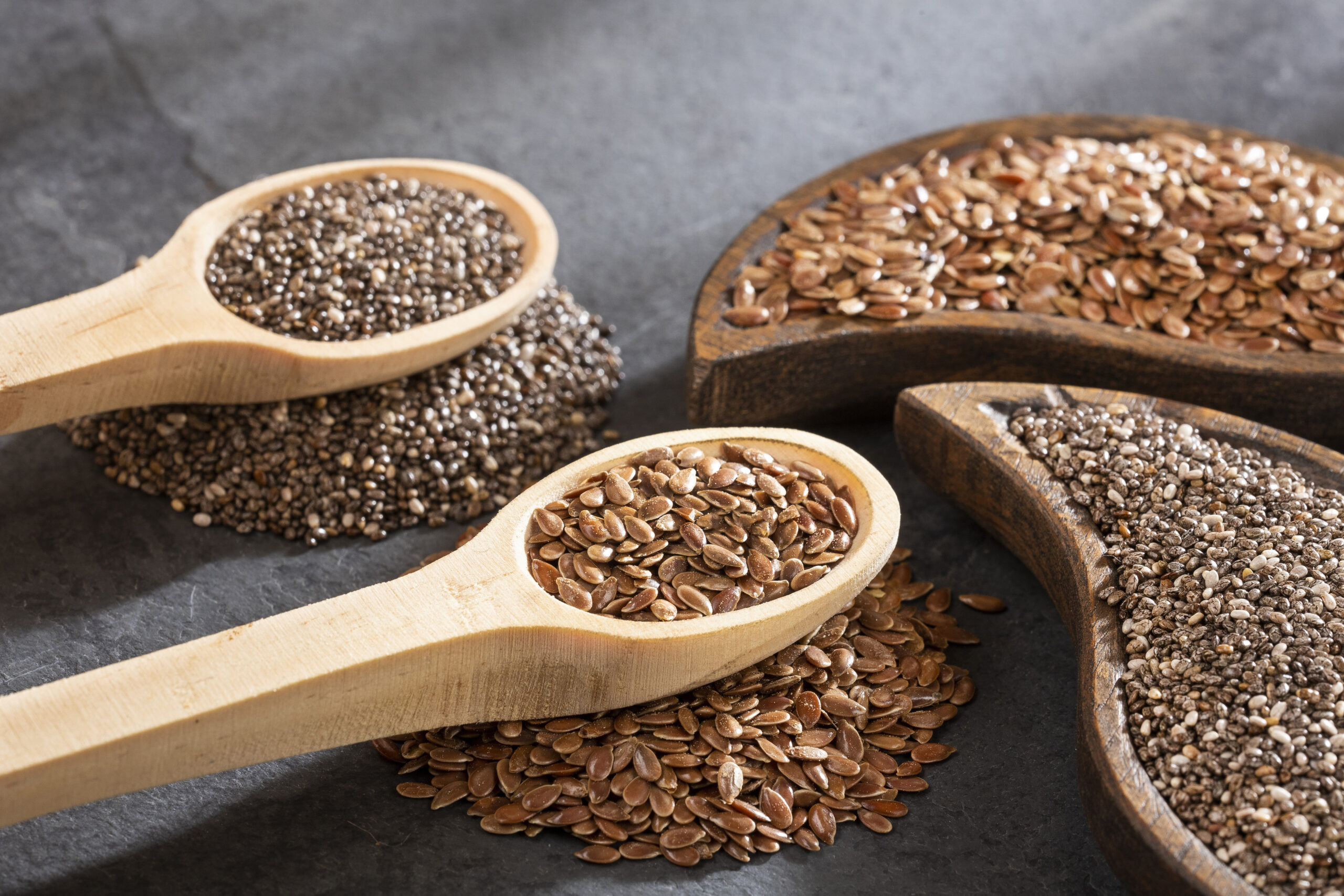
Many seeds (and their oils) are sources of ALA, particularly flax, chia, walnut, hemp, and canola, as well as less-familiar seed oils such as perilla, an herb from different parts of Asia, and corn gromwell (Ahiflower), which is grown in England, Europe, and Asia. Other vegetarian sources of ALA include the leafy green purslane and garden cress, an herb in the Cruciferae family (the same family as broccoli and cauliflower).
None of these plant sources of omega-3s contain DHA or EPA, however. But seaweed and other algae do, in varying amounts depending on the type. For instance, a 3-ounce serving of dried wakame (a brown seaweed) provides about 1.1 grams of EPA and 0.7 grams of DHA. For comparison, a 3-ounce serving of farmed Atlantic salmon, a rich source of omega-3s, provides about 1.4 grams of DHA and 0.6 grams of EPA.
There are also algal oil supplements that typically provide 200 to 250 milligrams of DHA per capsule; some provide small amounts of EPA, as well. According to the authors of a 2022 review paper in Critical Reviews in Food Science and Nutrition, there’s some evidence that vegetarians consuming microalgal oil have increases in blood DHA levels.
A number of foods are also fortified with DHA (often from microalgae) or ALA, including certain milks and eggs. But read the fine print before assuming these foods provide significant amounts of omega-3s. Both the sources of the omega-3s and the amounts vary, which affects how meaningful this fortification is. For instance, Horizon Organic Whole Milk with Omega-3 contains 32 milligrams of DHA (from algal oil) per cup, which is a fraction of what you’d get in a serving of fatty fish. And though a single Nature’s Yoke egg is advertised as having 225 milligrams of omega-3s (175 mg ALA, 50 mg DHA), you’d have to eat more than two dozen of them to get the equivalent DHA of a serving of salmon.
A nutty problem
Besides that the ALA in plant sources of omega-3s is inefficiently converted to DHA/EPA overall, another problem with most seed or nut sources of ALA is that they are also high in linoleic acid (LA), an omega-6 fatty acid. And a high intake of LA reduces or impairs the conversion of ALA to EPA and DHA even more. (Linoleic acid is found in many vegetable oils, including corn, safflower, and soybean, as well as in nuts and seeds, that are common in the diet, including vegetarian diets.) An exception is Ahiflower oil—it’s high in stearidonic acid, which can efficiently convert to EPA and DHA.
How much to get?
An “Adequate Intake” has been established for ALA in the amount of 1.1 grams (1100 mg) a day for women and 1.6 grams (1600 mg) for men. There is no official U.S. recommendation for EPA and DHA, but many health organizations generally agree that consuming a combination of DHA and EPA in the amount of 250 to 500 milligrams a day should be adequate.
However, these omega-3 recommendations don’t specifically address the needs of vegetarians but, rather, of people who are omnivores. Some health experts recommend that vegetarians double the ALA recommendation to 2 to 4 grams a day to take into account the poor conversion of ALA to EPA and DHA.
BOTTOM LINE: Though much is still unknown about vegetarians and their specific omega-3 needs, some general guidelines for them are to eat a variety of plant foods and get most fat from whole foods, including seeds (like flax, chia, hemp) and nuts (especially walnuts), which provide ALA. That’s actually good advice for everyone. If using concentrated oil sources, favor ones like olive, canola, walnut, and flaxseed oils (which are rich in ALA) over corn, soybean, and safflower oils (which are high in LA). If you forgo fish, consider adding seaweed to your diet for its EPA and DHA. Some dietitians recommend that vegetarians take a microalgae supplement containing EPA and DHA or an Ahiflower oil supplement.