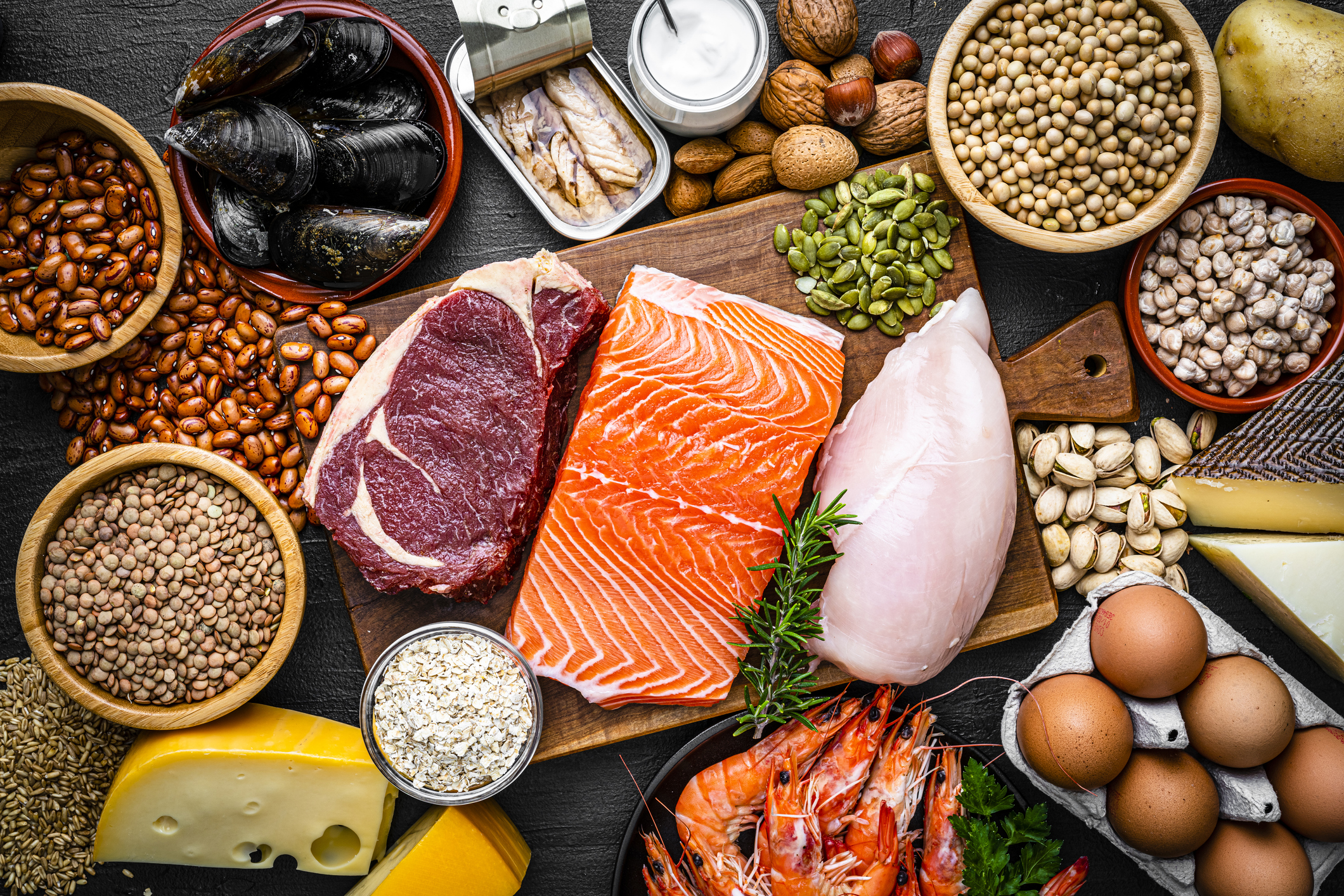
Dietary protein is still having a moment—and that moment doesn’t seem to be ending anytime soon. It’s everywhere, from high-protein diet plans that are still popular (Atkins, Whole 30, keto) to products on store shelves (shakes, smoothies, bars, even chips). Given the sheer number of products designed to help us boost our protein intake, you’d think we’re not eating enough on our own. But is this accurate? The answer depends greatly on your age.
What does protein do?
As you probably learned in seventh grade, proteins are the building blocks of muscle. And while this is true, proteins are also integral to the structure of tissue and organs, and critical to the control of their function and regulation. Proteins catalyze nearly all the chemical reactions that take place in the body, help regulate the immune system, and control gene expression.
Consuming dietary protein—along with physical activity that includes strength training—is necessary for muscle synthesis at any age. But the need for both becomes even more essential as we age, due to a condition called sarcopenia.
What is sarcopenia?
Beginning as early as age 30, we naturally start to lose 3 to 5 percent of our muscle mass every decade, and an estimated 10 to 20 percent of older adults develop sarcopenia—a significant loss of muscle mass, strength, and function. With this loss comes an increased risk of falls and fractures.
“Most of the time, people don’t realize they’ve started to lose muscle mass because their weight hasn’t changed,” says Mario Corona, MD, a board-certified specialist in internal medicine and nephrology and a member of our editorial board. “Their body mass index is good, but a good amount of their muscle has been replaced with fat. It’s mind-boggling to see how many people seem to be in good shape, but the percentage of fat versus muscle is way off.”
Although there are currently no specific tests to diagnose sarcopenia, the condition is often suspected when an adult over 65 has symptoms like difficulty rising from a chair or climbing stairs, reduced muscle strength, and slow walking speed. The best ways to prevent sarcopenia are engaging in regular strength-training exercise and eating a diet that contains enough protein.
How much protein is enough?
The recommended dietary allowance (RDA) of protein for adults—both men and women—in the U.S. is 0.8 grams for every kilogram (0.36 grams per pound) of body weight per day. To meet the RDA, a 150-pound person would need 55 grams of protein a day; a 175-pound person would need 64 grams a day. Most Americans, especially younger adults, have no problem reaching this amount—the average man in his 20s consumes 92 grams per day, and the average woman 73 grams.
But research suggests that older adults may benefit from an even higher amount of protein, such as 1 to 1.2 grams per kilogram (0.45 to 0.55 grams per pound) of body weight. For an older person weighing 150 pounds, that amounts to about 68 to 82 grams a day. For an older person weighing 175 pounds, the range would be about 80 to 95 grams a day. It can often be difficult to reach this level because older adults may begin to avoid foods—like meat—that can be difficult to chew and because they may be consuming fewer calories overall. In fact, a large 2019 study in the Journal of Nutrition, Health and Aging found that 42 percent of men and 50 percent of women ages 71 and up fail to meet even the current RDA for protein intake.
“The current recommendation of 0.8 grams [per kilogram of body weight] is totally inappropriate—particularly for elderly people,” says Dr. Corona. “We may not know what the ideal number is, but it’s likely much higher, maybe even 1.3 to 1.6 grams.”
Protein for weight loss (and more)?
Many studies over the years have found that including adequate protein in your diet can aid in weight loss, both because of the benefits provided by the protein itself and because protein helps you feel fuller after a meal, helping to suppress your appetite.
A 2022 study in Obesity found that when two groups of adults changed their diets to try to lose weight, the higher-protein group lost more weight than the lower-protein group. Interestingly, they also included more green vegetables in their diet and ate fewer products with refined grains and added sugar.
And protein can have benefits beyond helping you control your appetite and keep your weight in check. “Muscle mass is really an endocrine tissue as well, meaning that it plays a role in the uptake of glucose,” says Dr. Corona. “When you don’t have enough muscle mass, you begin to lose the ability to process glucose and you can become insulin-resistant. It’s not necessarily excess fat that’s contributing to insulin resistance, but that you don’t have enough muscle mass to help you maintain good metabolic health.”
Protein and your kidneys
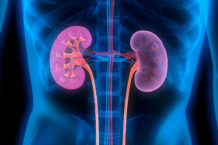
The kidneys are responsible for filtering out waste products after the body metabolizes protein. Does this imply that a high-protein diet could put a burden on these vital organs? Clearly anyone with known kidney disease—or those at risk for it—should consult with their doctor to determine whether the amount of protein in their diets should be monitored.
What about people with healthy kidneys? Most research has shown that high-protein diets are not harmful for people without known kidney disease. But a 2020 study in the Journal of the American Society of Nephrology did suggest that long-term, high-protein intake could lead to kidney problems—particularly if that protein comes from high-fat animal products (like red and processed meat).
Many people who have chronic kidney disease don’t know it, and many more have minor kidney impairment. If you’re considering adding protein to your diet—or if you already eat a significant amount—it might be a good idea to talk with your doctor about lab testing that can confirm your kidneys are healthy. This is especially important if you have a family history of kidney disease or are over age 60, have heart disease, obesity, high blood pressure, or diabetes.
BOTTOM LINE: Protein is an important part of a healthy diet at any age. While younger adults typically reach (or even exceed) recommended levels without trying very hard, older adults should aim for—and may struggle to meet—a higher protein goal. But as with many popular eating styles, “high-protein” doesn’t always equate to healthy. Don’t rely on red meat alone to supply your protein needs—there are healthier sources like fish and beans—and make sure that any protein-fortified foods you choose have other nutritional merits as well.
Not all sources of protein are created equal. While people tend to think of meat and other animal proteins (including dairy foods) first, they’re not the only options—and they have drawbacks. Sources of animal proteins tend to be expensive, are generally higher in saturated fat than non-animal protein sources, are produced in ways that are especially detrimental to the environment, and, of course, are not an option for vegans or those with other dietary restrictions. You can, in fact, get all the protein you need from a diet that includes no animal foods.
The chart below lists some of the foods highest in protein. If you find it challenging to reach your individual RDA for protein and want to include some protein-fortified foods in your diet, be aware that many (including mock meats) tend to be very processed and high in sodium, while others (like protein-fortified snack foods) are often just junk foods masquerading as healthy foods. For older adults who may have a reduced appetite and are having trouble taking in enough protein, adding nutritional drinks”such as Boost and Ensure may be a helpful option.
Try to incorporate some protein with every meal, which will make it easier to reach your daily goal.
| Food | Serving size | Protein (in grams) per serving* |
| Beef | 3 ounces | 24 |
| Greek yogurt | 1 cup | 24 |
| Salmon | 3 ounces | 22 |
| Chicken | 3 ounces | 20 |
| Lentils (cooked) | 1 cup | 17 |
| Tempeh | 3 ounces | 17 |
| Cottage cheese | ½ cup | 12 |
| Eggs | 2 | 12 |
| Almonds | ⅓ cup | 10 |
| Tofu | ½ cup | 10 |
| Edamame (cooked and shelled) | ½ cup | 9 |
| Milk | 1 cup | 8 |
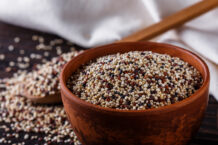
| Quinoa (cooked) | 1 cup | 8 |
| Chickpeas or black beans | ½ cup | 7 |
| Soymilk | 1 cup | 7 |
| Hard cheese (cheddar, Swiss) | 1 ounce | 6 |
| Oatmeal (cooked) | 1 cup | 5 |
| Green peas | ½ cup | 4 |
* Amounts may vary depending on the cut of meat, manufacturer, or individual product