The coronavirus pandemic has led to significant lifestyle changes for just about all of us, not the least of which involves the way we are eating. People who previously relied on restaurants got crash courses in how to cobble together meals at home, while seasoned cooks have spent time reinventing favorite recipes using fewer fresh ingredients and more processed foods. It’s no wonder, then, that canned foods joined toilet paper and hand sanitizer as some of the most coveted and stockpiled items in America.
If your can opener has been in heavy rotation of late and you’re curious about things like the nutritional value, safety, and history of canned foods, read on. Who knows, you may even be persuaded to keep a stash of canned edibles in your pantry long after the current crisis is all over.
Why, and how, is canning done?
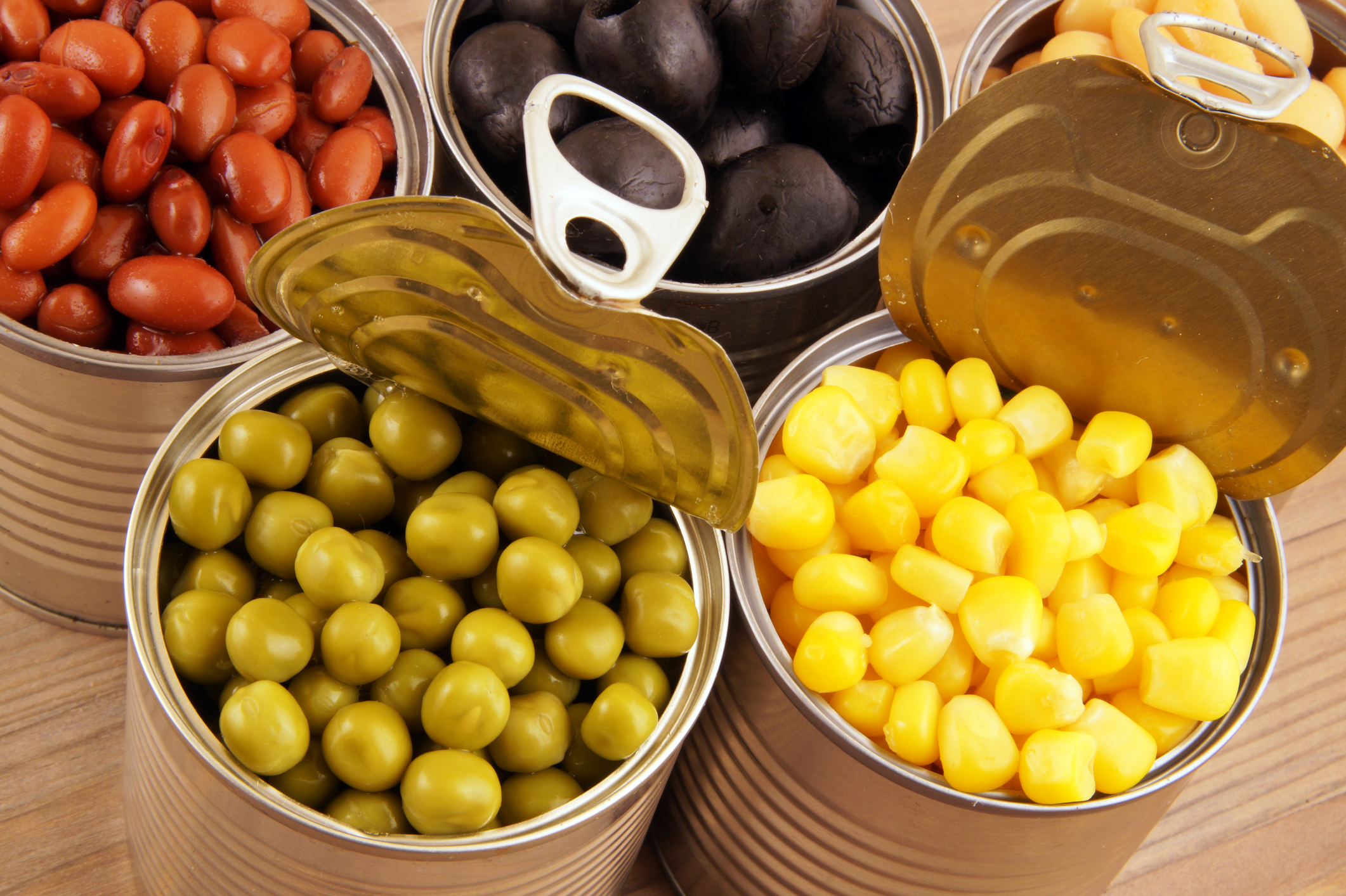
Simply put, canning is designed to keep food safe, nutritious, and palatable long after it would otherwise go bad. It does this through the use of methods that inhibit the growth of harmful microorganisms, deactivate enzymes that cause foods to break down, remove oxygen that contributes to spoilage, and prevent moisture loss. Key to canning is its use of a barrier, in this case an airtight metal can, to keep the food in a controlled environment while being stored. After it’s filled, the can, usually made of recycled steel or aluminum, is given a heat treatment of up to 250°F to eliminate unwanted microorganisms.
When did canning begin?
Canning was a revolutionary idea—literally. Its popularity during crises predates the 21st century coronavirus pandemic and includes the feeding of soldiers during wartime as well as everyday folks during the worldwide Long Depression of the late 1800s and the 20th century’s Great Depression.
The French military leader and emperor Napoleon Bonaparte is credited with the invention of canning. Though he didn’t develop the process itself, he offered a cash reward to whoever came up with a way to ensure that his traveling army would always have a safe and reliable source of food. The recipient of the reward, bestowed in 1795, was the French chef Nicolas Appert, who invented a method of sealing and heating food in glass jars.
True canning came later, in 1810, when the Englishman Peter Durance patented the use of more durable metal containers for preserving food. Another Brit, William Underwood, established the first canning facility in the U.S. in 1821, and his company’s products—including Deviled Ham Spread—continue to be manufactured today.
How long do canned foods last?
Most canned foods are safe to eat indefinitely as long as the can itself is not heavily rusted, deeply dented, leaking, or swollen (which are warning signs that bacteria or other unwanted organisms might be present). Still, the USDA advises a storage limit of 18 months for acidic canned foods such as tomatoes and other fruit, and two to five years for canned vegetables, beans, meat, and poultry. Consider writing dates on cans to indicate when you purchased them.
“Use by” or “best if used by” dates on canned foods, if present, refer to food quality, not safety. To keep your canned foods at optimal taste, texture, and appearance, store them below 85°F (50°F to 75°F is best, if possible) and away from hot pipes, the stove, and direct sunlight. Making sure the cans don’t get wet is also important because prolonged contact with moisture can cause corrosion, resulting in leaks and spoilage.
How do canned fruits and vegetables compare nutritionally to fresh and frozen?
Quite well, it turns out. Similar to frozen fruits and vegetables, produce destined for a canning facility is typically processed at peak quality within hours of being harvested, thereby locking in many of its nutrients. In contrast, fresh produce frequently travels over long distances (often under less-than-ideal conditions) before getting to you. During this transit stage—and any storage period thereafter, whether in the supermarket or at home—nutrients are diminished, many of which are preserved in a similar canned item.
A review in the Journal of the Science of Food and Agriculture in 2007 did report that the initial heat treatment of canned foods causes loss of some nutrients, including vitamin C and B vitamins. But the levels subsequently stabilized, meaning that there were no further nutrient losses after canning, owing to the lack of oxygen in the can (compared to fresh produce, which continues to lose nutrients over time). Moreover, the nutritional profile of certain foods actually benefits from being canned. For instance, canned pumpkin has even more nutrients and carotenoids, ounce for ounce, than fresh because the heat processing eliminates much of the water (making it more concentrated) and releases the carotenoids from the cell wall “matrix” so they are more readily available. The same is true for canned tomatoes and carrots.
Are there any other advantages of canned foods?
A long shelf life may be canned foods’ biggest advantage when you can’t get fresh food, but price, convenience, and year-round availability make them a great choice even in the best of times. Canned food is often less expensive than fresh; prep time is largely dictated by how long it takes you to operate a can opener and, if needed, heat the contents; and snow outside doesn’t mean you can’t have corn or peaches inside.
What should I watch out for when choosing canned foods?
In a word: sodium. Canned foods are typically high in added salt (which is 40 percent sodium, 60 percent chloride). But low-sodium and no-salt-added options are increasingly easy to find. While salt can act as a preservative, it is not required in canned food because the canning process does the preserving. Instead, salt is added to enhance flavor, appearance, consistency, and texture (so you don’t end up with mush). If you can’t find low-sodium or no-salt-added canned beans and vegetables, you can drain the liquid from the cans and rinse the food with water to lower the sodium.
Added sugar is an issue in most canned fruit. For instance, a half-cup serving of Del Monte canned sliced pears in heavy syrup has 14 grams of added sugar, in the form of high fructose corn syrup, sugar, and corn syrup—equivalent to about 3.5 teaspoons of sugar. The “lite” version has less, but still about a teaspoon of added sugar per serving. Look for no-sugar- added canned fruit that’s packed in water instead of syrup.
What about BPA in can linings?
Bisphenol A (BPA) is a chemical used in the linings of food and beverage cans to prevent corrosion and help maintain the safety and quality of the contents inside. But trace amounts—which can migrate out of these linings into the food—have been linked to developmental, reproductive, and behavioral problems in children and cardiovascular disease, type 2 diabetes, obesity, and other disorders in adults.
According to the Can Manufacturers Institute, more than 95 percent of the linings in food cans no longer contained BPA; typically, acrylic, polyester, olefin polymers, and non-BPA epoxies are used in place of BPA today. The canned food giant Campbell’s, for instance, has made the switchover in all its canned soups sold in the U.S. and Canada. But you may not easily know what’s in the lining, since canned foods do not reliably state if they are “BPA-free” even if the chemical is not present. Moreover, there is concern that some of the ingredients used in place of BPA, including another bisphenol chemical (bisphenol S), may have properties similar to BPA.
What else should I know about canned food?
- Improperly canned foods and damaged cans provide an ideal environment for bacteria that cause botulism, a deadly food poisoning, to thrive. Though home canning is usually the culprit, any can that is leaking, bulging, or badly dented should be double-bagged in plastic (to avoid leakage of toxins that might be present) and discarded.
- It’s okay to refrigerate unused portions of an opened food can in the original can, but to better preserve quality and flavor (foods, especially acidic ones, can take on a metallic taste from the can), transfer the leftovers to a food storage container with a lid.
- Canned foods do not need preservatives to prevent spoilage—and most, in fact, are preservative-free.
- Top-selling canned foods in the U.S. include chunk light tuna, soup (cream of mushroom, chicken noodle, cream of chicken, tomato), Vienna sausage, sweet corn, spaghetti and meatballs, and green beans.
- It seems just about anything that can be canned has been canned. That includes whole chickens (yup), cheeseburgers, scorpions, roasted crickets, fish mouths, and reindeer, rattlesnake, and crocodile meat.
- Home canning is an old idea that’s still a good idea—if you do it properly. If you have a home garden, you might con- sider canning surplus tomatoes, peppers, and other produce—or you can turn store- bought fresh vegetables and fruit into canned as a home project. But you must use the right equipment and follow scientifically developed procedures; otherwise the food may not be safe to eat (see botulism risk, above). A reliable resource is the National Center for Home Food Preservation.
Beyond the can: Canned products can be one of your best go-tos for protein-rich foods, as well as for vegetables and fruits, as long as you read the nutrition labels and check the ingredients. But you should also stock up on frozen fruits and vegetables (without sauces or other ingredients that add lots of sodium, fat, or sugar). And don’t forget other shelf-stable foods, including whole grains (such as brown rice, quinoa, and whole-wheat pasta) and packaged milks (dairy or nondairy) and low-sodium broth, as well as nuts, nut butters, and seeds; these do not require refrigeration, though cold temperatures prolong freshness and slow rancidity in high-fat foods like nuts and seeds.
It’s always a good idea to have a supply of shelf-stable canned foods in your pantry, but this is especially important when grocery shopping is difficult (for instance, due to illness or bad weather), if you’re limiting indoor shopping during the pandemic, or if your power goes out for an extended period of time. If you have abundant home storage space and a robust budget, you may want to indulge in some luxury items (imported marmalade or razor clams?), but most of us should probably stick with basic canned foods that pack the most nutritional bang for the buck.
Here are our top picks (look for low-sodium or no-salt-added versions):
- Canned beans (navy, kidney, black, garbanzo, etc.) and canned lentils. These legumes provide inexpensive plant protein (6 to 9 grams per half-cup) and a lot of fiber (6 to 10 grams per half-cup). Though protein needs vary based on age, activity level, and health status, eating just that small serving of navy beans, for example, is enough to meet nearly 20 percent of the protein requirement (54 grams) for a 150-pound person. Be adventurous. Why not try beans you’ve never had before—perhaps cranberry, pink, or even white kidney (cannellini) beans?
- Canned sardines and salmon. These fish provide about 25 grams of protein per 4-ounce serving and are an excellent source of omega-3 fatty acids. They are also good sources of calcium if the bones are included (heat processing renders the calcium-rich bones soft enough to eat), with 250 milligrams or more of this essential mineral per serving. In addition, because sardines are low on the food chain, they have fewer contaminants (including mercury) than large fish like tuna and are thus safer to eat more often than canned white tuna, for instance. There is concern, however, about overfishing of Pacific sardines; Seafoodwatch.org recommends buying ones that carry an MSC (Marine Stewardship Council) label. Most canned salmon is wild salmon, which has been found in the past to be lower in PCBs and other contaminants than farmed salmon, plus canned wild salmon is easy to find, available year-round, and far less expensive than fresh wild-caught salmon. Be aware, though, that canned “Atlantic salmon” is farmed salmon.
- Other canned foods to stock up on include tomatoes (whole, peeled, diced, paste) for making pasta sauces, chili, and other one-pot meals; lentil, bean, and minestrone soups; vegetables (from corn and carrots to green beans and peas); and unsweetened, water-packed fruit such as peaches, pears, apricots, and pineapple. Some canned foods work even better than fresh in recipes—canned pumpkin for making pumpkin pie is one example. Canned pumpkin can also be used in soups, sauces, lasagna, and dips. This recipe makes good use of low-sodium canned foods, with canned chickpeas (garbanzo beans) and canned diced tomatoes featured as key ingredients.