Much of the Make America Healthy Again (MAHA) agenda of the Trump administration lacks scientific support or goes against evidence-based recommendations, but Robert F. Kennedy Jr.’s opposition to artificial food dyes may not be entirely unfounded. As director of the U.S. Department of Health and Human Services (HHS), Kennedy has made ridding the food supply of these additives a priority.
Though data are mixed, a handful of studies suggest that food and drinks made with artificial colors may worsen behavioral problems in children. What’s more, based on evidence that high levels of Red No. 3 may cause cancer in rats—and following California’s lead—the Food and Drug Administration revoked its authorization of this popular additive for use in food, drinks, and ingestible drugs this past January (before the new administration took office). That dye was banned from cosmetics and topical drugs 35 years ago.
For years now, food dyes have caused a stir among health groups, regulatory agencies, food manufacturers, scientists, and, not surprisingly, parents of young kids who tend to ingest the most of them—with one side asserting they are safe and the other warning of risks. Here’s what to know if you’ve felt befuddled by the hotly debated topic.
The what, when, and why of food dyes
Synthetic food dyes have been used in consumer products for well over a century, and government oversight of their safety is nothing new. Indeed, federal regulations around color additives have been in place since the late 1800s. Since then, various acts and amendments have sought to improve the safety of the synthetic dyes used in foods, drugs, and cosmetics.
There are currently eight synthetic dyes approved for use in the food supply: FD&C Blue Nos. 1 and 2, FD&C Green No. 3, FD&C Red No. 40, FD&C Yellow Nos. 5 and 6, Orange B, and Citrus Red No. 2. Six of these dyes are referred to as “FD&C” certified color additives since their use is permitted not only in foods (F), but also in drugs (D) and cosmetics (C).
Synthetic dyes are added to foods to enhance their natural color or to prevent color losses that occur when products are stored on shelves or exposed to light, air, or extreme temperatures for extended periods of time. The dyes make otherwise ho-hum products like salad dressings, frosting, chewing gum, and Benadryl appear more enticing to consumers. After all, few people would be interested in purchasing a white stick of margarine, a gray hot dog, a brownish-gray maraschino cherry, or a colorless cola—even if those are the real colors of these processed foods.
Identifying the additives on food labels is challenging because they all have more than one name; some have up to dozens of synonyms. For example, Yellow No. 5 can be listed as tartrazine or lake yellow on a food label. Yellow No. 6 can be called sunset yellow. Blue No. 1 is also known as brilliant blue. Green No. 3 may be called Fast Green FCF or, even more cryptic, C.I. 42053.
While many manufacturers now use natural food dyes to color their products (see below), countless ultraprocessed products contain synthetic ones, most commonly FD&C dyes. You’ll spot them in the following, for instance:
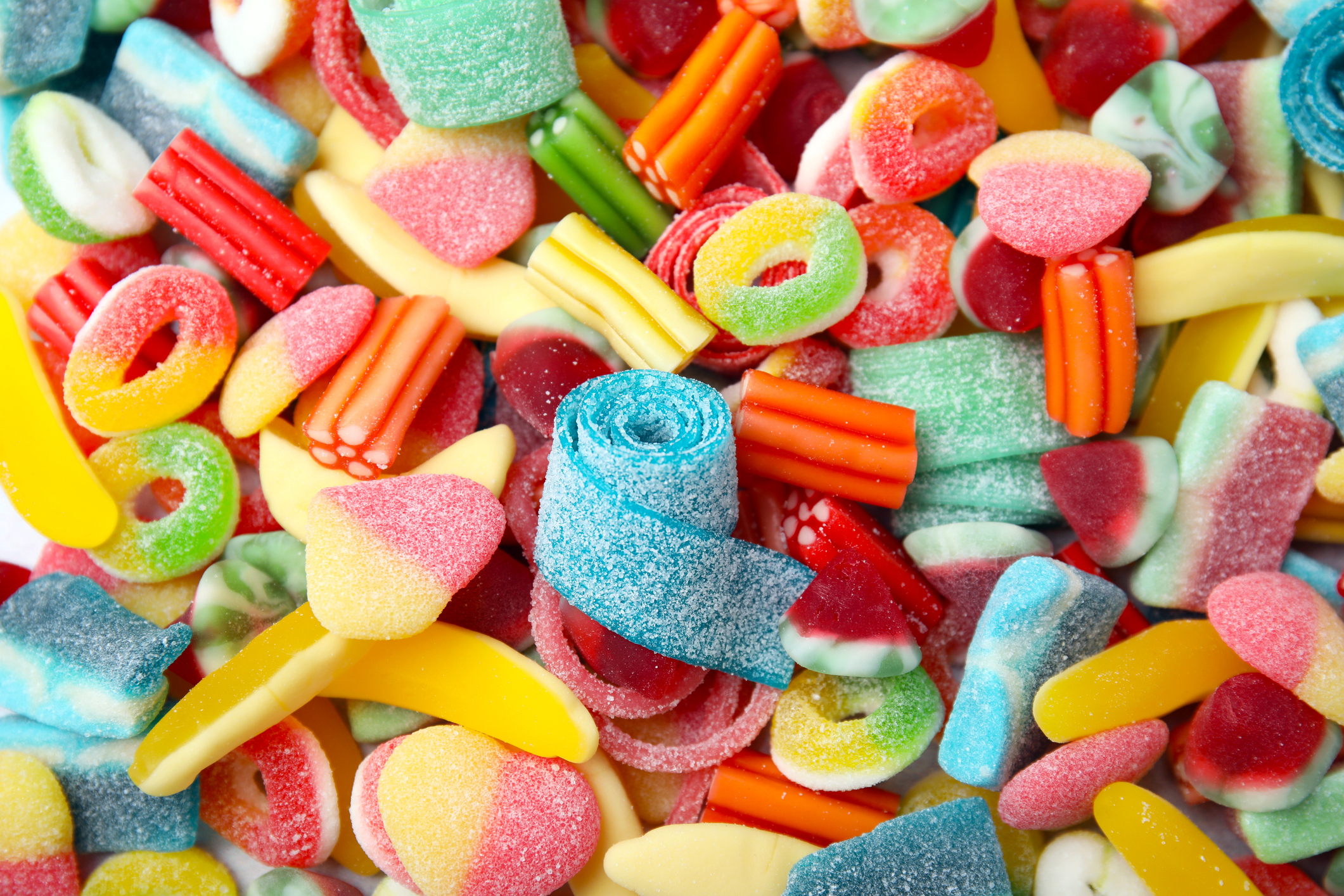
- Candies, such as M&Ms, Twizzlers, Jolly Ranchers, and candy corn
- Sports and soft drinks like Gatorade, Slurpees, and Fanta, as well as some flavored milks
- Breakfast cereals like Apple Jacks and Froot Loops
- Dessert items like Jell-O, instant puddings, pie fillings, and premade cake frostings
- Condiments like relish and pickled ginger
- Snack foods like Cheetos
- Salad dressings, including some raspberry vinaigrettes
That’s just a very short list. In fact, according to new research published in the Journal of the Academy of Nutrition and Dietetics in June, 19 percent of 39,763 U.S. packaged foods and beverages evaluated were found to contain synthetic food dyes—most commonly candy, sugary drinks, ready meals, breakfast cereals, and cookies, cakes, and other baked goods. Red No. 40 was the most common dye, found in 14 percent of all products.
Research rundown
Research on the safety of synthetic food dyes for humans has yielded mixed results. So far, the strongest (but still not definitive) evidence links them to potential behavioral problems, like hyperactivity, in children.
In 2021, California’s Office of Environmental Health Hazard Assessment (OEHHA) published a health assessment that reviewed findings from 27 human studies. More than half of the studies reported clear associations between synthetic food dyes and neurobehavioral problems, such as inattention, in certain kids.
One trial published in The Lancet nearly two decades ago found that kids ages 3 and 8/9 scored significantly worse on hyperactivity scales after drinking juice mixes containing multiple synthetic food dyes, as well as the preservative sodium benzoate. The findings, though meaningful, aren’t without limitations. For one, hyperactivity levels were rated by the study participants’ parents and teachers, who may not have been entirely impartial. And because the juices contained a handful of different dyes, as well as the preservative, it’s impossible to know which ingredient may have influenced the kids’ behavior.
Still, the OEHHA report led California to ban Red No. 3 from its food supply in 2023. Earlier this year, the FDA followed suit, though for a different reason. The FDA revoked its authorization for the use of Red No. 3 in foods and ingestible drugs based on a review of evidence that the color additive caused cancer in rats. The amount of Red No. 3 fed to rats in lab tests is significantly higher than what’s found in a sports drink, for instance, so concluding that the color additive causes cancer in humans is, thus, far from proven. However, the FDA is required to ban any color additive found to cause cancer in humans or animals, thanks to the 1958 Delaney Clause in the Federal Food, Drug, and Cosmetic Act. Manufacturers have until January 2027 to remove Red No. 3 from their food and beverage products, though Kennedy’s HHS is angling for swifter action on this.
Other health risks?
Although the FDA commissioner recently cited synthetic food dyes as a potential contributor to chronic diseases like obesity and diabetes, there’s limited evidence directly linking them. Of course, products made with these dyes typically also contain a great deal of calories and sugars like high-fructose corn syrup. The Journal of the Academy of Nutrition and Dietetics study cited above additionally found that foods with artificial dyes had far higher levels of sugar than foods without them. Taking in excess calories and sugar can unquestionably lead to obesity and diabetes over time. It’s unlikely that certified color additives are as influential in this equation.
In the same vein, experts are skeptical that food dyes alone are the reason for the increasingly shorter attention spans and rise in obesity in America’s kids. A more likely hypothesis is that the never-ending screen time, along with all those sugars in artificially dyed food products, is to blame.
The European Union takes a stricter approach to popular food dyes. In 2010, the EU began requiring manufacturers to add warning labels to all products containing Yellow No. 5, Yellow No. 6, or Red No. 40. The labels warn of possible adverse effects on children’s hyperactivity levels and attention spans.
The future of food dyes
Kennedy wasted no time launching a crusade against synthetic food dyes since being appointed HHS director this past February. In April, the HHS and FDA announced plans to revoke authorization of two (infrequently used) food dyes, Citrus Red No. 2 and Orange B, in the next few months. The FDA also plans to work with industry to “voluntarily eliminate” the six remaining FD&C certified color additives by the end of 2026.
Industry giants are starting to listen—in June, General Mills announced it would be removing FD&C colors from all its U.S. foods, including cereals, by the end of 2027. In similar fashion, Kraft Heinz said it would not introduce any new foods with these artificial colors and would aim to phase them out of all their existing foods over the same timeline. Soon after, Nestlé and Conagra also announced that they would phase out artificial colors from their products.
But even if all leading food companies voluntarily comply, artificial food dyes are not disappearing immediately from the food supply. And because the choice to replace these color additives is left to manufacturers’ discretion, it’s also probable that they will remain in many products well beyond the FDA’s proposed voluntary deadline; some companies may remove them from just some products or not remove them at all.
Au naturel alternatives
Many companies have already ditched synthetic food dyes, long before they became headline news this year. For instance, in 2016, Kraft Heinz stopped using Yellow No. 5 and No. 6 in its famously fluorescent-orange macaroni and cheese, replacing them with paprika, turmeric, and annatto. Conagra colors some of its jarred pickles with turmeric.
Natural food colors are derived from plants, animals, insects, and minerals. Examples include saffron, spirulina, and lycopene. Extracts from vibrant fruits and vegetables like radishes, beets, pomegranates, and grapes are also commonly used as natural coloring agents.
Although these alternatives are generally safe for consumption, they are more costly to produce and don’t usually provide the vibrancy that synthetic dyes do—and they’re not necessarily risk-free, either. Here are a few to look out for:
| Colorant | Found in some … | Possible risks |
| Annatto—yellow-orange colorant made from the seeds of a tropical tree native to Central and South America | Shredded cheese, snack foods like Goldfish | Potential for moderate allergic reactions |
| Carmine—red-purple colorant derived from the cochineal beetle | Strawberry yogurt, fruit cups, candy | Potential for severe allergic reactions, including anaphylaxis |
| Caramel color/4-methylimidazole (4-MEI)—brown colorant derived from sugars treated with acids, sulfites, and ammonium | Colas, breakfast cereals, pancake syrup | 4-MEI was previously classified by the International Agency for Research on Cancer as “possibly carcinogenic to humans” based on findings from animal studies; these risks have not been observed in humans |
BOTTOM LINE: Studies on the health risks of food dyes have produced mixed results. A better reason to avoid them is that synthetic colors are seldom added to healthy foods. Nobody’s injecting bell peppers with Red No. 40, or broccoli with Green No. 3. Your healthy plain popcorn is not pumped with Yellow No. 6. The preservatives, excess added sugars, saturated fats, and sodium in the ultraprocessed products that contain artificial food dyes are a far bigger problem for our health. Removing the Yellow No. 5 from a banana pudding mix won’t change the fact that it is still just junk food.
Keep in mind, also, that it’s the dose that makes the poison. In general, color additives aren’t a big health concern if they’re consumed in moderation—and if you’re primarily eating a balanced, whole-food diet, the amount of food dyes you’re ingesting is likely pretty low.
Whether all food companies will voluntarily remove synthetic food dyes from their products remains to be seen. Even if they do, it will be several years before they are fully eliminated. In the meantime, if you do want to limit or avoid these additives, you can scan products’ ingredient lists for the ones still in use (though they may be hiding under more pleasant names like sunset yellow).