
Trendy superfoods come and go—remember grapefruit, kale, pomegranate juice, goji berries, and ancient grains? Although healthful, none of them lived up to their hype as miracle foods with the power to transform your health. And the same appears to be true of one of the hottest superfoods of the moment: acai.
What is acai?
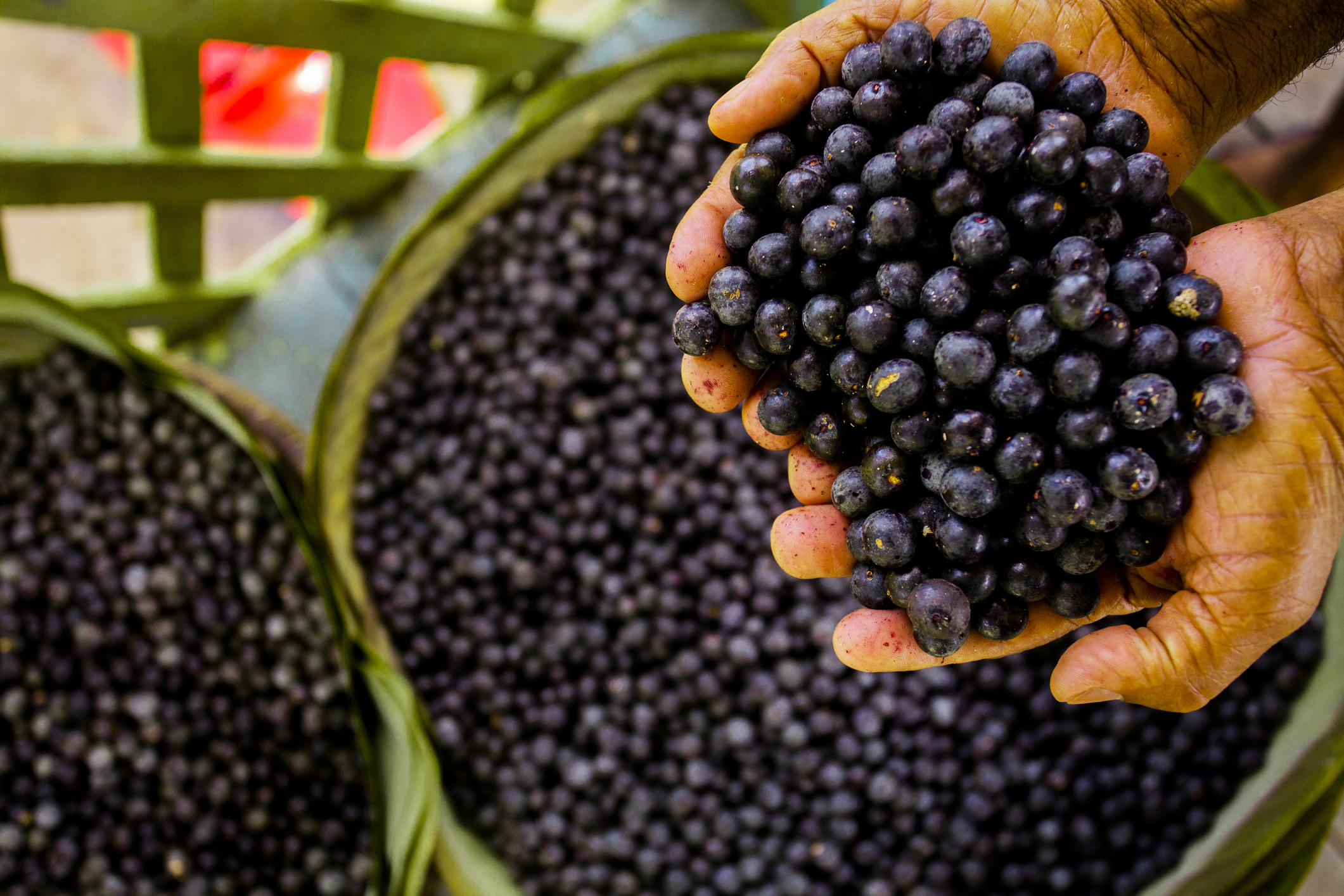
Acai (pronounced “ah-sigh-EE”) is a small reddish-purple fruit, similar to blueberries in appearance. It comes from the acai palm tree in Central and South America and has long been an important part of the diet of Amazonian people. In recent decades, acai has made its way to Hawaii and California, to surf shacks, to health-food stores, and now to many supermarkets and restaurants. Because acai berries spoil within a few days of picking, you won’t see fresh berries in supermarkets. After harvesting, they are mashed into pulp and frozen. You can find acai in its frozen form as well as in juices, powders, and capsules.
Acai bowls have become hugely popular. This trendy breakfast and lunch item typically consists of a layer of frozen acai on the bottom, granola in the middle, plus fresh fruit and possibly coconut or honey on top. A whole industry has sprung up around “bowl” shops, with acai as the star of the show.
Manufacturers have touted the benefits of acai for everything from lowering blood sugar and cholesterol, preserving brain health, and aiding in weight loss to preventing diabetes and heart disease and even improving your skin. And people are buying in, literally: The fruit’s popularity shows no signs of slowing, as one forecaster predicts that sales of acai berry products will increase by $1.49 billion from 2023 to 2028.
Is acai really able to improve your health, or is it just the latest in a long line of superfood fads? “Although it deserves recognition as a healthful food,” says Edward R. Blonz, PhD, assistant clinical professor of clinical pharmacy at UC San Francisco and a member of our editorial board, “does it offer a unique benefit that we couldn’t get from red or black raspberries, strawberries, blueberries, cranberries, pomegranate, or even a glass of orange juice?”
The color purple
Acai’s distinctive color comes from anthocyanins, a group of more than 700 compounds that are present in all red, pink, blue, and purple fruits and vegetables. Anthocyanins are thought to have the potential to help balance gut bacteria, reduce oxidative stress and inflammation, and affect the release of chemical signals in the brain.
Berries are among the richest sources of anthocyanins. According to a 2022 review article in the journal Nutrients, the amount of anthocyanins in acai is comparable to that of blackberries, strawberries, blueberries, cherries, and currants. If your goal is to consume more of these compounds, then any of these other berries might be less expensive and more accessible sources than acai.
The review article also mentions that acai and other “exotic fruits” like camu-camu and goji berry have long been used in traditional medicine to treat disease. But the authors point out that better human studies are needed to determine the actual health benefits, as well as effective formulas and doses, of anthocyanins, including those in acai.
Countering the claims
Some lab research has shown a modest effect of acai on fat metabolism and inflammation, but what happens in cells in a lab doesn’t necessarily happen in a living person. And while some small clinical trials suggest acai might fight oxidation and inflammation, among other possible effects, there’s no conclusive evidence that the berry specifically (and alone) has the power to bring about any substantial health improvement, including weight loss. The U.S. Federal Trade Commission (FTC) has taken legal action against companies that claim it does.
According to the National Center for Complementary and Integrative Health, “there is not enough reliable information to say whether acai might be helpful for any health-related purpose.” And as of November 2024, “no studies in people have been published in peer-reviewed journals in the last five years that substantiate claims that acai promotes weight loss.”
The sour side of acai
Like other berries, acai provides vitamin C, vitamin A, and fiber, along with other nutrients, with only 60–80 calories per 3.5 ounces. It may surprise you that the berries also contain some fat, although it is largely unsaturated—the “heart-healthy” kind.
But because acai is not a sweet berry—its flavor has been described as earthy, chocolatey, and metallic—it’s often processed with sugar into frozen puree. Some packs of frozen acai have 100 calories per 3.5 ounces, which doesn’t sound like a lot—but nearly half of those calories come from added sugar. Acai juice is also a higher-calorie choice than other juices such as orange, grapefruit, and pineapple. One popular acai juice brand contains 140 calories per 8-ounce serving, with 96 of those calories coming from the 24 grams of added sugar in it (the American Heart Association recommends no more than 25 grams of added sugar per day for women, and 36 for men).
And then there are those ubiquitous calorie-packed acai bowls. At one regional chain, they have 540 to 790 calories, depending on the toppings. If you’re watching your calories, a better option may be to make your own bowl (or smoothie) using unsweetened frozen acai (available online and in grocery stores) and adding your own healthy, lower-calorie mix-ins.
A couple of warnings
Acai does not appear to have any adverse side effects when consumed at recommended levels in most forms. However, there are a few things to keep in mind:
- There have been reports of Chagas disease (also known as American trypanosomiasis) in people who drank unprocessed acai juice. Chagas disease is mainly transmitted through the bite of an insect (the “kissing bug”) that is infected with a parasite, but you can also contract it by consuming foods or beverages that are contaminated with the infected bug itself. Pure, unprocessed acai juice is not typically available in the U.S., but avoid it if you see it. Look for the word “processed” on the label of any juice product.
- The pulp of the acai berry has been investigated as a possible oral contrast agent in magnetic resonance imaging (MRI) of the gastrointestinal tract. If you regularly consume acai and are having such a scan, tell your doctor before, as it could affect your results.
BOTTOM LINE: You can include acai in your diet if you enjoy it, but keep things in perspective: This trendy berry doesn’t appear to offer more benefits than any other richly colored fruit (or vegetable). Novelty and popularity don’t make a fruit more healthful than the ones we’ve been eating for decades. And skip acai capsules. As with other dietary supplements, they don’t include all the fiber, vitamins, and other nutrients and compounds present in the fruit itself that work together synergistically to provide the “whole package” of a healthful food.