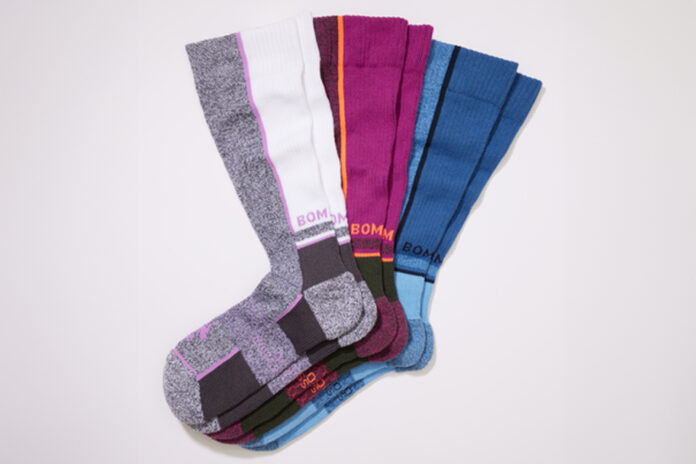
I see ads for fashionable compression socks all over the internet, aimed at healthy people, like me, to use “every day.” I thought they were just warranted if you have circulatory problems. Should I snag a pair?
You could, although how much benefit you’d get if you’re generally healthy depends on your circumstance. Sales of compression garments, including stylish socks, are certainly on an upward trend. Most are knee-high, some are thigh-high; there are also leggings, tights, and pantyhose that go up to the waist. These days, they come in all kinds of colors and patterns.
Compression apparel is warranted for certain medical conditions, notably for people who are at risk for deep vein thrombosis (DVT), which causes blood clots to form in the legs. Having an inherited condition that affects blood clotting, taking birth control pills or hormone replacement therapy (HRT), being on bed rest (such as post-surgery), or having a family history of DVT all increase the risk of blood clots to various degrees. The garments may also be of benefit for other conditions that can cause leg swelling (edema), such as varicose veins, congestive heart failure, pulmonary hypertension, and cirrhosis.
But you could also don them for more “everyday” purposes, such as if you’re taking a long flight or car ride, or you just spend a lot of time on your feet and get tired, achy legs. Though rare, DVT can occur on long flights, even in otherwise healthy people. A 2021 paper from the Cochrane Collaboration concluded that wearing compression stockings on flights lasting four hours or more reduced the risk of DVT and superficial vein thrombosis (a blood clot in veins under the skin), compared to not wearing them. Pregnant women are also at increased (though quite low) risk of DVT.
How do these garments work? Blood in your leg veins must travel back to the heart against gravity. If that is impeded—such as if you have circulation problems or weak valves in your veins—the blood can pool in the veins of the lower legs or feet, causing achiness, leg fatigue, swelling, and possible blood clots. Made primarily with nylon and spandex, compression socks squeeze the tissues of your legs, including the muscles and the walls of veins, to facilitate the flow of blood back to the heart. The compression can also increase the flow of lymph fluid surrounding cells to help reduce tissue swelling in the legs.
Compression garments are not for everyone, however. They may, for example, be contraindicated for people with peripheral artery disease, skin infections on the legs, any condition that reduces skin sensation (such as peripheral neuropathy), or significant swelling in the legs. If you have ongoing health problems, it’s always best to get medical advice before trying them.
And though you’ll likely see all sorts of athletes—from runners to basketball players—wearing compression socks, it’s not clear that they offer any performance benefit, according to a 2022 systematic review in Sports Medicine. There’s also no good evidence from well-designed studies that they help prevent exercise-related soreness, injury, or muscle damage—although some athletes anecdotally report benefits, possibly because compression garments raise localized skin temperature, which may reduce perception of pain and soreness. Thus, there’s no compelling reason to wear compression socks while exercising, unless you like the way they feel.
If wearing compression apparel is for you, keep in mind that it must be worn properly to be effective. The fabric should lie smooth with no folds or bunching up, as that could result in a buildup of pressure against the skin and cause tissue damage.
And if you use compression garments for a medical condition—with your doctor’s okay—you need to do so consistently. You should put them on in the morning, before any leg swelling may develop. Ask your doctor what style is best for you (whether knee- or thigh-high, for instance), what level of compression to look for (see below), and how many hours you should wear them each day. In some cases, they need to be worn all day and removed only when going to bed or when you can put your feet up.
You can buy compression garments in medical supply stores, pharmacies, and online. They come in different fabrics and styles, different sizes (it’s a good idea to measure your legs in the morning so you can get the proper size), and a range of compression levels, with higher levels requiring a prescription. The compression level is expressed as mmHg (millimeters of mercury), which is the amount of pressure exerted.
Light compression (8 to 15 mmHg) socks are sold over the counter and are fine for people who want to wear them for tired legs or if they have very minor leg swelling, perhaps from standing for long periods of time. The next level of compression (15 to 20 mmHg) apparel is also found OTC and can be used for air travel or if you have minor varicose veins, minor swelling, or tired legs. Compression levels above 20 mmHg (20 to 30, 30 to 40+) are for medical use and by prescription.
Prices vary depending on the fabric, length, brand, level of compression, and other features. Basic OTC compression socks and stockings cost about $10 to $20 a pair; leggings range from about $20 to $35, with some running as high as $80 a pair. High-end, designer-type compression garments and some prescription ones can cost over $100.