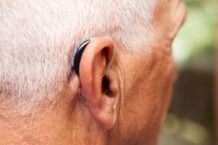
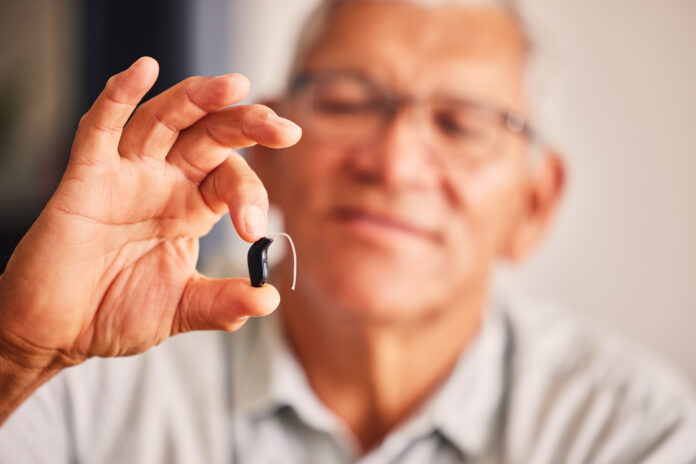
It’s been just over two years since hearing aids became available over the counter, but we haven’t known much about how well they work—until now. A small new study suggests that OTC hearing aids are as effective as traditional ones fitted by a healthcare professional.
In 2022, a long-awaited ruling by the U.S. Food and Drug Administration (FDA) allowed the sale of OTC hearing aids online and at retailers like CVS and Walmart. For the first time, it became possible to buy a hearing aid without a prescription and bypass the services of an audiologist.
The FDA ruling was aimed at making hearing aids more accessible and affordable to the many Americans dealing with mild to moderate hearing loss. Nearly 16 percent of U.S. adults—about 40 million people—have some degree of hearing difficulty, according to the most recent CDC survey data. Yet most people who might benefit from hearing aids don’t use them. Cost is one major obstacle, since prescription hearing aids average $4,600 a pair, says the National Council on Aging (NCOA). Basic Medicare (parts A and B) does not cover hearing aids, nor do many private insurance plans. Some Medicare Advantage plans do.
But while OTC hearing aids are less pricey and more convenient than prescription versions, the big question has been: Are they as good? The new study, published in JAMA Otolaryngology–Head & Neck Surgery, suggests the answer is yes.
The findings are based on 44 older adults (mean age, 63) with mild to moderate hearing loss. About half were randomly assigned to use “self-fitting” OTC hearing aids, while the other half used audiologist-fitted aids. After eight months, both groups reported similar benefits for their hearing, though participants with OTC aids tended to be a bit more satisfied with the devices.
Hearing loss can have a substantial impact on people’s lives. Older adults, in particular, can become withdrawn or depressed because they find it difficult to socialize and may feel embarrassed about the problem. Older people with impaired hearing also appear to be at increased risk of dementia (possibly due, in part, to social isolation). On the other hand, there’s evidence that using hearing aids may slow age-related declines in memory and thinking.
If you’re curious about OTC hearing aids, there are some points to keep in mind. While you can buy them without a prescription, it’s still a good idea to get a hearing evaluation if you perceive problems. OTC aids aren’t for everyone with hearing issues; they’re intended for adults with mild to moderate hearing loss—and not more severe impairment.
Last but not least, just because OTC devices are less expensive doesn’t mean they’re cheap: Depending on how sophisticated the hearing aid (and service plan) is, prices can range from about $300 all the way up to $2,500 per pair, according to NCOA. The cheapest ones are typically “preset,” with a few audio settings to choose from or only volume control. Hearing aids that are truly self-fitting (like those in the new study) cost more, since they have features, including smartphone apps, that allow you to better customize the device to your needs. Pricier options may also get you access to remote help from an audiology care team for troubleshooting—or even an online hearing evaluation before you buy the hearing aid.
Navigating all of the options can be tricky, so you might find it helpful to consult OTC hearing aid reviews from NCOA, Consumer Reports, or Forbes.
BOTTOM LINE: Hearing loss is common and can have significant effects on quality of life and even cognitive functioning. It’s also treatable. If you’ve been simply living with hearing difficulties, it may be time to get an evaluation and perhaps consider a hearing aid, whether OTC or custom-fitted.