Are all breakfast cereals considered ultraprocessed foods—even the basic, non-fancy ones I buy like cornflakes, Special K, and Wheat Chex?
There are degrees of “processing,” and various definitions of what “ultraprocessed” means—and while many if not most ready-to-eat cereals would fall into that category, some have qualities that fit with a healthy diet.
According to the NOVA food classification system developed in Brazil, foods can be classified into four groups depending on their level of processing: unprocessed or minimally processed foods, processed culinary ingredients, processed foods, and ultraprocessed foods. In general, ultraprocessed foods (UPFs) are ready-to-eat, packaged products with five or more ingredients, including sensory-enhancing additives, that have gone through a number of processes to combine and transform them. They include everything from processed meats (like hot dogs and chicken nuggets), margarine and spreads, jarred sauces, canned soups, and frozen meals to most baked goods, chips and other packaged snacks, ice cream, candies, and even sweetened yogurts.
Think of them as multi-ingredient industrial formulations that are no longer recognizable as their original plant or animal sources and rarely if ever used in home cooking (when “cooking from scratch”). Or, to put it this way: They are types of foods that health experts have consistently advised for decades to limit or avoid.
So where do your breakfast cereals fit in? That largely depends on what the actual ingredients are and how the nutrition profile stacks up—and if the cereal is made primarily of whole grains, has no or minimal added sugar, provides a good amount of fiber, and is low in sodium, that could be considered a healthful food, wherever it falls along the processing continuum.
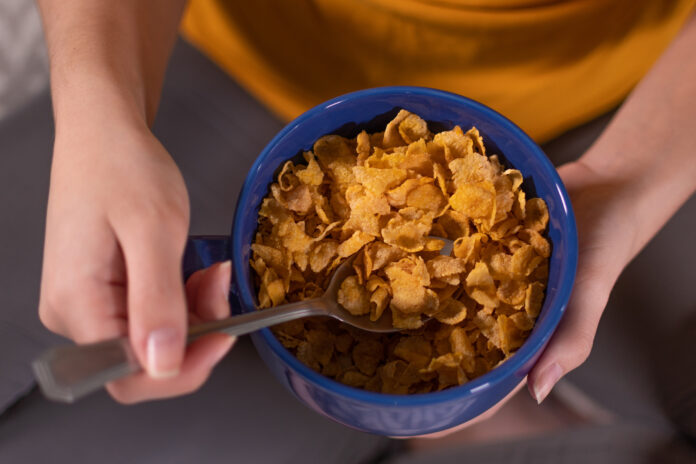
Standard cornflakes (both brand names and generics), as well as Special K Original, in particular, would not meet that “healthful” criteria, overall, because these cereals are not made from whole grains and are low in fiber. In contrast, Wheat Chex is made from whole grain wheat (the first ingredient), is quite high in fiber (8 grams per serving), and, for a processed cereal, has a relatively low amount of added sugar (6 grams), so it could be considered a healthful choice—certainly better than many other breakfast cereals.
Keep in mind that 6 grams of sugar is equivalent to 1.5 teaspoons (4 grams of sugar = 1 teaspoon), while many other popular cereals—even those that may sound healthful like Quaker Life Cereal and Kellogg’s Smart Start—have 8 to 18 (or more) grams of added sugar per serving. And then, of course, there are the loads of cereals, typically marketed to children, where the sugar is unquestionably high—such as Cocoa Krispies, Reese’s Puffs, Chips Ahoy, Frosted Flakes, and Froot Loops. You can tell from the name alone.
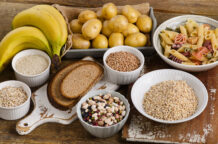
Other healthful, minimally processed cereal options to consider are simple bran flakes (you can add a small amount of your own raisins rather than buy a “raisin bran” cereal, where the raisins are typically coated in sugar), shredded wheat, and old fashioned or rolled oats (for a warm cereal).
But be aware that many cereals sold in health food stores or in health food sections of supermarkets are not necessarily very healthful—even if they are less processed. They may be just as low in whole grains and fiber and as high in added sugars as conventional breakfast cereals. Their ingredients lists may sometimes be shorter, but their overall nutrition profile may still be sorely lacking. That’s why it’s always important to check a cereal’s ingredients and its Nutrition Facts panel before deciding on a product.
Why the concern over UPFs? A spate of studies in recent years has implicated them in a range of health conditions, including obesity and cognitive decline. A review of meta-analyses, published earlier this year in BMJ, found consistent evidence linking higher consumption of UPFs to increased risk of 32 adverse health outcomes, particularly cardiovascular disease and all-cause mortality, common mental disorders (like anxiety), overweight/obesity, and type 2 diabetes. The researchers noted that these outcomes may not be due solely to the foods’ nutrient composition and calories but may also be related to the industrial processing methods used, as well as their additives and other ingredients (such as emulsifiers, colorants, thickeners, preservatives, and artificial sweeteners), by-products (such as acrylamide, furans, heterocyclic amines, and advanced glycation end products), and contaminants (that may migrate from packaging). Intensive processing may affect digestion and nutrient absorption, the gut’s microbiome, and satiety levels.
If you want to minimize your intake of UPFs overall, this list from the Center for Epidemiological Studies in Health and Nutrition at the University of São Paulo, Brazil, is a good place to identify them and their less-processed alternatives. The Academy of Nutrition and Dietetics provides this chart. Relying on unprocessed or minimally processed foods will help ensure that your diet is better balanced and healthier overall—but the key, again, is to check a food’s ingredients and nutrition information and make your own educated call. Best yet, many unprocessed whole foods (like fresh vegetables, fruits, and seafood) are not packaged and do not carry nutrition labels, so deciphering of labels is not even needed to make healthful choices.