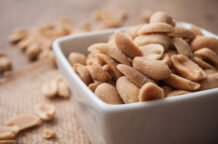
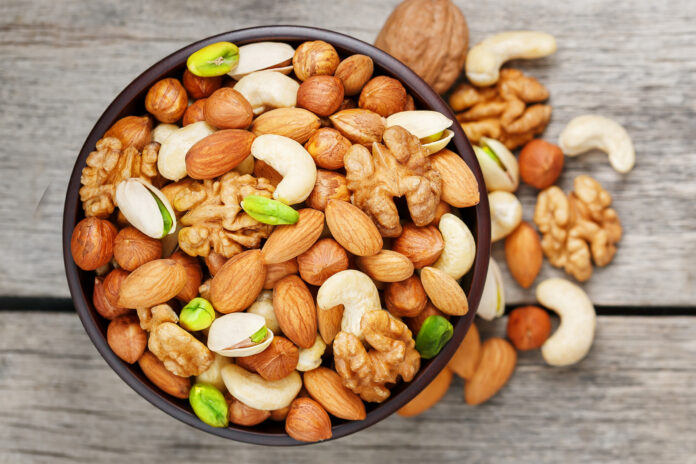
If you’re striving to lose a few pounds, you might consider making nuts a go-to snack—as long as you keep an eye on your total daily calories, too.
That, in a nutshell, is the takeaway from a recent review of studies. Researchers found that people often lost more weight on reduced-calorie diets that included a daily dose of nuts, versus nut-free diets.
That might sound surprising, since nuts often get a bad rap for being fairly high in calories. But they’re also quite satiating, thanks to their protein, fiber, and fat content. So on balance, a handful of nuts a day may help people feel fuller and thus eat fewer calories overall.
The review, published in the journal Nutrition Research Reviews, analyzed seven clinical trials in which participants—who were in the overweight to obese range—were randomly assigned to follow either a reduced-calorie diet that included nuts (almonds, peanuts, pistachios, or walnuts) or one with no nuts.
Overall, calorie-cutting typically helped people lose weight, whether they ate nuts or not. Participants in the shorter-term trials (up to 12 weeks) shed 3 to 8 pounds, on average; in the single trial that lasted one year, participants dropped an average of 18 pounds. As for the impact of nuts, the results were mixed: In three trials, nuts did not help people lose more weight—but they also didn’t cause weight gain. The story got even better, however, in the other four trials.
In those studies, participants following “nut-enriched” diets lost more weight than their counterparts on nut-free diets, despite both groups being under the same calorie restrictions. On average, the nut diets led to an extra 3 to 16 pounds of weight loss, depending on the trial.
The studies in the review investigated only four kinds of nuts, but other nuts—cashews, pecans, hazelnuts, and macadamia nuts—are likely to have similar benefits.
Not everyone, of course, is looking to lose weight. Still, everyone can benefit from replacing the “empty” calories that come with junky snacks like potato chips with foods that are rich in nutrients. Nuts can fit that bill:
- While nuts are high in total fat, most of the fat is the “good,” unsaturated kind. Walnuts, in particular, are rich in a type of heart-healthy omega-3 fat.
- Along with some protein and fiber, nuts contain a variety of nutrients, including B vitamins, vitamin E, potassium, magnesium, and calcium—with the specific amounts varying depending on the type of nut. Almonds, for instance, provide nearly half the daily recommendation of vitamin E per ounce and the most calcium of any nut; a single Brazil nut has almost twice the daily recommendation for selenium (if you eat these nuts on a regular basis, don’t consume more than two or three per day to avoid selenium toxicity).
- Like other plant foods, nuts contain polyphenols, a group of plant chemicals that may help reduce inflammation in the body and guard cells against damage.
Nuts are also tasty, which brings us to a potential downside: You may be tempted to go overboard. In the trials discussed above, participants ate about 1.5 to 3 ounces of nuts per day—which amounted to roughly 240 to 480 daily calories. But that was within the context of a diet that cut their usual number of calories. So if you’re going to add nuts to your diet, just be mindful of your overall eating—and exercise some restraint. A small handful of nuts (1.5 ounces) or 2 tablespoons of nut butter per day may be enough to both satisfy you and help with weight control.
Nutty tips
Here are some ways to fit nuts (and peanuts, technically a legume) into your diet.
- Have a serving of nuts with fruit or cheese as a quick afternoon snack.
- Replace unhealthy snacks—like potato chips and pastries—with nuts.
- Mix a small amount of chopped or sliced nuts into salads (in place of croutons), yogurt, oatmeal, or breakfast cereal.
- Add nuts to stir-fries, sautéed vegetables, and grain dishes.
- Sprinkle crushed nuts over noodle dishes (think Pad Thai) and fish dishes.
- Use nut butter in place of other spreads or dips, or put a dollop into smoothies for added protein.
- If you are watching your sodium intake, opt for unsalted nuts and nut butters. “Lightly salted” nuts often have just 40 to 65 milligrams of sodium per ounce serving, but because this is not a standardized term, be sure to check the Nutrition Facts label to see the exact amount.
- Be aware that commercial nut butters may have added sugar (1 gram per tablespoon). Tropical oils (usually palm oil)—which are high in saturated fat—may also be used in small amounts to prevent separation of the product at room temperature. If you want to avoid these ingredients, be sure to read the ingredients list.