
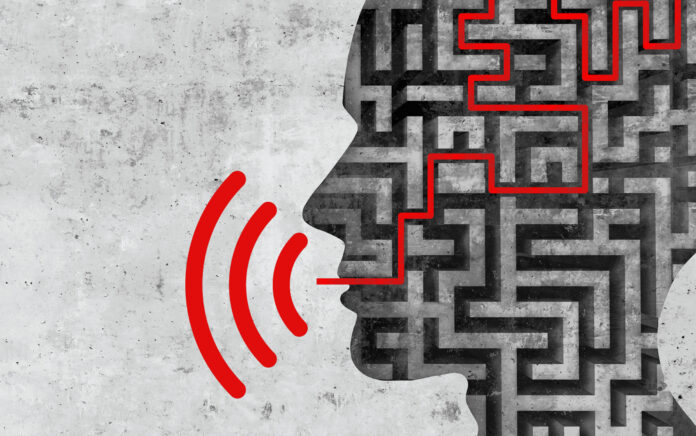
What causes stuttering, how is it treated, and does it indicate any kind of underlying cognitive issue?
Stuttering (also known as stammering) is a disruption in the normal flow and rhythm of speech that can present in many ways, including repeating a sound, word, or phrase (for example, sk-sk-sk-skate); stretching out a sound (like sssssskate); or not being able to say a word or make a particular sound. An estimated 80 million people worldwide (including more than three million Americans) stutter, typically beginning between the ages of two and six, with more boys than girls affected. Most kids outgrow stuttering by late childhood, but some 25 percent stutter into adulthood. In those who continue to stutter, it often becomes less severe or less frequent with age, however.
As many people are aware, President Biden has struggled with this speech condition since childhood—and he continues to be mocked and bullied for it by a number of his opponents and some media outlets. But the stutter and resulting verbal stumbles that he and others may make do not in and of themselves point to a cognitive problem or mental unfitness. Stuttering, in fact, has nothing to do with one’s intelligence but rather just represents a glitch in how they express themselves. In Biden’s case, maybe you’ve even noticed him suddenly stop talking and squeeze his eyes shut as he works up the effort to continue.
Other famous people who have dealt with debilitating stutters include James Earl Jones, Jimmy Stewart, Emily Blunt, Nicole Kidman, Peggy Lipton, Marc Anthony, Gerald Ford, Jack Parr, Tim Gunn, John Lee Hooker, Tiger Woods, King George VI, and Boris Karloff. The list goes on and on.
In the past, stuttering was thought to be due to defects in the tongue or larynx or was attributed to anxiety or trauma. The exact cause of stuttering still isn’t clear, but genetics are likely involved—the majority of people who stutter have family members who also stutter or have stuttered. There may also be some differences in parts of the brain involved in the processing of speech.
Not surprisingly, having a stutter can severely impact quality of life. Sufferers may feel embarrassed and have anxiety that makes them withdraw from social gatherings, as well as difficulty with sleep. The condition can negatively affect self-perception and relationships with family, friends, and colleagues. In a 2022 study of almost 1,000 people with a history of stuttering, 90 percent reported having anxiety as a result, and 81 percent said their stuttering hindered their job and educational prospects.
How a person adapts to a stutter differs and may change throughout their lifetime, depending on how they view their stutter. For Biden, it was something he sought to overcome early on—though it remains one of his most visible political weaknesses. According to a PBS Frontline documentary, when Biden was young, he would recite Yeats and Emerson while holding a flashlight to his face and looking in the mirror, as one way to control his stuttering.
Speech therapy is considered the treatment of choice for stuttering, whereby you learn to slow your speech and then eventually increase the speed to that of typical speech. For the tech-minded, there are a variety of electronic devices (some quite expensive) and software options (some free) that use delayed or altered auditory feedback to make it sound like you are speaking at the same time as someone else, which may help improve speech fluency. One such device is SpeechEasy, which is worn in the ear canal like a hearing aid. A free software option is FluencyCoach.
Cognitive behavioral therapy (CBT), under the guidance of a psychologist or other mental health professional, can be used to reduce stress, negative self-esteem, and the anxiety and negative thought patterns that may worsen stuttering. One study found that incorporating mindfulness meditation into a stuttering treatment program reduced stuttering frequency and severity.
Support groups can also be helpful because they boost self-confidence and a sense of community. Some are guided by speech therapists. There are also many foundations and associations that have resources for managing stuttering, including the National Stuttering Association (NSA), the Stuttering Foundation of America, and the International Stuttering Foundation. If you want to join a meeting, the NSA provides a map where you can search by zip code to locate a chapter of the organization nearest to you.