If you’re a woman who’s been diagnosed with low bone density (osteopenia), there will soon be a treatment option that doesn’t require taking a pill: Instead, you wear it.
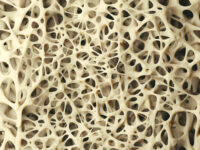
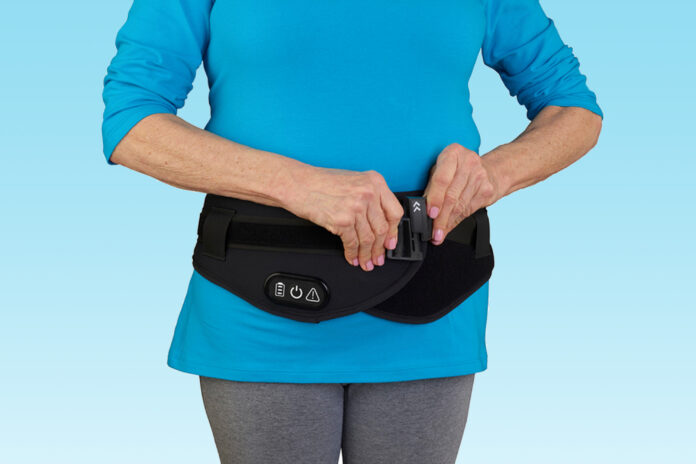
Earlier this year, the FDA cleared a vibrating belt called Osteoboost for slowing bone loss in postmenopausal women with osteopenia—lower-than-normal bone density that can precede full-blown osteoporosis. Roughly half of U.S. women ages 50 and older have reduced bone mass in the hips or lumbar (lower) spine, according to a 2017–2018 CDC report.
The new, prescription-only device is worn around the hips and is designed to send mild vibrations to the lumbar spine and hip bones. That stimulation may help maintain bone strength and density—a principle partly based on NASA research, according to manufacturer Bone Health Technologies.
The FDA gave Osteoboost the green light based on findings from a clinical trial cited in the Journal of the Endocrine Society in October 2023. The study included 126 women in their 50s and 60s who were randomly assigned to use the vibrating belt or a “sham” version (featuring sounds, but no vibration) five times a week, for one year.
During that time, women who used the real device showed much smaller declines in bone density and strength in the lumbar spine—as long as they wore the belt often enough. Those who donned it at least three times a week lost about 0.5 percent of their starting bone strength (the main outcome, measured by CT scan). In contrast, women who used the sham belt lost about five times as much bone strength, at 2.8 percent.
The pattern was similar when it came to bone density, which dipped by 0.3 percent among Osteoboost users, versus nearly 2 percent in the sham-belt group.
That’s a promising deceleration in bone loss. But according to lead researcher Laura Bilek, PhD, a physical therapist and professor at the University of Nebraska Medical Center—and a clinical advisor for the company that makes the device—the one-year trial could not answer the ultimate question: Does the device help prevent bone fractures?
There are other caveats, as well. Nearly all trial participants were white and non-Hispanic, so it’s not clear whether the belt would be similarly effective for women of other races and ethnicities. Plus, the regimen is a commitment: You wear the belt for 30 minutes at a time while you’re walking or otherwise on your feet. And as the trial underscores, you must do it several times a week to see benefits. Cost is another consideration. The belt is not yet available for sale, so the price tag remains to be seen. The amount you’d need to pay would depend on your insurance coverage.
All of that said, we have few ways to address osteopenia. There are medications for osteoporosis, but they can have side effects and in many cases are not warranted for someone with osteopenia. So doctors generally recommend lifestyle measures—including weight-bearing exercise (brisk walking, jogging, or stair climbing, for example) and muscle-strengthening and posture exercises, along with a healthy diet that has adequate calcium and vitamin D, not smoking, and minimizing or not drinking alcohol. Dr. Bilek said the belt device stands as a potential add-on to those steps. (Women in the trial, she noted, did take calcium and vitamin D supplements.)
BOTTOM LINE: If you have osteopenia, this new option might be worth a discussion with your doctor. And if you don’t know the state of your bone health, it may be time for a bone density screening, which is recommended for all women ages 65 and older, and for younger postmenopausal women who have additional risk factors for osteoporosis, such as smoking or low body weight.