I saw duck fat spray at my local supermarket for the first time. That got me wondering—how healthy (or unhealthy) is duck compared to other types of poultry?
It’s a twofold answer, as we will get to below, because duck meat and its fat have both pros and cons.
Long popular in Asia-Pacific countries such as China, Japan, and New Zealand, duck meat has generally been relegated to Chinese restaurants and high-end eateries in the U.S. That may be changing, according to market research, which estimates that increased global production will fuel a $1.75 billion growth in the U.S. duck meat market from 2021 to 2026. That duck fat spray you discovered at your local store may be part of this trend, but you’re better off passing on this particular product if you’re looking for a healthier fat to use in your cooking.
The breeds of duck most commonly used for eating in the U.S. are White Pekin Duck, Muscovy, Mallard, and Moulard. Similar to other types of animal flesh, duck meat is an excellent source of protein. It does contain slightly less protein than chicken, turkey, beef, and pork, but even a relatively small serving (3½ ounces) provides 18 grams of high-quality protein. (To put that into perspective, the recommended daily protein intake for healthy adults is 0.8 grams per kilogram of body weight, which works out, for example, to be 55 grams a day for someone weighing 150 pounds; other groups, including the elderly, may benefit from more protein.)
The more consequential difference between duck and these other animals lies in its fat content, with duck being higher in total fat than chicken, turkey, pork, and beef. But of that total fat, duck fat has a higher percentage of unsaturated fats (polyunsaturated and monounsaturated) compared to those other meats. Duck fat is also higher in oleic acid, a monounsaturated fatty acid abundant in olive oil that is associated with a lower risk of coronary heart disease. On the down side, duck fat has more saturated fat than chicken and turkey, though less of this “artery-clogging” fat than beef or pork.
On balance, then, swapping duck meat for beef and pork could be just what you want to add variety to your diet, but using a spray made from duck fat instead of one made from vegetable oil may not be (it is a reasonable swap for butter and coconut oil, however, which have much higher saturated fat contents).
From a culinary perspective, it’s worth noting that duck fat has a high smoke point—a plus for high-heat cooking methods—and according to food experts, it has a rich, savory taste that enhances the flavor of the foods cooked with it. But duck is also a lot pricier than other poultry, like chicken and turkey.
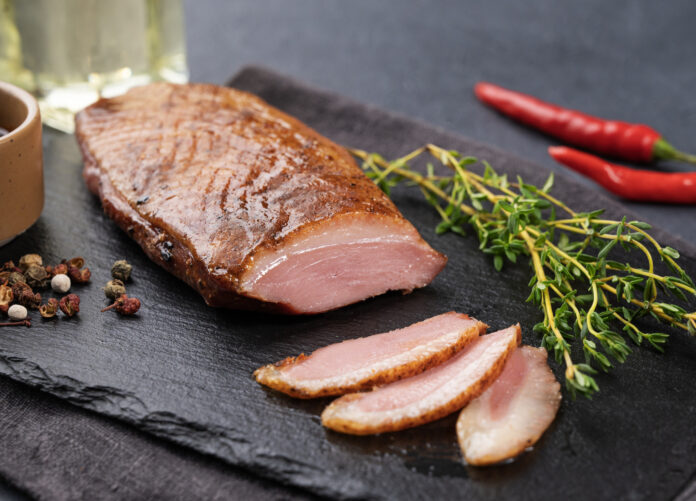
If you want to give duck a try, consider choosing recipes that allow you to render out the considerable amount of fat under the breast skin in order to reduce your calorie and saturated fat intake. According to Maple Leaf Farms, this involves scoring the skin in ¼-inch intervals in a crisscross pattern (about 21 cuts across a 5–6 ounce breast), placing it in a cool skillet skin-side down, turning the heat to medium-low for about 10 minutes, and then cooking it in the oven or on the grill.
If you care about the environment, though, you’ll want to make duck an occasional treat: A 2021 study from Indonesia found that duck manure produced far higher amounts of methane than the manure of cattle, buffalo, chicken, goat, and rabbit (the lowest methane producer by far). Methane is a greenhouse gas that plays a large role in global warming. You might also consider limiting or forgoing duck for humane reasons, since most ducks raised in the U.S. for food are subjected to harsh conditions in factory farms.
| Type Poultry/Meat (raw) | Calories (per 3.5 ounces) | Protein (in grams) | Fat (total/saturated, in grams) |
| Duck, meat only | 135 | 18 | 6.0 / 2.3 |
| Beef, flank steak, lean only | 135 | 21 | 5 / 2.0 |
| Chicken, dark meat, meat only | 115 | 19 | 3.5 / 0.9 |
| Chicken breast, skinless | 105 | 23 | 1.9 / 0.4 |
| Pork, loin | 110 | 21 | 2.2 / 0.7 |
| Turkey, dark meat | 110 | 21 | 2.5 / 0.7 |
| Turkey, breast | 115 | 24 | 1.5 / 0.3 |