I see “sugar alcohol” listed on quite a number of food labels, often on products boasting low sugar or low calories. What is this ingredient?
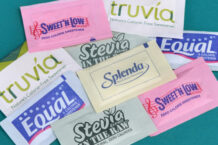
Also called polyols, sugar alcohols are reduced-calorie sweeteners used in many “diet” foods, from candies and jams to baked goods, protein bars, and ice cream, as well as in sugar-free gums, cough drops, mouthwashes, toothpastes, and other products. You can usually identify them by their “ol” endings—as in sorbitol, xylitol, mannitol, maltitol, and erythritol—though isomalt and hydrogenated starch hydrolysates are also sugar alcohols. Small amounts are found naturally in plant foods.
While they resemble sugar and alcohol in chemical structure, sugar alcohols are actually carbohydrates that the body does not fully digest. Thus, they have fewer calories (0.2 to 3 per gram) than sugar. They are not alcoholic.
Sugar alcohols are always listed by name in the ingredients. If a product makes a “sugar free” or “no sugar added” claim, however, sugar alcohols must be included in the Nutrition Facts panel, under “Total Carbohydrates.”
Because they are slowly and incompletely absorbed, sugar alcohols have less effect on blood sugar—so, in moderation, they are helpful for people with diabetes. They don’t promote cavities, and some (notably xylitol) may actually inhibit oral bacteria and thus help reduce tooth decay.
A downside is that large amounts can cause gas, bloating, and diarrhea, since bacteria in the intestines ferment what is not absorbed. And you may inadvertently consume too much since they are in so many products. Some, but not all, products carry a warning not to exceed a certain amount. Be aware also that xylitol is extremely toxic for dogs, according to the FDA, and products containing this sweetener should be kept away from them.