
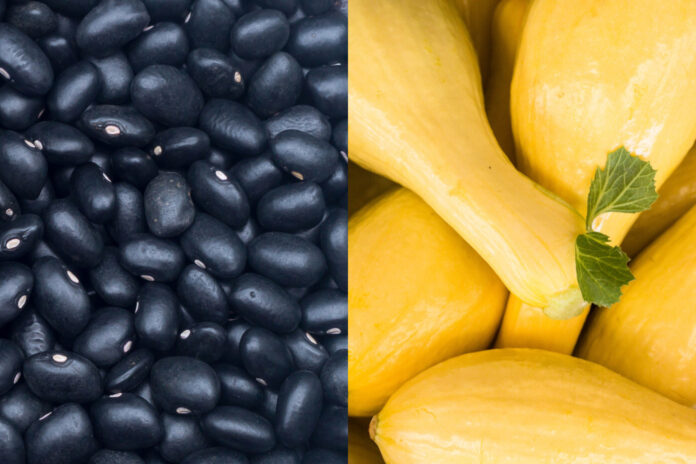
A small amount of peanut butter stirred into stews offers a lot of bang for the buck: The roasted, rich flavor permeates the entire stew and at the same time adds a satisfying thickness to the sauce.
- 1 tablespoon olive oil
- 1 large red onion, diced
- 1 large green bell pepper, cut into ½-inch chunks
- 3 cloves garlic, minced
- ¾ pound small red potatoes, cut into 1-inch chunks
- ¾ cup water
- 1 pound yellow squash, halved lengthwise and cut crosswise into ½-inch-thick slices
- 1 can (14½ ounces) stewed tomatoes, chopped with their juice*
- 1¾ cups cooked black beans (see box below) or canned (rinsed and drained)*
- 2 tablespoons creamy peanut butter
- ¾ teaspoon oregano
- ½ teaspoon salt
- 1 cup frozen corn kernels
- In a nonstick Dutch oven or flameproof casserole dish, heat the oil over medium heat. Add the onion, bell pepper, and garlic, and cook, stirring, until the onion is soft, about 7 minutes.
- Add the potatoes and water. Cover and cook until firm-tender, about 10 minutes.
- Add the squash, tomatoes and their juice, black beans, peanut butter, oregano, and salt. Stir to combine. Bring to a boil, reduce to a simmer, cover, and cook until the squash and potatoes are tender, about 10 minutes.
- Stir in the corn and cook until the corn is heated through, about 2 minutes.
Makes 4 servings; per serving: 315 calories, 9g total fat (1.5g saturated), 15g dietary fiber, 50g carbohydrate, 15g protein, 570mg sodium.
From The Wellness Kitchen
How to Cook Beans
Beans are cooked in water until tender, but you should adjust the cooking time to the final use you have planned. For instance, for salads, cook the beans until just done (firm but not mushy). For purees, cook them until they are very soft. And for recipes where the beans will continue to cook, such as soups or casseroles, slightly undercook the beans.
- To soak or not soak. There are several schools of thought on presoaking beans before you cook them. Most people will tell you that the reason for soaking them first is that it cuts down on the cooking time. The fact of the matter is that it saves only about 45 minutes (not much when you’re already committed to 1 to 2 hours anyway). The other reason put forth for presoaking beans is their oligosaccharides, carbohydrates responsible for causing unwanted gas in the bean consumer. Some research suggests that presoaking beans, and then discarding the soaking water before cooking them, will get rid of some of the oligosaccharides.
- Soaking methods. You can quick-soak beans in an hour, or soak them for 8 hours or overnight (in the refrigerator). For either method, place the beans in a large pot (they will double in size during soaking) and add enough water to cover—about 10 cups of water per pound of beans, or two to three times the beans’ volume in water. For quick-soaking, bring the water to a boil and cook at a boil for 2 minutes. Remove the pot from the heat and let stand, covered, for 1 hour. For long soaking, let the beans stand in cold water at room temperature for no longer than 8 hours. For longer than 8 hours, or in warm weather, soak the beans in the refrigerator; otherwise they will begin to ferment.
- How to cook. With either soaking method, pour off the soaking water. Then add fresh water (or broth) to cover the beans by about 2 inches. Bring the liquid slowly to a boil, skimming off the scum that rises to the surface. When the liquid boils, reduce the heat, partially cover the pot, and simmer until the beans are tender. Stir occasionally, and add more water, if necessary. The beans are done when they can be easily pierced with the tip of a knife.
- Cooking times. The amount of time it takes to cook beans varies with the size, density, and age of the bean. Small beans, such as adzuki, take 30 to 40 minutes to cook (after soaking). Medium-size beans (the bulk of the bean family), such as black beans and kidney beans, take 1 to 2 hours. Older beans (of any size) will take longer.