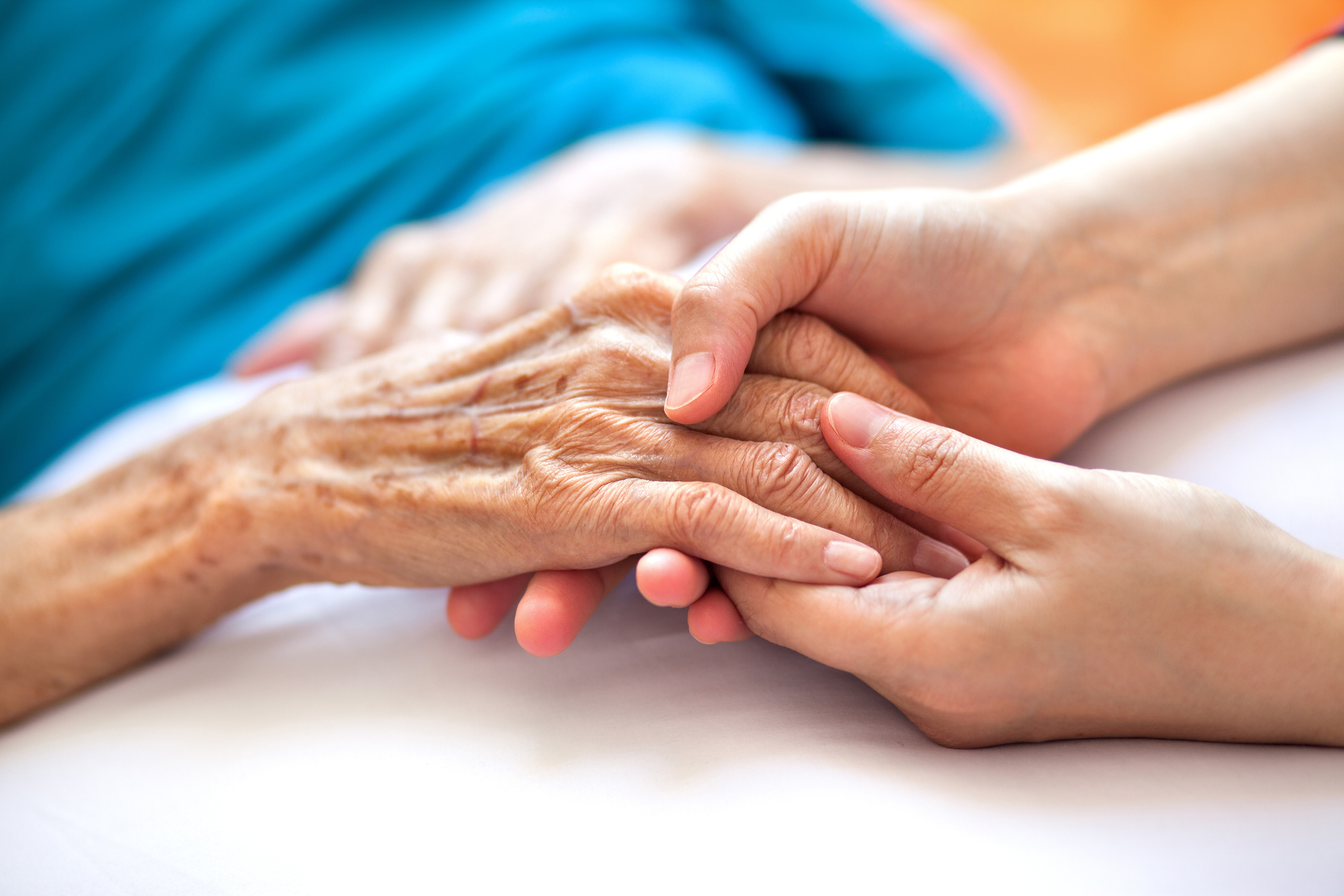
Many people are familiar with the concept of doulas, with the term introduced in the 1970s to refer to women who help out during and after childbirth. (Doula comes from the Greek word meaning “woman who serves” or “servant woman.”) But there’s a growing field of professionals trained to support people dealing with end-of-life issues, whether death is relatively imminent or off in the unforeseeable future. They are called end-of-life (EOL) doulas, although sometimes they are more macabrely referred to as death doulas.
Historically, lay people (usually women) provided support in death care. As a formal term to describe end-of-life care, doula was introduced into the nomenclature by a grassroots volunteer-driven movement launched in 2001 through the New York University Medical Center’s Department of Social Services.
Though the profession is relatively new and doesn’t really adhere to a specific definition, “EOL doulas, in general, are individuals who support people at the end of life, mainly in the last year of life, emotionally, spiritually, psychologically, and practically, about what they need to close that book of life,” explains Shelby Kirillin, who entered the field after 20 years as a neurotrauma intensive care unit nurse and later became an educator with the International End-of-Life Doula Association (INELDA).
Coverage in mainstream platforms such as the New York Times, the Guardian, Huffington Post, and the BBC suggests EOL doulas have captured a fair amount of attention—mostly in the U.S., Canada, Australia, and the UK. But there’s little to date in the scientific literature about the field. A review article that sought to clarify the role of EOL doulas found more disparities than unifiers, and included as a limitation the poor quality of papers available.
This same review, however, ended on a positive note, suggesting that EOL doulas may represent an opportunity for personalized care, one that is directed entirely by the dying person “without governing oversight.”
Although the specific roles of EOL doulas may vary, INELDA states that these professionals can provide:
- Listening
- Advance care planning
- Knowledgeable presence and guidance about dying
- Non-medical methods for pain and anxiety reduction
- Facilitation of conversations between family and loved ones
- Legacy project support
- Rituals for end of life
- End-of-life care planning
- Presence during active dying
- Support for dying person’s family and loved ones
- Early grief support
Who are these doulas?
It’s a challenge to pin down statistics on end-of-life doulas—how many there are, how many professional organizations they have, how many people they have served. But a survey of INELDA doulas gives a rough idea of demographics and characteristics. EOL doulas in that organization are overwhelmingly female (91 percent) and white (90 percent). Most are college educated, with one-third having a bachelor’s degree, one-third having a master’s degree, and 7 percent having a doctoral degree. About one-third identify as Christian, while about 28 percent each identify as Buddhist or not religious or spiritual. While a sizable proportion, 25 percent, have a background in healthcare, more than half have no such experience. A considerable minority, 19 percent, are not certified.
Training varies in time and intensity from one organization to another; some programs offer little more than a one-day workshop, while others involve longer and more comprehensive preparation. INELDA mandates 30 hours of training, 36 hours of doula services, experience with five patients, a peer evaluation, and two letters of recommendation before issuing certification. INELDA-trained doulas must adhere to the organization’s Scope of Practice guidelines and Code of Ethics. Some in the profession believe trainees should have at least six months of hospice experience before entering a program, but that is not mandated.
Most courses address death-related issues such as talking about death, end-of-life planning, acceptance, dealing with emotions, and leaving a legacy. Trainees also learn how to explore the dying person’s life (for instance, through active listening, guided imagery, and legacy work), how to recognize the signs of dying, and how to provide support and respite for a dying person’s loved ones. The National End-of-Life Doula Alliance (NEDA) has a curriculum based on four core competencies: communication and interpersonal skills, professionalism, technical knowledge, and values and ethics.
But, as noted in the INELDA survey, not all EOL doulas have certification of their training; there is neither state nor federal regulation of the field, and the lack of regulation is a bit of a double-edged sword, according to Ms. Kirillin.
“On the one hand, regulatory agencies do not dictate what EOL doulas can and cannot do, which has its advantages, such that we can stay as long as we need to on visits and can use other modalities we’re skilled in. The downside is that individuals seeking care have to be advocates for themselves; since there’s no certification required, anyone can just say, ‘Well, I’ve had a lot of experience with death,’ and call themselves an EOL doula.”
Therefore, before hiring or consulting with an EOL doula, you should think about what kind of background you want them to have, and your own expectations. Ask how long the doula has been in practice, what sort of training they received, and whether or not they have had prior experience in a related field (such as nursing, gerontology, social work, or psychology) and are certified, if that’s important to you.
Finding an EOL doula
Though some end-of-life doulas work in hospitals and assisted living facilities as part of hospice or palliative care teams, many are in private practice with independent community-based roles. INELDA offers a directory of EOL doulas, with three ways to search (by proximity to a specific location, by state, or by country). NEDA, the Death Doula Collective, and other organizations also offer directories. If you’re working with a palliative care team, they might be able to direct you to a trusted service or individual. Clients of Ms. Kirillin, who practices in Richmond, Virginia, find her largely by word of mouth.
While some EOL doulas consider the work a calling and don’t ask for payment, others have made a career of the practice and charge a fee for their services. Ms. Kirillin uses a sliding scale, which she said is the most common compensation model of EOL doulas. To date, EOL doulas are not covered by insurance, but that may change if research shows that use of EOL doulas reduces emergency room and hospital visits in the last year of life (that is, if it saves money for insurers).
“Based on how birthing doulas are reimbursed, I think once that can be proven, all doulas will need to be certified,” Ms. Kirillin said.
When to consult an EOL doula?
Ms. Kirillin has done workshops with clients who do not have a terminal illness and just want to discuss issues around mortality—but most come to her knowing that they have a life-limiting or life-changing diagnosis and that they are probably in their last six to 12 months of life. At this point, patients are otherwise healthy enough and energetic enough to work with an EOL doula in a productive way.
“Cure is off the table, but they want to live as long as they can with the disease process. They are still receiving palliative care, but don’t meet the standards for hospice. More than one person has said, ‘I don’t want death to dictate to me, I want to own my own death.’”
She advises people not to wait until they are at the very end stage, facing death within weeks or days. “My saddest moments are when people find me too late. I can sit with them and support them, but once the patient is so far into the dying process, I feel that support is more for their loved ones.”
BOTTOM LINE: With the profession still in its infancy, the role of end-of-life doulas is not yet really defined, but you can think of them as part nurse, part social worker, part chaplain, part friend/family member. Clearer definition of their responsibilities and services, education, and credentialing will likely be coming and make them an accepted—and welcome—addition to the hospice team.