
The ability to get a good grip on a handrail, jar lid, grocery bag, tennis racket, or golf club—or wayward grandchild—is primarily an indicator of the strength of your forearm muscles. But it’s also much more than that: Your handgrip says something about your overall muscle mass and function, and a body of research suggests that waning grip strength can serve as a marker when it comes to various medical conditions and perhaps even overall mortality.
As with so much of our physical prowess, grip strength tends to peak in young adulthood, and at some point after middle age it does naturally decline. But there’s a lot of variation among individuals, and studies show that people with a relatively weak grip in their 50s, 60s, or 70s tend to have increased risks of heart disease, bone fracture, diabetes, and even depression and premature mortality.
The hand-heart connection
The hand-heart connection is probably the best researched. A study published in early 2023 in Experimental Gerontology is a recent example. It found that among nearly 21,000 adults ages 50 and older, those with greater grip strength were less likely to be diagnosed with any form of heart disease over 13 years of follow-up. In particular, men and women in the top quartile for grip strength were 35 percent and 46 percent less likely, respectively, to develop heart problems than their male and female peers in the bottom quartile.
Similarly, a 2021 study in Mayo Clinic Proceedings looked at the relationship between grip strength and heart problems—in this case, heart failure, a chronic disease where the heart muscle gradually loses its ability to pump blood efficiently. Among 770 people ages 61 to 74, the top third with the strongest grips were about half as likely to develop heart failure over the next 17 years as the bottom third with the weakest grips.
Why, exactly, grip strength can foretell future heart troubles is not fully clear. But it’s likely related to the aforementioned connection between hand strength and overall muscle mass and strength. People with greater grip strength may have better cardiovascular fitness (a key protective factor against heart disease) and relatively less body fat (excess body fat, particularly abdominal fat, can contribute to heart disease, through mechanisms like chronic, low-level inflammation in the body). A study in 2022 found that among middle-aged and older adults, those with greater grip strength typically had a lower body-fat percentage than those with a weaker grip.
The hand-mind connection
But the story may be bigger than the hand-heart connection. Recently, the UK Biobank—a research project tracking the health of a half-million adults ages 40 and up—has been assessing the relationship between grip strength and some other health conditions. It has linked weaker grip strength to increased odds of developing depression and anxiety disorders and dementia within the next decade.
The “why” is not clear here, either. One hypothesis is that in some people, waning grip strength might signal an issue in brain function. However, the link could very well be indirect: Again, exercise may be at work, since physical activity is associated with lower risks of depression and dementia. Plus, older adults who exercise may be more active in a broader sense—they may be getting out and socializing more or learning new skills to keep their minds sharp.
And here’s perhaps the biggest picture: Some research has linked weaker handgrip strength to increased all-cause mortality, with the association uninfluenced by age, income, smoking, exercise, comorbidities, or other factors that may shorten life.
To squeeze or not to squeeze?
All of this may have you wondering whether you should have your grip strength tested at your next annual checkup. It’s a simple matter, typically done by squeezing a device called a dynamometer with all your might. However, it’s not yet clear whether routinely measuring grip strength would add meaningful insight into your health status beyond the things doctors already measure, like blood pressure, blood sugar, and cholesterol levels. More study is needed before grip strength could be considered a standard risk assessment tool.
That said, if you notice a change in your grip—it’s harder to open lids or hang onto your dog’s leash—talk to your doctor. In some cases, there might be a specific cause, such as carpal tunnel syndrome, arthritis, or Parkinson’s disease.
BOTTOM LINE: Whether handgrip strength becomes a routine risk assessment tool in the doctor’s setting or not, the most basic takeaway message is a familiar one: Stay active. You can’t stop the march of time, but you can slow down muscle aging with exercise that works your whole body, including your forearms and hands (see box).
First and foremost, you should follow an exercise program that includes both aerobic exercise and a general strength-training regimen. The CDC recommends getting at least 150 minutes of cardio exercise—like brisk walking—per week, plus muscle-strengthening exercises on at least two days out of the week. Those strengthening exercises should target the whole body, including your forearms and hands. When you hold light weights (or resistance bands or soup cans) for upper-body exercises, for example, your grip strength will increase.
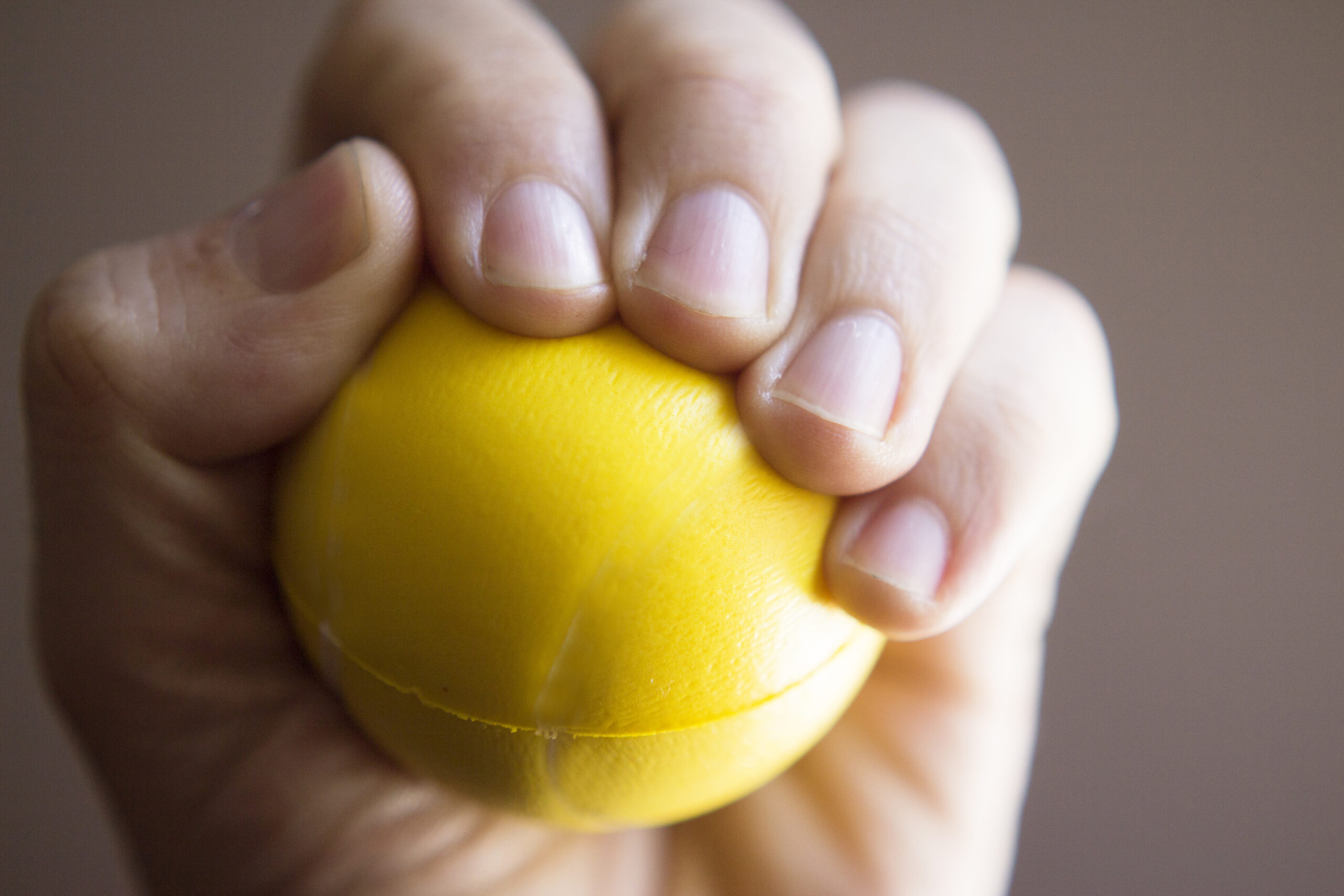
You can also focus on grip strength with simple exercises like squeezing a tennis or small rubber ball. Many types of grip strengtheners are also available for purchase, including ones that vary in amount of resistance (it’s unnecessary under normal circumstances—and could even be injurious—to use devices that strengthen individual fingers). The American Council on Exercise (ACE) recommends including two specific grip strength exercises in every workout, and they list eight exercises here that you can choose from, including reverse curls, bottom-up kettlebell shoulder presses, and farmer’s walk.
Keep in mind, too, that daily life offers plenty of opportunity to work with your hands—from carrying groceries, to housework, to gardening. And if you’re a tennis or golf player, more power to you and your forearms.