One of the latest sports-training trends has been weighted vests. You may have spotted people wearing them at the gym or while simply going for a walk or jog outside. Maybe you’ve even invested in one yourself. Promotors assert that such “wearable resistance” will help you burn more calories, boost your fitness level and sports performance, and possibly even improve your body composition and bone health.
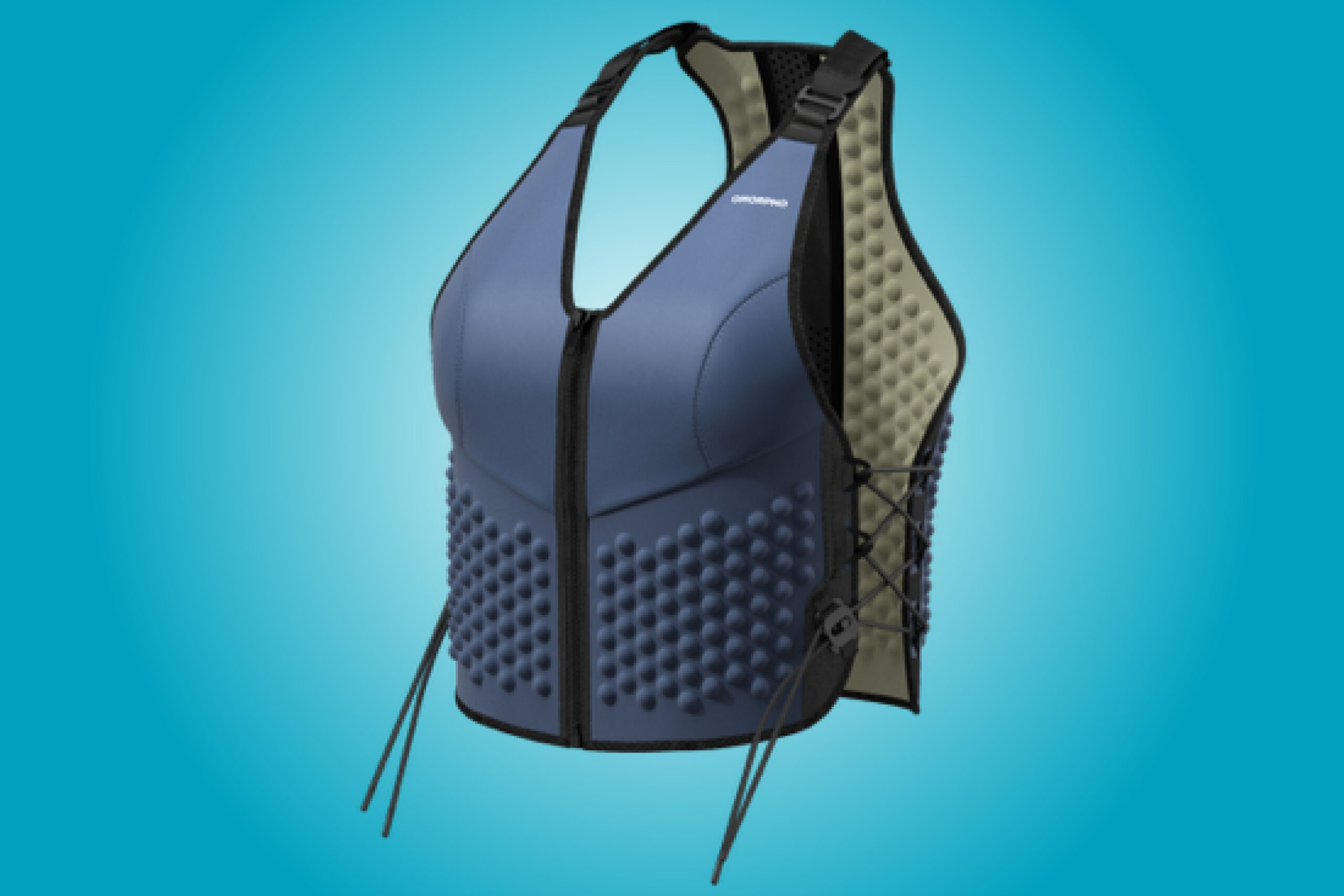
Sold by many companies online and at some sporting goods stores in a range of styles, the vests provide anywhere from 4 to 20 pounds of weight. Some are as heavy as 50 pounds. The idea is that they add resistance to anything (and everything) you do, in or out of the gym.
Can such apparel really do all it’s touted to do? In short, the jury is still out because studies have been small and varying in quality, but some preliminary results are encouraging. Here’s a sampling of the research.
Weighted vests for weight loss?
One of the claims made for the vests—based largely on the observation that heavier people burn more calories whether at rest or when active—is that they can aid in weight loss.
A study in EClinicalMedicine in 2020 included 69 people at the lower end of obesity who wore either light vests (about 1 percent of their body weight) or heavier vests (about 11 percent of their weight) eight hours a day for three weeks. At the end of the study period, the heavyweight-vest group lost an average of about 3.5 pounds, while the lightweight-vest group lost less than one pound. Most of the weight loss was attributed to fat loss, which suggests that wearing a weighted vest could preserve lean body mass during weight loss.
On the other hand, in a small study in the Journal of Frailty and Aging in 2018, weighted vests did not have much effect on body weight or body composition in older (65 to 79), obese, sedentary men and women, half of whom wore the vests (up to 15 percent of their body weight) while dieting (1,100 to 1,300 calories a day) for 22 weeks, while the other half just dieted. Both groups lost about 11 pounds and nearly 4 percent body fat, on average. More encouragingly, while both groups gained some fitness in terms of walking speed, the weighted-vest group lost less muscle power in their legs compared to the diet-alone group, leading the researchers to conclude that weighted vests—by offsetting the decreased mechanical load on the body that occurs with weight loss—“could be a promising approach to counteract some aging and obesity-associated conditions.”
For better bones?
Studies looking at the impact of weighted vests on bone health are a little more consistent, but not without caveats.
A 2015 study in the Journal of Orthopaedic & Sports Physical Therapy included postmenopausal women with low bone mineral density (osteopenia) and a recent history of wrist fracture. The 30-plus women who completed a six-month exercise program that involved wearing weighted vests (three 60-minute sessions a week) experienced increased bone mineral density just below the head of the femur (thigh bone), along with significant strength gains in their quadriceps and better balance. But the study was small and did not have a control group.
A better-designed but even smaller study, in the Journals of Gerontology: Series A in 2000, compared nine postmenopausal women who engaged in lower body resistance and jumping exercises while wearing weighted vests with nine women who were active but did not wear the vests. Those wearing the vests maintained bone mineral density over the five-year program, while those not wearing them lost bone mineral density. “Our data support participation in long-term exercise using weighted vests as a strategy for reducing hip fracture risk,” the authors concluded. They further wrote that “this program is safe and practical and promotes both adherence and compliance in older women.”
A study in Rheumatology International in 2013 included 36 postmenopausal women with osteoporosis who were randomly split into three groups: one that did aerobic exercise (30 minutes three times a day for six weeks), one that did the same exercise but wearing weighted vests, and a control group that did not exercise at all. Both exercise groups had improvements in markers of bone health, while the weighted vest group showed greater improvement in balance. Having better balance is important for reducing the risk of fractures.
For improved fitness?
Studies looking at the impact of weighted vests on fitness levels have also tended to be small and have been limited to mostly young men. Findings are mixed. Moreover, the focus of the studies has been highly specific and may not be generalizable to people exercising recreationally or just trying to maintain a healthy lifestyle.
For instance, a randomized controlled trial in the European Journal of Sports Science in 2017 included 16 young men performing “power cleans,” a type of explosive weight training that works out both the upper and lower body. Those who wore a weighted vest (about 12 percent of their body weight) during the exercise experienced small improvements in various aspects of the movement over five weeks, compared to those who didn’t wear vests.
But in another study in 2017, which looked at sprint training in 19 young, male soccer players who trained with or without weighted vests for six weeks, both groups showed improvements in various performance measures.
Weighing your risks
Before donning a weighted vest, there are things to consider:
- Weighted vests made from heavy materials like neoprene and nylon may constrict breathing and contribute to overheating. In fact, though studies have documented few adverse effects from wearing the vests, many participants have reported at least some discomfort. More recent technology has given way to weighted vests with wickable fabrics that breathe more and are more flexible to allow for greater range of motion; some are slim enough to wear under clothes.
- The vests may not be appropriate for people who have neck or back issues or poor core strength, because they can put extra stress on the spine. People with balance and certain joint problems should also think twice about carrying around extra weight. If you have osteoarthritis in the knees and ankles, for instance, the extra weight can worsen the pain. In one study, 25 percent of participants reported more back pain with vest use and had to stop or lower the weight.
- Even if you don’t have physical issues, you should still be cautious. Start with a lower weight load—many vests allow you to add weight in half-pound increments—and limit the added weight to about 10 percent of your body weight. For example, if you weigh 120 pounds, the vest should be no more than 12 pounds; if you weigh 180 pounds, don’t go over 18 pounds.
- If you’re not a good candidate for a weighted vest but still want to increase the intensity of your workouts, you can add some sort of resistance training to your regular exercise to help build strength and preserve lean body mass and bone. Or you can, for example, increase the incline on a treadmill for a more challenging workout that doesn’t put excess stress on your knees and other joints.
BOTTOM LINE: Research on weighted vests is a relatively new area, and most studies are too small or too preliminary to make any firm conclusions about whether they can help you achieve your goal, whether that is weight loss, better body composition, improved fitness, or stronger bones. Still, it’s something you can try if you don’t have any contraindications. If possible, consult with an athletic trainer or physical therapist to help you set up a training program tailored to your goals, needs, and limitations. At the very least, donning a weighted vest may motivate you to get up and get moving—though the novelty may also wear off pretty soon.