
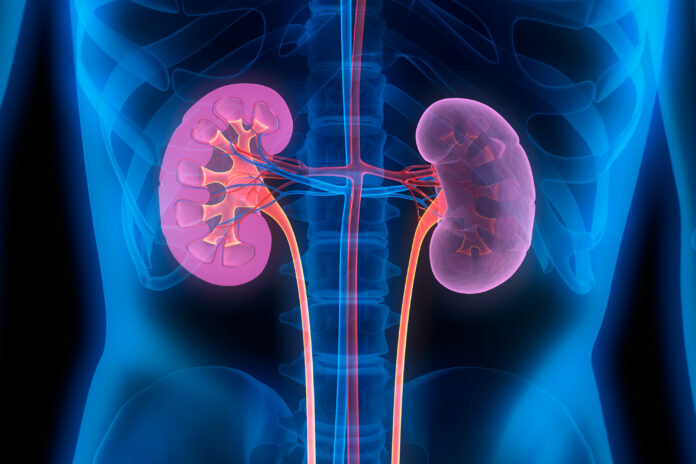
MARCH IS NATIONAL KIDNEY MONTH
Chronic kidney disease involves the progressive deterioration in the kidneys’ ability to filter the blood. According to the Centers for Disease Control and Prevention, 15 percent of adults in the U.S.—around one in seven, or 37 million people—are reported to have chronic kidney disease. Among those 65 and older, the prevalence is estimated at 38 percent.
Unfortunately, most people with chronic kidney disease—up to nine out of 10—are unaware that they have it. Kidney damage does not cause pain or other symptoms until the later stages of chronic kidney disease. While chronic kidney disease cannot be reversed or cured, treatment can significantly slow the rate of progression.
We asked Mario Corona, M.D., a nephrologist in Berkeley, California, and a member of the Wellness Letter editorial board, about the importance of early detection of chronic kidney disease, the available tests and treatments, and whether non-prescription drugs can pose risks to the kidneys. Dr. Corona attended medical school at La Salle University in Mexico. After his medical residency, he completed fellowships in nephrology at Einstein Medical Center Philadelphia and in critical care medicine at the Mayo Clinic in Rochester, Minnesota. He is on the clinical faculty at UC Berkeley.
The Wellness Letter: Kidney disease tends to be diagnosed after it’s already advanced. Why is that?
Dr. Mario Corona: Except for something like a kidney stone or infection, kidney problems don’t hurt. They’re silent. If you have inflammation of the kidney, or a process like uncontrolled hypertension or diabetes that basically scars the kidney—that doesn’t hurt. So by the time someone comes to see a nephrologist, they sometimes have advanced kidney disease. I see a lot of people in their 40s and 50s who I have to tell not only that they have a significant problem but that they may have to go on dialysis soon.
The kidney is a filter. If the kidney senses any kind of issue with the ability to get rid of the waste, it will increase the filtration rates. At the beginning, that response is good, because you do get rid of whatever the waste is. But if the kidneys continue to hyper-filtrate for long periods of time, you’re overworking them and you’re going to damage them.
WL: What factors drive this progressive kidney damage?
MC: The two main causes of kidney disease, particularly in the Western world, are hypertension and diabetes. And we do a very poor job diagnosing and managing both of these. We’ve known for many decades how to screen for and treat high blood pressure and diabetes. But socioeconomic and other factors create obstacles to access that are notoriously difficult to overcome.
Most people with hypertension, for example, are not even aware that they have it, let alone have it under control. Hypertension creates a hammer-like effect on the thin walls of the capillaries in the kidneys. And over time those little pipes get thick and don’t let as much blood flow through, and then other compensatory mechanisms get triggered. At the end of the day, that will take you to chronic kidney disease.
Besides hypertension and diabetes, we also have what’s called metabolic syndrome, which is related to obesity. That’s a significant risk factor for kidney damage, independent of high blood pressure and diabetes. Addressing metabolic syndrome involves controlling blood pressure, weight, and lipids.
WL: Are there any symptoms or signs that people should pay attention to?
MC: Yes. But they are usually late signs, unfortunately. If you have swelling of the legs, that could be a sign. Another sign could be if your urine is abnormal—if you see an unusual amount of bubbles in the urine, or if it looks foamy. But most people don’t even look at their urine; they just flush the toilet, and that’s the end of it.
High blood pressure can be another sign. The kidney regulates blood pressure, and blood pressure regulates the kidney. If you’ve never had problems with your blood pressure, and all of a sudden the pressure is really high, the main cause of this sort of hypertension is likely related to the kidney.
WL: So what are the challenges in testing for kidney disease?
MC: The main problem is that the two most common methodologies used to screen for kidney disease have significant limitations. First, we do a blood test to measure a substance called creatinine, which is a product of muscle metabolism. The creatinine level is a measure of the capability of the kidneys to filtrate. That’s considered our gold standard worldwide. But the relationship between creatinine level and the filtration rate or function of the kidney is not linear—it’s exponential. The rate at which the creatinine goes up is not necessarily reflective of the rate at which kidney function is decreasing.
And everybody has their own normal level of creatinine. Creatinine is the product of your muscle metabolism, and we do not all have the same muscle mass. So it can be very difficult to detect the beginning of the problems with kidney function, especially if you’re not extremely attuned to all these little caveats. Unfortunately, I don’t see any widely available blood tests coming in the near future that will be a real substitute for the creatinine test.
WL: And what’s the other test?
MC: The second one is checking protein in the urine. Most often we use what’s called a dipstick test—that’s just a sample of urine, we put a little dipstick in it, and then we see the results in 30 seconds. The problem with the widely available dipsticks that we use in clinical medicine is that by the time the dipstick turns positive, you already have abnormal amounts of protein in the urine. Not only is the horse out of the barn, as they say, but the horse is already out of the barn and has had babies.
WL: So where does that leave screening?
MC: For one thing, most people who should be screened for kidney disease are not getting screened. We have to do a better job of educating primary care providers about the need to screen, because a lot of times they don’t think about the kidney. The ideal would be to have a healthcare system that allows for this kind of screening to be incentivized. Screening is important because if we catch kidney disease early, we can at least slow its progression.
All patients should have a creatinine test as part of the basic panel of laboratory tests they get when they have a physical exam or see a new doctor. And the level should be monitored for any changes the same way blood pressure, blood sugar, and so on get monitored. The dipstick test, which you can get from the drugstore and do at home, is not that helpful for early detection, so many doctors will also order a test called the albumin-to-creatinine ratio. That requires a urine sample.
WL: If you suspect kidney disease from these initial results, what then?
MC: To fully confirm that there is kidney dysfunction, what you want to do is get a 24-hour urine sample to measure what’s called the creatinine clearance, which is much more accurate than just the creatinine level that you measure in the blood. At the same time, you measure the 24-hour protein excretion, which is, again, much more accurate than the standard test. But you have to have a certain amount of suspicion to order those tests because it requires the patient to collect the urine every single time they urinate during the 24-hour period.
If we determine a patient has kidney disease, the first line of intervention is to treat their blood pressure. At this stage of the condition, high blood pressure is commonly found among patients, so controlling that is the most important factor. Recently we have data about a new pharmacological approach that can significantly decrease the rate of progression of kidney disease, independent of blood pressure. So that’s an exciting development.
WL: What drugs are harmful to kidney function?
MC: From my perspective, the most commonly used drugs that might be of concern are nonsteroidal anti-inflammatory drugs (NSAIDs). I’m going to exaggerate here, but some people pop these medications like they’re M&M’s. NSAIDs block prostaglandins, which are a group of complicated substances that are very important in the regulation of blood flow in the kidneys. The nonsteroidals also can cause an idiosyncratic negative reaction that can lead to what we call nephrotic syndrome. That is when you have a massive excretion of protein in the urine.
WL: What other drugs should people be alert about?
MC: Acetaminophen, sold as Tylenol or generics, can also be a problem, but it’s not that common because you need to ingest massive amounts in order to get in trouble with the kidney.
But one of the issues that we’re seeing more and more right now is that some of the new chemotherapeutic agents, which are a blessing as far as treating malignancies, can affect the kidneys—so much so that there is a new field called onco-nephrology.
Dietary supplements and herbal treatments that are not prescription medications are another concern. People taking them can end up ingesting substances without really knowing what they are. The active ingredient may be an issue, but sometimes to preserve the supplement or for other reasons, these products include something that might end up being toxic to the kidneys. People need to understand that whatever you put into your mouth is going to go through the kidneys. It is a mistake to automatically assume that these compounds are going to be benign.
WL: Any last bits of advice for our readers?
MC: If someone doesn’t know whether or not their kidneys are healthy, they should definitely ask their primary care doctor about it. Everyone should make sure they are getting screened regularly for chronic kidney disease, the same way they get screened for cardiovascular disease and other chronic conditions.