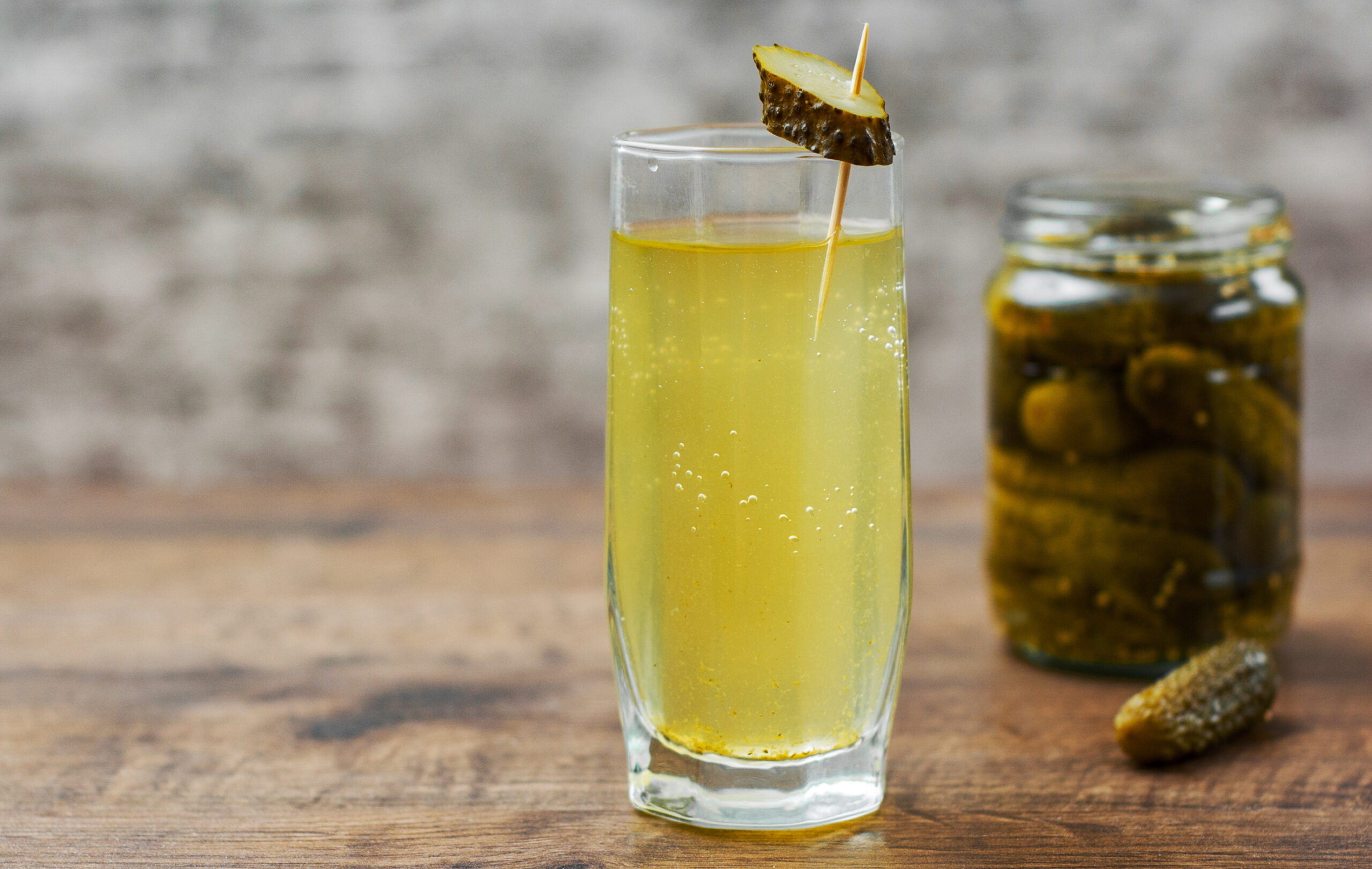
Pickle juice, which typically contains water, vinegar, salt, pickling herbs or spices, and often sugar, is being touted as a remedy for exercise-related muscle cramps. If you stayed up late to watch the Australian Open in January, you might have caught the match between Casper Ruud (ranked No. 2 in the world for men’s singles) and the American tennis player Jenson Brooksby (No. 48), who was given this briny beverage for leg cramps and told to down it as quickly as possible. It apparently worked, according to the commentators, and Brooksby went on to win the biggest match of his career.
But was it really the pickle juice that did the trick? One pickle juice company goes so far as to claim its product is “Scientifically Proven to Stop Muscle Cramps.”
First, some background about muscle cramps. It’s still not entirely clear what causes them during intense exercise. In the past, they were thought to result from dehydration or a deficit of electrolytes (potassium, sodium, magnesium). While these factors may certainly be involved, researchers now think the nervous system may play a more pivotal role—specifically nerve cells in the brain stem and in the spinal cord that’s connected to it. When muscles become fatigued from exercise, these nerve cells, called alpha motor neurons, send signals to the muscles to contract and hold the contraction—a.k.a. a cramp. This is a reflex. Another reflex—one that’s initiated in the tendon of the affected muscle—also contributes to cramping by impairing the muscle’s ability to relax.
Pickle juice’s effect may be due to its sharp, biting taste (from the acetic acid in the juice’s vinegar), which stimulates receptors in the back of the throat that reduce activity of the alpha motor neurons, the result being that the cramped muscle relaxes.
This nerve-related notion was tested in a 2010 study in Medicine & Science in Sports & Exercise of 10 mildly dehydrated men who were given a small amount (2–3 ounces) of either pickle juice or water after investigators electrically induced cramps in the muscles that flex the big toe. Duration of muscle cramps was found to be about 50 seconds shorter when pickle juice was ingested compared to the water. Although some anecdotal reports claim even better results for pickle juice, the bottom line is that the effect is pretty quick—and too rapid to attribute to the electrolytes in the juice, which wouldn’t have enough time to be absorbed into the blood from the digestive system and then get to the affected muscle to exert any effect. (The authors note that it takes some 30 minutes for pickle juice to leave the stomach.)
Do you even need to drink the pickle juice? If coming in contact with the receptors is key, maybe just rinsing your mouth with it could work. This idea was put to the test in a small study in Applied Sciences in 2021. Researchers again induced cramps in the big-toe muscles of 11 cramp-prone people, who then either rinsed their mouth with pickle juice, drank the juice (about 2 ounces), or drank water (the control condition), switching conditions every week. This time, however, there didn’t appear to be any difference between the pickle juice and control groups. The authors proposed various possible reasons to explain the lack of effect, including methodological issues (small sample size, low acetic level of the juice), as well as variations in the duration of the cramping that was being examined. In addition, it’s possible that the oral rinse methodology used might not have stimulated the key receptors (there are different types of receptors in the throat and stomach).
An even more recent and larger study (not too subtly named PICCLES), in the American Journal of Gastroenterology in 2022, involved more than 70 people who had frequent muscle cramps (about 11 to 12 cramps a month) related to cirrhosis (not exercise related). Participants were randomized to take either a small sip of pickle juice (a tablespoon) or water at the onset of a cramp. After 28 days, during which time cramps were assessed 10 times, a larger percentage of the pickle group had their cramps curtailed compared to the water group (69 versus 40 percent). Moreover, the pickle juice was linked with a greater reduction in severity of cramps compared to water. But the study had some methodological limitations, including that it was not blinded.
BOTTOM LINE: Since published studies on pickle juice are limited and don’t show consistent or overwhelming benefit in terms of significantly reducing muscle cramp frequency, duration, or severity—and since the juice can be high in sodium—it’s hard to enthusiastically stand behind this trendy remedy as your go-to fix for exercise-related muscle cramps. It’s not even known for sure which ingredient in pickle juice might reduce the cramping, though a likely suspect is the strong-tasting acetic acid in the vinegar—which begs the question whether just sipping plain vinegar would also be of benefit. Consider, too, that other strong tastes, such as from yellow mustard, lemon/lime juice, and quinine have also been proposed (but unverified) for cramp relief. This all suggests that the sour/vinegary receptor angle deserves further study.
With that all said, if you want to try pickle juice, and if it works, it’s okay to use on occasion if you don’t have any contraindications (such as being on a very low sodium diet). You could also just try a sip of vinegar, for that matter. Note that these should be used together with stretching the muscle and ice massage to relieve the cramp.
But if you are an active person who regularly gets cramps when you exercise, you may want to see a healthcare professional with experience working with athletes, such as an athletic trainer, physical therapist, or sports medicine physician, who can teach you ways to manage the cramps, including with proper stretching techniques. And if you tend to get cramps other than with exercise, you should see your doctor to determine the cause.