
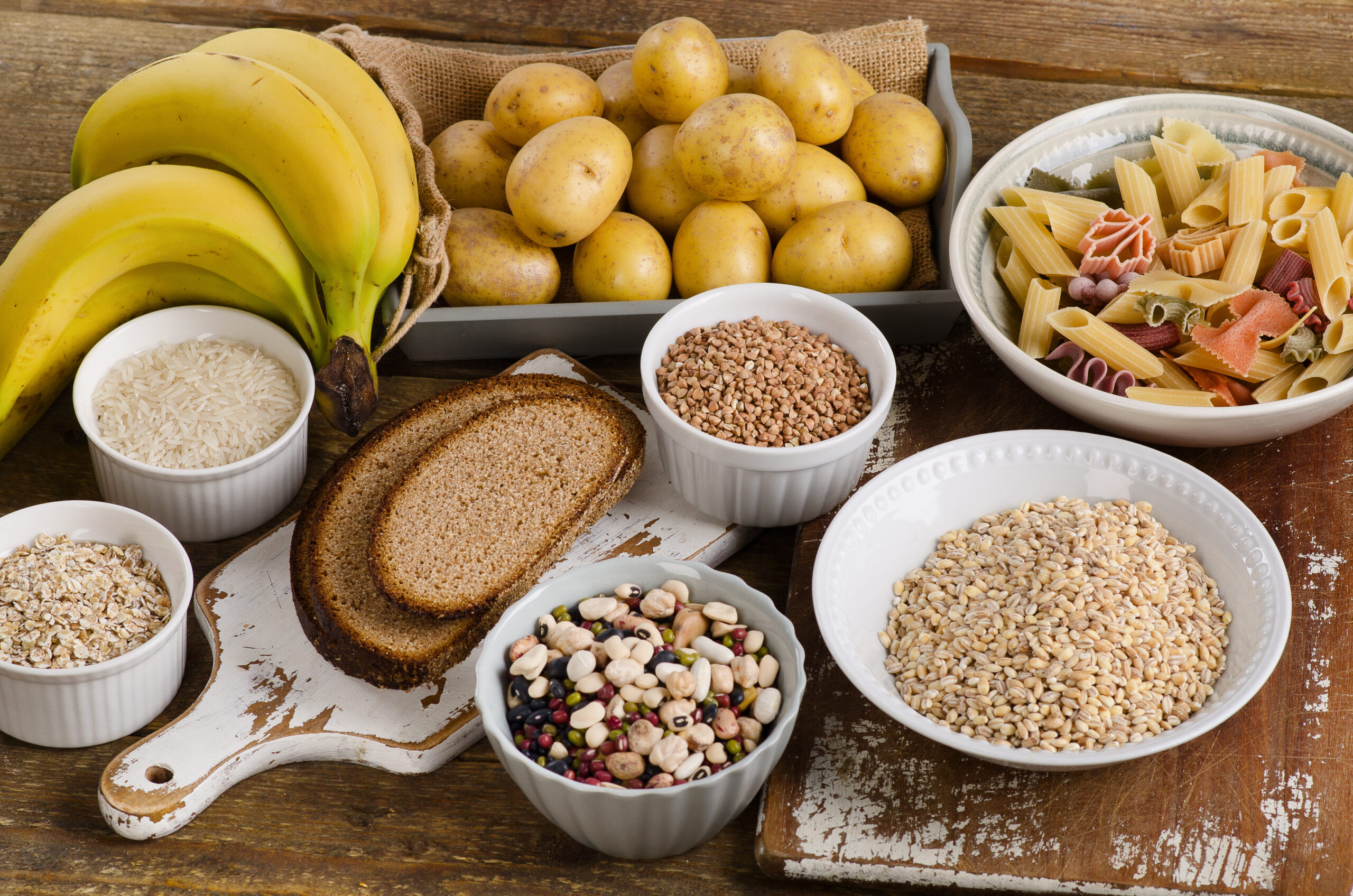
Have you heard the one about pasta and potatoes being good for you? (There’s a catch, but it’s a pretty easy workaround and something people routinely do anyway, as we explain below.) The star of this story is something called resistant starch (RS), and it’s found in some of our most commonly eaten foods.
What is resistant starch?
A better way to phrase that question would be “What are they?” because resistant starch has four primary subtypes. RS1 and RS2 are inherent in certain starchy foods and are typically raw, minimally processed, and uncooked; RS3 is created by the heating and subsequent cooling of high-starch foods; and RS4 is a chemically modified product used by the food industry.
Whether naturally occurring or in processed foods, all subtypes of resistant starch share a key characteristic: They resist digestion and absorption in the human gastrointestinal (GI) tract, and as such are considered to be a type of dietary fiber. We lack the enzymes needed to break down resistant starch, but it so happens that the bacteria present in our large intestine thrive on the stuff, and byproducts of their feast have myriad beneficial health effects.
What are some health benefits of resistant starch?
One of the most-studied byproducts of the bacterial fermentation of resistant starch is the short-chain fatty acid butyrate, which serves as a major energy source for the cells that line our large intestine. Butyrate helps the gastrointestinal tract regulate fluid transport, reduce inflammation and oxidation, strengthen the epithelial barrier, and modulate visceral sensitivity and intestinal motility. In short, butyrate is beneficial for intestinal health and has been shown to improve conditions such as inflammatory bowel disease (IBD) and irritable bowel syndrome (IBS). Moreover, because it is fermented more slowly than other types of fiber, resistant starch creates intestinal gas at a slower rate, which can mitigate this unwanted side effect of butyrate production.
Interestingly, results from a clinical trial reported in Cancer Prevention Research in September 2022 found that daily consumption of 30 grams of resistant starch for up to four years led to fewer cases of upper gastrointestinal cancers (but not colorectal cancer), compared to a placebo, over a follow-up period of 10 to 20 years. The trial, called CAPP2, was limited to those with Lynch syndrome, so the findings may not apply to people who do not have this hereditary condition that increases the risk of GI and some other cancers. Still, the authors of the study encouraged further research, noting the possibility that resistant starch might have a similar effect in the wider population.
Resistant starch has also shown promise in treating diseases that do not originate in the digestive tract, including diabetes and diabetic kidney disease. For instance, a meta-analysis published in 2021 in the British Journal of Nutrition found that participants who consumed resistant starch had significantly lower fasting blood glucose levels than those who consumed digestible starch. And a 2022 review article in the journal Nutrients concluded that resistant starch may attenuate the progression of diabetic kidney disease through its ability to increase production of short-chain fatty acids such as butyrate.
How can I increase my intake of resistant starch?
The type and amount of resistant starch varies from food to food and can be significantly influenced by the way the food is prepared and processed.
- RS1 is found in grains, legumes (beans, peas, lentils), and seeds.
- RS2 is in under-ripe bananas, plantains, and legumes.
- RS3 is the one that has received a lot of attention because it’s found in potatoes, pasta, and rice—all foods that have been much maligned in recent years.
- RS4 is a commercially made product that manufacturers use to boost the fiber content of their foods. HI-MAIZE® 260, NOVELOSE® 3490, and Fibersym® RW are some brand names of RS4 that are added to packaged foods such as flour blends, bread, crackers, and cereals—but they may be listed on labels only as modified food starch.
Practically speaking for carb lovers, your best bet for maximizing your intake of resistant starch may be RS3, which is found in inexpensive staples that serve as the backbone for many dishes and can be cooked in large batches and used for multiple meals. The “catch” alluded to earlier is that RS3 only forms via a process called retrogradation, which occurs when the food is heated and then cooled.
In this RS3 category, cooked and then chilled potatoes tend to have the most resistant starch, followed by cooked/chilled pasta. Cooked/chilled rice comes in a distant third. The longer you refrigerate these foods, the more resistant starch that tends to form, but if you reheat them, it’s unclear whether that may increase or decrease their resistant starch content; study findings vary. For potatoes, at least, reheating appears to result in a loss of resistant starch, so it would be best to eat your spuds cold, as in potato salad.
How much resistant starch should I aim for on a daily basis?
There are no official recommendations, but a daily intake of about 15 grams of resistant starch may be needed to achieve meaningful health benefits. Considering that a 2015–2016 survey of adults in the U.S. showed an estimated intake of about 4 to 6 grams a day (for people consuming 2,000 to 3,000 calories a day), we have a long way to go. To get an idea of the resistant starch content of some common foods, see the box below.
BOTTOM LINE: Resistant starch is an undeniably beneficial substance, but it may be difficult to consume an appreciable amount on a regular basis because it can be degraded if food is not processed, cooked, or stored appropriately. Rather than focus exclusively on getting more resistant starch, it may be best to increase your overall fiber intake and incorporate some of the more palatable sources of resistant starch into your diet whenever possible. Aiming to get more legumes is one way to get more overall fiber—and resistant starch, in particular, if you choose lima and kidney beans. You can also buy unflavored resistant starch powders, such as green banana flour and raw potato starch, that you can sprinkle on foods like yogurt and oatmeal or add to smoothies or other liquids (but don’t heat them). Be wary of powders making broad and unsubstantiated health claims and charging extra-high prices.
The following is from a database of the resistant starch content of foods commonly consumed in the U.S. from 1982 to 2018, listed in order from most to least. These are average values; values for specific products may vary greatly in some cases.
| Food | Resistant Starch per 100 grams (3.5 ounces) |
| Oats, rolled, uncooked | 7.7 grams |
| Potatoes (high-amylose variety, such as russet), cooked then chilled | 6.4 g |
| Lima (butter) beans, cooked | 6.4 g |
| Semolina, cooked | 4.8 g |
| Potatoes (high-amylose variety, such as russet), cooked not chilled | 4.6 g |
| Kidney beans, cooked | 3.8 g |
| Barley, cooked | 3.4 g |
| Pasta, durum wheat, cooked then chilled 3–5 days | 3.4 g |
| Tortillas, corn, refrigerated 1–7 days | 3.3–4.6 g |
| Plantain, cooked and cooled | 3.2 g |