
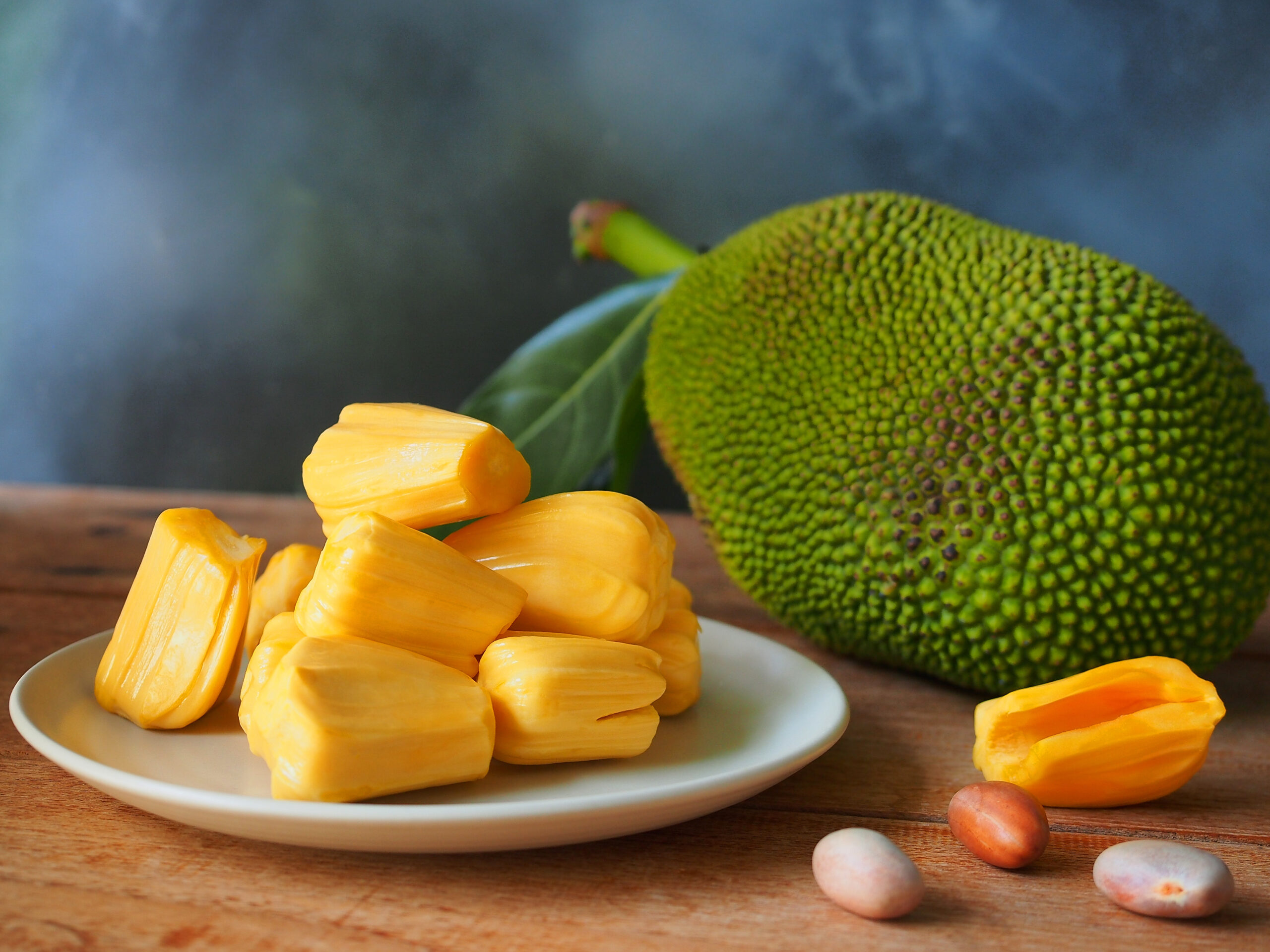
Jackfruit is popping up as a plant-based meat alternative in supermarkets and on restaurant menus—and one that’s considered more sustainable from an environmental perspective. That might leave you wondering whether a fruit can really imitate meat. Yes, to some extent because of its fibrous texture—though nutritionally, jackfruit doesn’t measure up completely, nutrient for nutrient, to meat (more on that below).
Distinguishable by its spiky, thick green or yellow skin, jackfruit is the world’s largest tree-borne edible fruit, typically weighing about 10 to 25 pounds, though it can weigh as much as 100 pounds. It grows in tropical locales around the world, including India and other countries in Southeast Asia such as Indonesia, Thailand, and the Philippines, as well as in Brazil and Africa. It also grows in Hawaii, Florida, and Australia.
Jackfruit nutrition
With just 95 calories per 3.5-ounce serving, raw, jackfruit is a good source of several vitamins and minerals, according to the USDA, including vitamin C (14 milligrams, or 15 percent of the daily recommendation) and potassium (450 milligrams, or nearly 10 percent of the daily recommendation); it also contains carotenoids, flavonoids, and other phytochemicals. As with many other fruits, jackfruit has been found in lab studies to have anti-inflammatory, anti-carcinogenic, and other potential health-promoting properties.
Even though jackfruit is eaten as a meat substitute, it’s not a rich protein source, however, containing only about two grams of protein in 3.5 ounces, raw. Jackfruit doesn’t provide significant amounts of other key nutrients found in meat, either, like iron, vitamin B12, and zinc. Nor is it a rich source of fiber, with only 1.5 grams per serving (but neither is meat).
Where to find it, how to eat it
When the fruit is ripe, it can be eaten raw and tastes a bit like bananas. But it’s the unripe fruit (often referred to as young jackfruit) that, when cooked, develops a texture similar to that of pulled pork or shredded chicken. And with its fairly neutral taste, it picks up whatever flavors it’s cooked with, whether curry or barbecue sauce, for example. Cooked jackfruit can be added to chili, fajitas, stir fries, burritos, tacos, pastas, soups, stews, and more. You can even use it as a pizza topping in place of sausage or pepperoni.
In the U.S. you may be able to find fresh jackfruit at Asian or other specialty markets. But it’s pretty labor intensive to work with. Cutting the fruit releases a sticky white substance (latex) that will coat utensils and is difficult to wash off (jackfruit latex has a traditional use as an adhesive, in fact).
Packaged jackfruit is easier to find at mainstream supermarkets, and easier to use in recipes. Canned jackfruit packed in water or brine is best for cooking, though brine versions can be high in sodium. Ones in syrup can be high in sugar and are too sweet for using in savory dishes.
A few companies sell jackfruit in pouches, with or without seasoning, including Upton’s Naturals and The Jackfruit Company. They come in a variety of flavors, from barbeque to Thai curry to Tex-Mex. But, of course, along with the flavors comes added sodium. One brand’s teriyaki-flavored jackfruit contains 670 milligrams of sodium per half-cup serving, for instance, while the BBQ flavor contains a lot less (370 milligrams). You can also find various jackfruit products online, including frozen and dried.
Can jackfruit feed the world?
In parts of the world with food security issues, jackfruit is an important part of local diets. Because of its size and versatility, a single fruit can feed a family for several days, with both the flesh and seeds used. In fact, jackfruit is poised to play a larger role in feeding the world’s population in a more sustainable way.
That’s because the trees, which can produce up to two hundred fruits a year, don’t typically need pesticides or to be irrigated (they are resistant to drought conditions). In addition, jackfruit doesn’t require a vast amount of land—it can be grown along with other crops, similar to the way coffee plants are grown, resulting in more fertile soil and allowing farmers to gain income from mixing different crops on the same land.
Some downsides to producing jackfruit on a large scale: The fruit is very laborious to process and highly perishable, and more than half by weight is inedible.
BOTTOM LINE: With its meaty texture, ability to pick up whatever flavors you like, and its relatively low carbon footprint (save for transporting it around the world), jackfruit makes for a worthy meat substitute, particularly for its sensory properties. Though it lacks all the nutrients that meat provides, it has some other nutrients and phytochemicals that meat lacks. When buying packaged jackfruit, read the labels carefully, noting any added salt or sugar. Still not sure what to do with jackfruit? There are plenty of recipes online, including on the website of The Jackfruit Company.