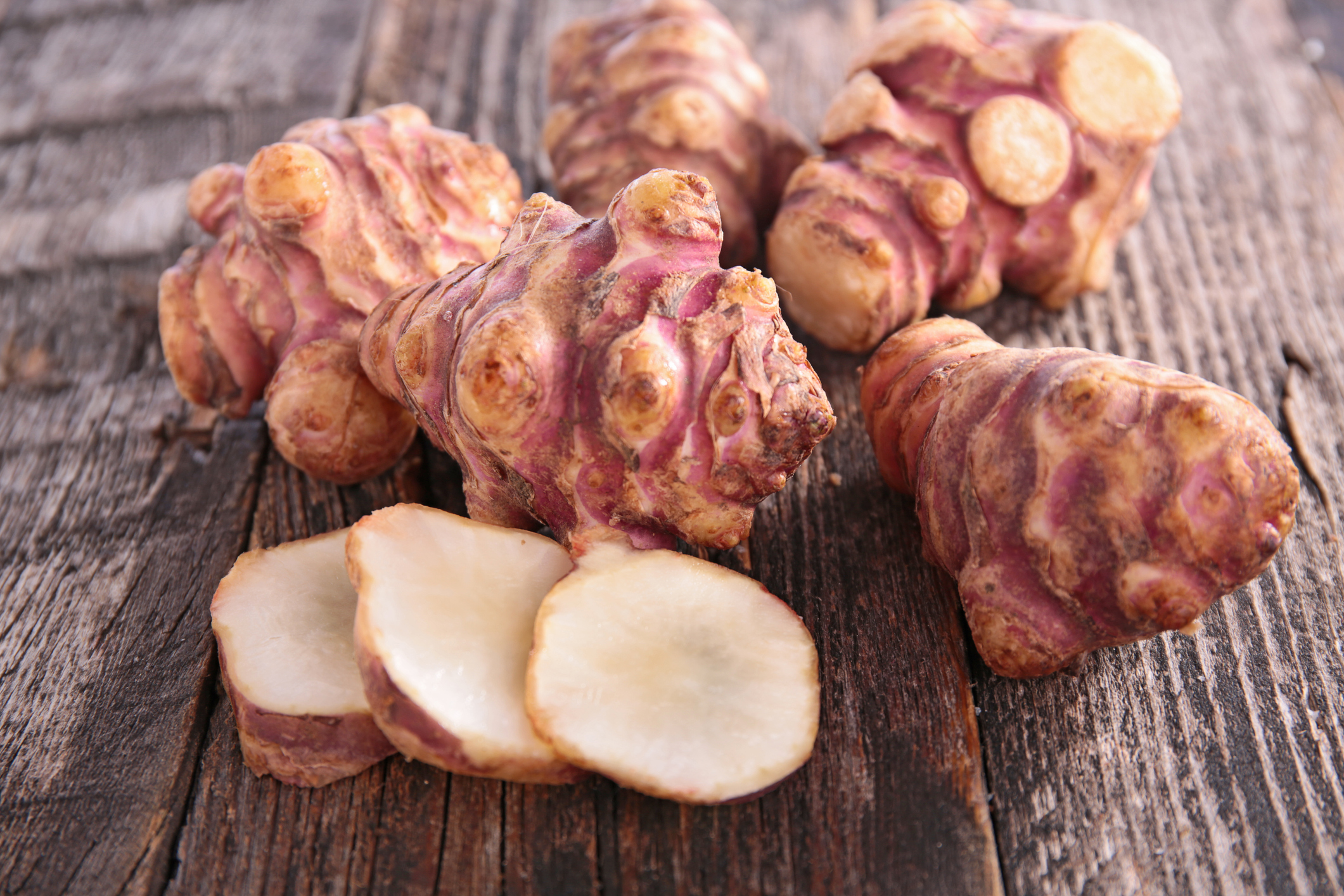
Tired of turnips at Thanksgiving? Sick of sweet potatoes? For a delicious, perhaps novel, alternative, consider sunchokes—a.k.a. Jerusalem artichokes, even though they don’t hail from Jerusalem but rather are native to North America.
These knobby-looking tubers have a thin edible skin, crisp white flesh that turns creamy after cooking, and an earthy, nutty, and sweet flavor. They have about 110 calories per cup, sliced, and no fat, and they provide good amounts of iron, thiamine, potassium, and vitamin C. They also contain a type of fiber known as inulin, which, in addition to aiding digestion, may, according to preliminary research, enhance calcium absorption and help regulate the immune system, among other potential benefits. This is the same fiber commonly added to processed foods as a fat substitute.
But there is a caveat: Sunchokes have acquired the unfortunate nickname “fartichokes”—for good reason. Eat too many and the inulin in them can cause bloating, abdominal cramps, and flatulence, especially if you already have a digestive issue. One way to reduce this downstream consequence is to store the tubers in the fridge and boil them, sliced, in a large amount of water for 10 to 15 minutes—then roast or sauté the slices. (Adding lemon juice or cream of tartar to the cooking water prevents the tubers from turning gray.)
Sunchokes taste so good, you may be tempted to eat a full plateful. But no matter how you prepare them, you might be best off starting with just a few forkfuls to gauge your tolerance. It may take several hours or more for any untoward effects to become evident. People with irritable bowel syndrome or other digestive disorders should especially limit (or avoid) them.