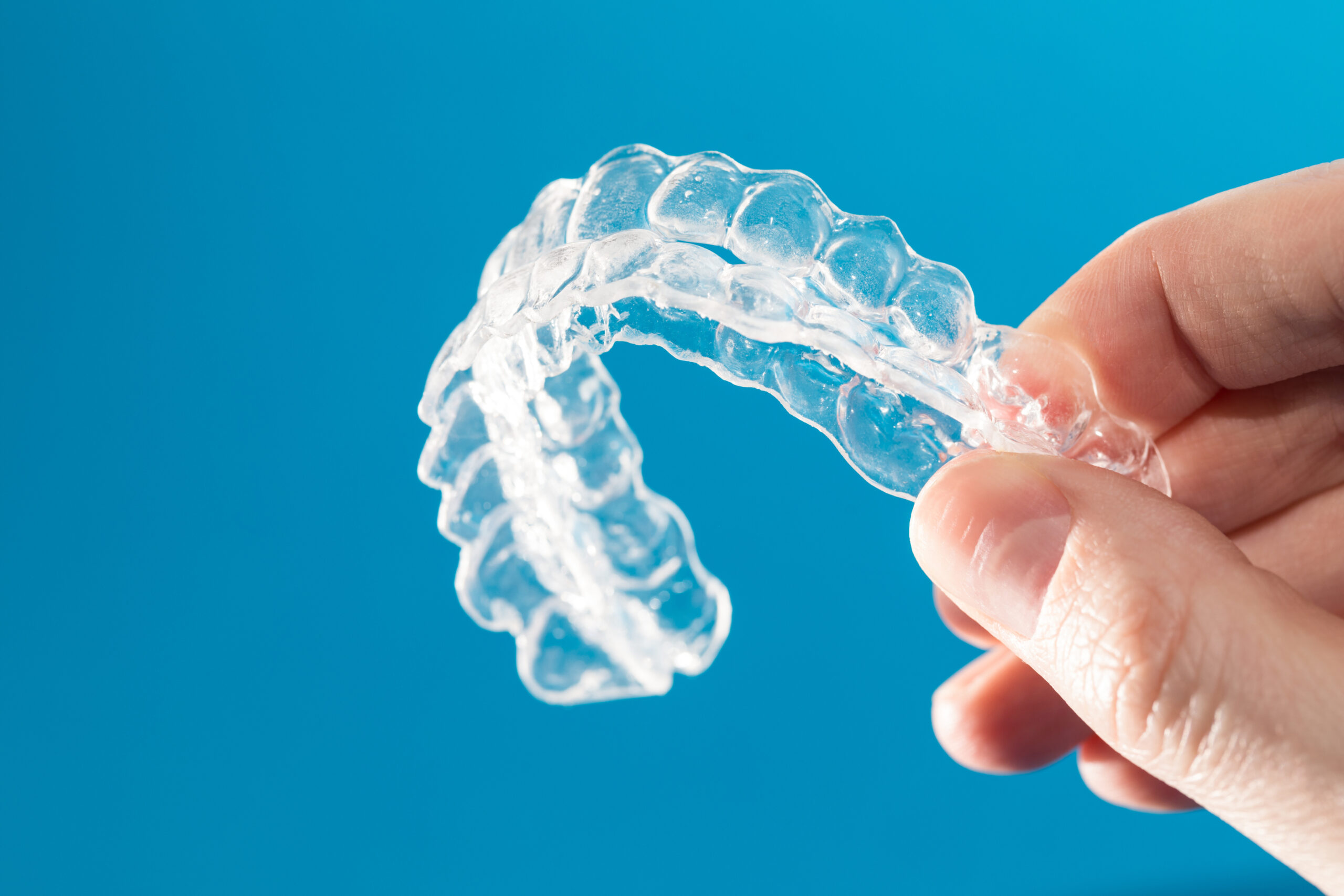
If you wear a mouthguard at night—as is advisable if you clench or grind your teeth—be sure to keep it clean. Research has shown that with ordinary use, mouthguards, which are porous like a sponge, can be a reservoir of potentially harmful microorganisms.
There is no ideal cleaning protocol, but experts recommend the following general tips:
- Floss and brush your teeth before using your mouthguard.
- After using, rinse the mouthguard in cool water to loosen any plaque that may have accumulated on it overnight; then clean it using a soft toothbrush, paying attention to all nooks and crannies. Because toothpaste can be abrasive, you can alternatively use a gentle soap (such as castile soap) or dish soap as the cleansing product. This is especially recommended for mouthguards that are lab-processed.
- After cleaning the mouthguard, plug it with tissue to dry it, and store it in a perforated container (usually provided). Alternatively, lay it on a clean, flat surface to let it air dry. It may sound obvious, but keep your mouthguard out of reach of pets to prevent it from being chewed up.
- Be sure to also clean the container at least every few days using a gentle soap or dish soap.
- Do a deep cleaning of the mouthguard at least once a month: You can use an over-the-counter nonabrasive denture cleaner (follow the directions as you would for cleaning dentures) or do a two-step process of soaking the mouthguard first in vinegar and then in hydrogen peroxide for 30 minutes each (rinsing in-between). Don’t exceed this soaking time. Don’t use alcohol-based mouthwash.
- Replace your mouthguard when it gets worn out (they typically last several years, though durability depends on many factors) or if it starts to not fit right. If you’re not sure, bring it to your regular dental checkup to have the dentist evaluate it. Your dentist may also be able to give it a thorough cleaning then.
A 2020 study in the European Journal of Molecular & Clinical Medicine determined that immersing mouthguards in a hydrogen peroxide solution for five minutes significantly reduced microorganisms on them. Using distilled water or brushing the mouthguards with fluoride toothpaste was less effective.
The same tips apply to athletic mouth protectors used in high-impact sports activities. Mouthguards are available over the counter or can be custom-made by your dentist.