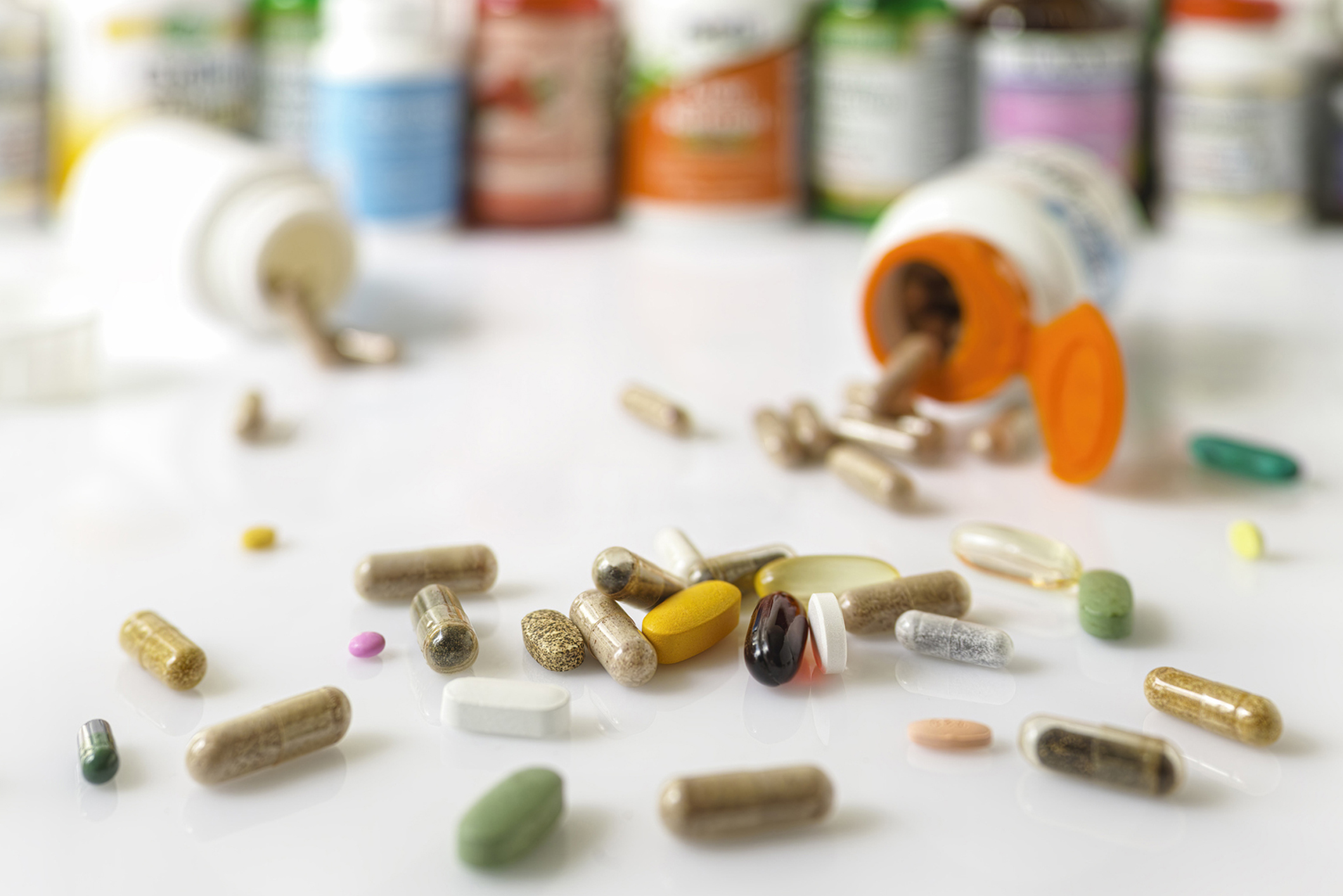
Dietary supplements adulterated with undisclosed drugs continue to make their way to consumers, according to a study recently published in the Journal of Clinical Pharmacology. Using the Tainted Dietary Supplement Database created by the FDA in 2007, the study’s investigator found that the total number of adulterated products decreased in recent years (that’s the good news), but a higher percentage of them contained more than one active pharmaceutical ingredient (API).
Altogether, there were 1,068 unique adulterated products over the whole 15-year period of the database (333 in 2007–2011, 443 in 2012–2016, 292 in 2017–2021), with sexual enhancement supplements being the leading category in the last five-year period, followed by weight-loss supplements.
Sexual enhancement supplements—which are touted to increase erections or enhance sexual desire—most commonly contained sildenafil (generic Viagra) or other phosphodiesterase-5 inhibitors. About 20 percent contained more than one API. Two products “inexplicably” contained acetaminophen or the antibiotic ciprofloxacin along with sildenafil.
Weight-loss supplements—promoted to control hunger or speed metabolism—were most commonly adulterated with sibutramine, a prescription appetite suppressant (brand name Meridia) that was taken off the market due to cardiovascular concerns. Other drugs found in these supplements were phenolphthalein (a stimulant laxative banned in the U.S. due to cancer concerns) and fluoxetine (the active ingredient in the antidepressant Prozac, which is required to carry a boxed warning about increased risk of suicidal ideation and suicide). One weight-loss supplement combined sibutramine with diclofenac, a nonsteroidal anti-inflammatory drug.
“It is unconscionable that sibutramine and phenolphthalein are still being included in dietary supplements for weight loss after they were removed from the U.S. market by the FDA for valid safety concerns,” the investigator wrote.
The category of so-called muscle-building supplements was the third most frequent to contain APIs (usually steroids or steroid-like substances) in 2007–2016, but none were found to be adulterated in 2017–2021.
The Tainted Dietary Supplement Database includes products that the FDA has issued warning letters about and that contain at least one of the following types of APIs: an API approved by the FDA for prescription or over-the-counter drug use, an API once approved but subsequently banned, or an API never evaluated or approved by the FDA.
As the study’s author noted, dietary supplements containing undisclosed pharmaceuticals are much riskier than FDA-approved prescription and OTC drugs because there is no assurance of purity, consistent dosing, or regulated manufacturing processes. Plus, undisclosed drugs in supplements may interact with the listed ingredients in unknown ways or may be substances that a consumer is intentionally avoiding for health reasons. They may also interfere with other medications or treatments.
A limitation of the study is that it could not determine whether sexual enhancement and weight-loss supplements are really the most adulterated products out there or whether they are just more closely watched by the FDA. Moreover, the FDA’s database represents just a fraction of the tainted and potentially dangerous dietary supplements on the market.
Also, bear in mind that the FDA’s database doesn’t include the concentrations of APIs to know how harmful they might be, and it doesn’t indicate whether the undisclosed drugs are there intentionally (likely in most cases) or the result of improper cleaning of equipment or other inadvertent actions.
Consumers who take supplements can—and should—search this database to see which dietary supplements have been found to contain undeclared drugs or are otherwise misbranded.