Most fad diets simply call for eating more of this and less of that—but some promote more radical changes for losing weight. One example is the Paleo Diet, which is based on what we think our Paleolithic forebears ate. Unlike traditional weight-loss plans, the diet has no ceiling on calorie intake.
There’s not enough scientific data to recommend the Paleo Diet for weight loss, though some evidence suggests that it—like most trendy diets that cut out entire food groups—could help you shed some pounds, at least in the short term. It’s difficult to stick with, however, so any weight loss might be fleeting and hard to maintain. Moreover, the diet cuts out some healthy foods, which means that people who follow it risk having shortfalls of nutrients important to overall health.
Paleo presumptions
The Paleo Diet was popularized by a 2002 book of the same name, written by Loren Cordain, Ph.D., now professor emeritus at Colorado State University. Today, a Google search for “Paleo Diet” returns tens of millions of hits, and bookstores teem with Paleo cookbooks and magazines. Actor Chris Pratt credited the Paleo Diet with getting him buff to star in the Guardians of the Galaxy movies.
The claim behind the Paleo Diet is that it reflects what humans ate more than 12,000 years ago. “We are Stone Agers living in the Space Age,” Cordain writes. “Nature determined what our bodies needed thousands of years before civilization developed, before people started farming and raising domesticated livestock.”
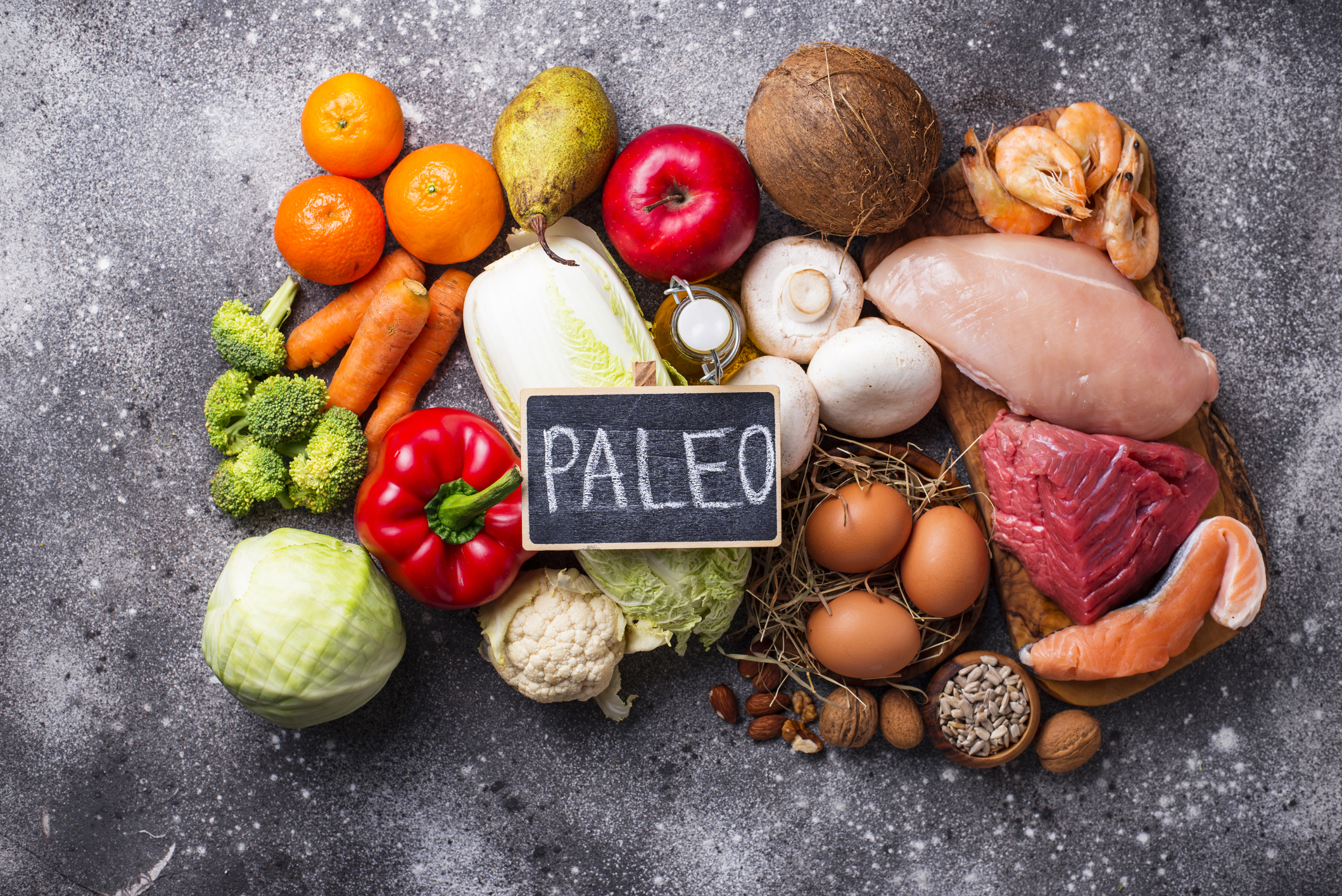
Paleo Diet proponents assume that early humans were hunter-gatherers who depended on lean meat and raw fruits and vegetables, seldom ate cereal grains, and had no dairy products. Therefore, early humans consumed much more animal protein than we do, no refined sugars, more fiber, and much less sodium. In practice today, that means consuming grass-fed meats, seafood, fresh fruits and vegetables, eggs, nuts and seeds, and oils from nuts, seeds, olives, avocado, and coconut. The Paleo plan avoids cereal grains, legumes, dairy products, potatoes, refined vegetable oils, processed foods, sugar and commercial sweeteners, and salt.
Some of those prescriptions, such as cutting down on sugar and salt, echo the recommendations of current nutrition science. The diet rules out junk foods and emphasizes nutrient-rich, high-fiber fruits, vegetables, and nuts. However, it also recommends avoiding some healthy foods, such as whole grains, dairy products, and beans. In practice, “going Paleo” typically means eating a lot of meat, a source of saturated fat.
The reality
Does the Paleo Diet even reflect what our Stone Age ancestors ate? The reality is that early humans lived in ecological niches with widely varying food sources. They ate whatever they could lay their hands on by foraging or killing. According to a 2014 paper in The Quarterly Review of Biology by C. Owen Lovejoy, Ph.D., famed for reconstructing the “Lucy” fossil skeleton, and Ken Sayers, Ph.D., “There’s very little evidence that any early hominids had very specialized diets or there were specialized food categories that seemed particularly important.” As Sayers added in a 2014 public release statement from Georgia State University, where he is a researcher, “Everyone would agree that ancestral diets didn’t include Twinkies, but I’m sure our ancestors would have eaten them if they grew on trees.”
Skeletal remains also reveal that early humans’ diets were feast or famine, as they would kill and gorge on an animal and then go long stretches with little food. That’s hardly a diet to emulate. Moreover, in a seminal 1989 paper on the diets of early humans published in Nutrition Reviews, Stanley M. Garn, Ph.D., and William R. Leonard, Ph.D., noted that a true Paleolithic diet would also have included such “meats” as weevils, moles, gophers, squirrels, and rats, along with insect grubs and larvae.
So does it work, or not?
Accuracy aside, does the Paleo Diet have any solid science to back it? Regarding weight loss, a clinical trial published in the European Journal of Clinical Nutrition in 2014, for example, did find that obese postmenopausal women lost nearly twice as much weight on a Paleo Diet than on a control diet that followed Nordic dietary recommendations (similar to the Mediterranean diet)—about 19 versus 10 pounds, over 12 months). And according to a 2019 systematic review and meta-analysis, the Paleo Diet resulted in an 8-pound weight loss, on average, compared to other diet recommendations, due possibly to the satiating effect the diet might have. But the authors also pointed out that a physiological mechanism remains unproven—and that more clinical trials of higher quality and longer duration are needed.
As for other health benefits often claimed for the diet—increased energy, reduced inflammation, and better blood sugar and cholesterol levels among them—long-term evidence is scant. A review of four randomized controlled trials (with a total of 159 participants), published in the American Journal of Clinical Nutrition in 2015, reported that the Paleo Diet resulted in greater short-term improvements in metabolic syndrome (a cluster of conditions that may predispose individuals to diabetes and heart disease) compared to control diets that were based on national nutrition guidelines. And in a 2017 study in the Journal of Nutrition, people who adhered most closely to a Paleo (and Mediterranean) dietary pattern were at lower risk of dying from cancer, cardiovascular disease, and all other causes.
In 2021, U.S. News & World Report ranked the Paleo Diet 31st in best diet overall out of 39 popular diet plans and 32nd for weight loss—hardly a ringing endorsement. The diet didn’t even rank high (24th) for best “fast” weight-loss diet.
BOTTOM LINE: While the so-called Paleo Diet might work for some dieters in the short term, we don’t recommend it because it excludes important foods known to be healthy and, for many people, it can be an excuse to consume too much red meat, increasing their intake of saturated fat. And keep in mind: “How past diets bore on chronic and debilitating diseases is conjectural, given the abbreviated lengths of life,” Garn and Leonard concluded. Or, as Sayers put it, if hunter-gatherers really were healthier, they didn’t enjoy those benefits for long: “It’s hard to be healthy when you’re dead.”