If you need a respite from anxiety-producing news—whether it’s about inflation, war, politics, bank failures, ongoing Covid-19 illnesses, or something else—you might want to consider meditation. People who regularly meditate say it provides mental, spiritual, and physical benefits, including stress reduction and a sense of well-being. Doctors often recommend meditation as an adjunct therapy to treat ailments like chronic pain and high blood pressure, based on a growing number of studies that support its health benefits.
Meditation helps you draw attention inward and calm your mind. It comes in many forms, which typically involve combinations of postures, breathing, sound, visualizations, or movement (for example, walking meditation). Some types of meditation involve a mantra, which is a word or phrase you repeat to yourself silently.
One widely researched technique used to reduce stress is mindfulness-based stress reduction (MBSR), which uses mindfulness meditation, among other practices. Studies have shown an association between mindfulness meditation and various positive mental and physical health effects, including decreased stress and anxiety. As a result, mindfulness meditation has become popular even outside of MBSR.
Several studies around the world have shown benefits of mindfulness training for improving psychological well-being during the pandemic in particular. For example, in a study in Translational Psychiatry in 2021 that used online surveys of hundreds of people in China, those who were regular practitioners of mindfulness (with experience ranging from six months to two years) reported less distress at the peak of the pandemic than non-practitioners. And the more they practiced mindfulness, the greater the reduction in depression, anxiety, and stress at the three-week follow-up.
In another study, participants who were assigned during Covid to a guided mindfulness meditation group (10-minute daily sessions for 10 days) had greater positive affect afterwards than those on a waitlist (the control group, which was just offered a one-month subscription to a meditation app). Among the conclusions of the study, which was published in Psychological Research in 2022, was that mindfulness training “protects our affective well-being from the negative impact of Covid-19 news exposure.”
And a clinical trial at Duke University Medical Center, published in JAMA Network Open in 2022, found that twice-daily transcendental meditation (TM) practice for three months reduced chronic stress and burnout among healthcare workers during the height of the pandemic.
Anxiety and stress promote short, shallow breaths, in turn worsening anxiety. Breath meditation is one of the easiest ways to start meditating. Try this four-step breathing exercise to encourage a calm state and relaxation.
Find a comfortable position and focus only on your breath while inhaling deeply. If your mind wanders, continue to bring your focus back to your breath:
- Take a slow, deep breath through your nose, allowing the air to fill your belly.
- Hold the breath for however long is comfortable for you. Exhale slowly through your nose or pursed lips.
- Repeat the first two steps twice more.
- Relax and let yourself experience calmness.
Mind over matter
Although meditating may seem like a new-age practice, people have been meditating for thousands of years to increase inner calm and relaxation. When undertaken to help with existing health conditions, meditation is best viewed as an enhancement to, instead of a replacement for, standard treatments. It also shouldn’t be used to replace other key components of a healthy lifestyle, such as exercise and a balanced diet.
Meditation is generally considered safe, although some people have difficulty with practices that require movement or entail sitting in certain positions. People with balance issues should be especially cautious about movement meditations because many of them—like walking meditations—are done quite slowly, which requires having good balance.
How meditation works is not fully understood. Some research suggests it induces a relaxed state, resulting from its calming effects on the nervous system, which regulates organs and muscles that control functions such as breathing, heartbeat, and sweating. It’s been shown to alter aspects of the immune and endocrine systems, as well, and produce changes in areas of the brain associated with memory, learning, and emotion.
What can meditation do for you?
Meditation may help its practitioners develop the capacity for “metacognitive awareness,” the ability to mentally step back from and observe the contents of consciousness. As a result, metacognition can help people actively control—and modify—their reflexive response to stress.
A growing body of evidence indicates that meditation may help improve physical complaints in addition to psychological stress. According to the National Center for Complementary and Integrative Health, research suggests that meditation may, for example:
- Help people with cancer relieve stress, anxiety, and fatigue and improve mood and sleep
- Lower blood pressure
- Ease the symptoms of irritable bowel syndrome
- Reduce hot flashes and other menopausal symptoms
Mindfulness meditation
Mindfulness refers to the state of being fully cognizant of all things in your field of awareness in the present moment—thoughts, feelings, sensations, and everyone and everything around you. You never lose touch with any of them, even when you focus on just one.
Several therapies are based on cultivating mindfulness, including MBSR and mindfulness-based cognitive therapy (MBCT). MBCT is similar to MBSR but modified to focus more specifically on managing depression. One practice used in mindfulness-based therapies is mindfulness meditation, which typically starts as a breath meditation in which you focus your attention on your breathing. Eventually, the meditation practice is expanded to being aware (without judgment) of what else is present in your consciousness while retaining your main focus on the breath.
At this point, mindfulness itself has effectively become the focus of the meditation. These therapies also encourage direct practice of mindfulness during activities such as yoga, stretching, walking, and eating.
Don’t overthink it
It’s a myth that if you don’t feel serene and blissful during meditation, you haven’t really meditated. When beginners discover that those exalted states don’t necessarily materialize, at least at first, they may give up. But that’s like concluding you can’t play tennis because you can’t immediately hit the ball like Serena Williams.
Meditation typically involves focusing on something (such as your breathing, a mantra, or the feel of walking). When you meditate, at some point (often quite soon) you’ll become aware of having become lost in thought. This is normal and happens to everyone many times. When it occurs, gently disengage from the thoughts without judging yourself (or the thoughts) and bring your attention back to the object of focus.
Meditating briefly—even a minute or two—can be a good way to get started without growing bored, antsy, or anxious. Indeed, struggling to meditate for half an hour or more might increase the anxiety you’re seeking to reduce. Instead, rest easy in knowing that whatever amount you do, you can improve your well-being. Little by little, as you start to experience the rewards of meditation, you may want to meditate longer or more often.
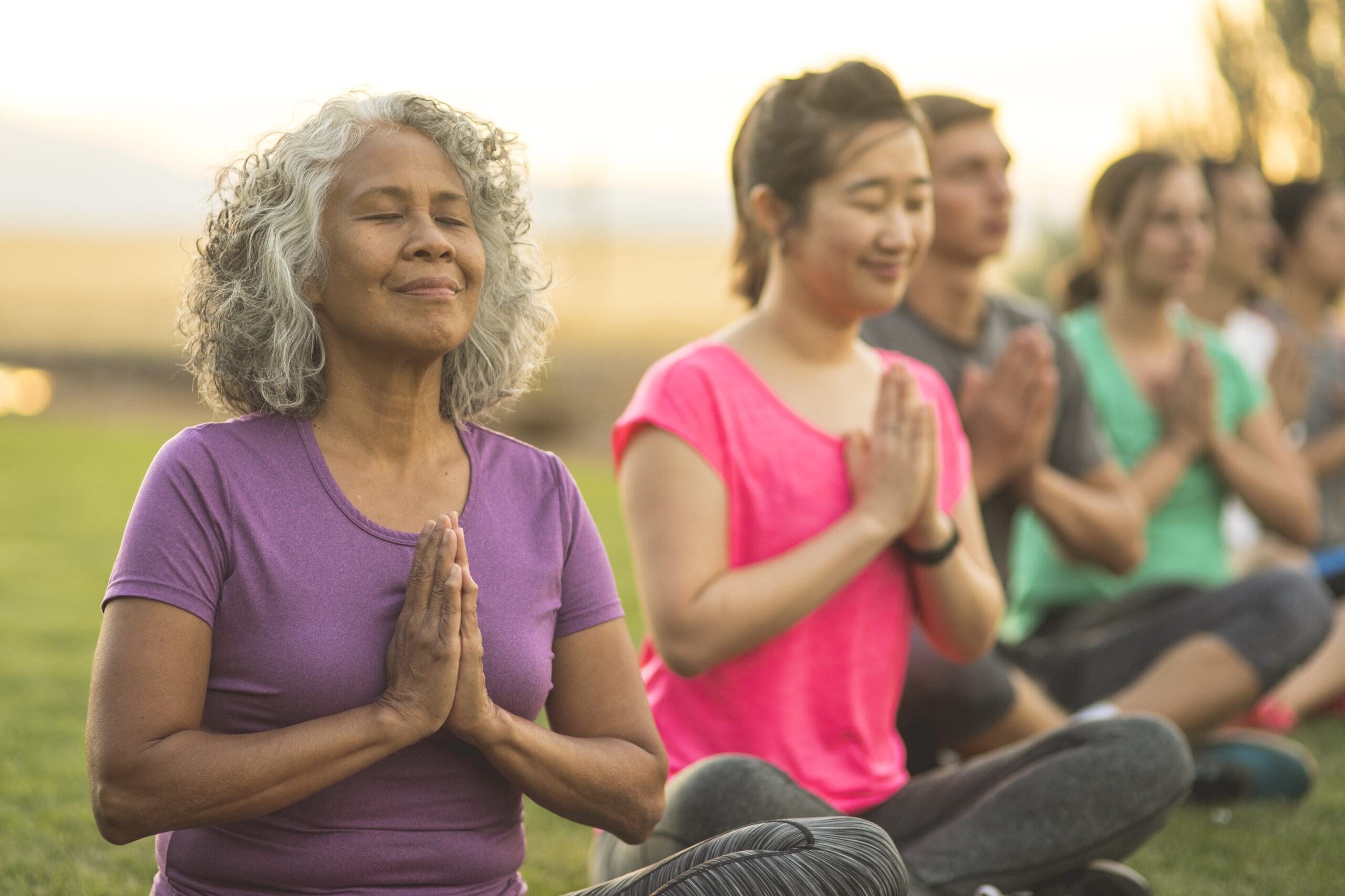
Meditation comes in many forms, which typically involve combinations of postures, breathing, sound, visualizations, and movement. You can learn how to practice meditation on your own, in a group setting, or with a trainer’s guidance, depending on the type of meditation you prefer.
The practice of meditating doesn’t necessarily require a considerable time commitment to reap its benefits; you can choose to meditate one or more times a day for a few minutes or an hour. Experiment with different methods to see which works best for you. Many medical clinics, universities, and community centers offer programs, sometimes free, where you can learn the basics of mindfulness meditation through online courses, videos, and audio recordings. You can also practice regularly with a smartphone app. Below are some resources to try:
- The UC Berkeley Greater Good Science Center offers free guided meditations (select “Mindfulness”).
- The University of Massachusetts Memorial Health Center for Mindfulness offers online programs for a fee.
- The UCLA Mindful Awareness Research Center offers a variety of meditation options, including free drop-in meditation sessions and more in-depth class experiences for a fee. You can also download the UCLA Mindful app at the site or from iTunes or Google Play.
- The Headspace app (monthly or annual fees) can guide you through meditation. You can learn more about it or sign up for a free two-week trial.
- Insight Timer has a free app and online programs that you can stream.