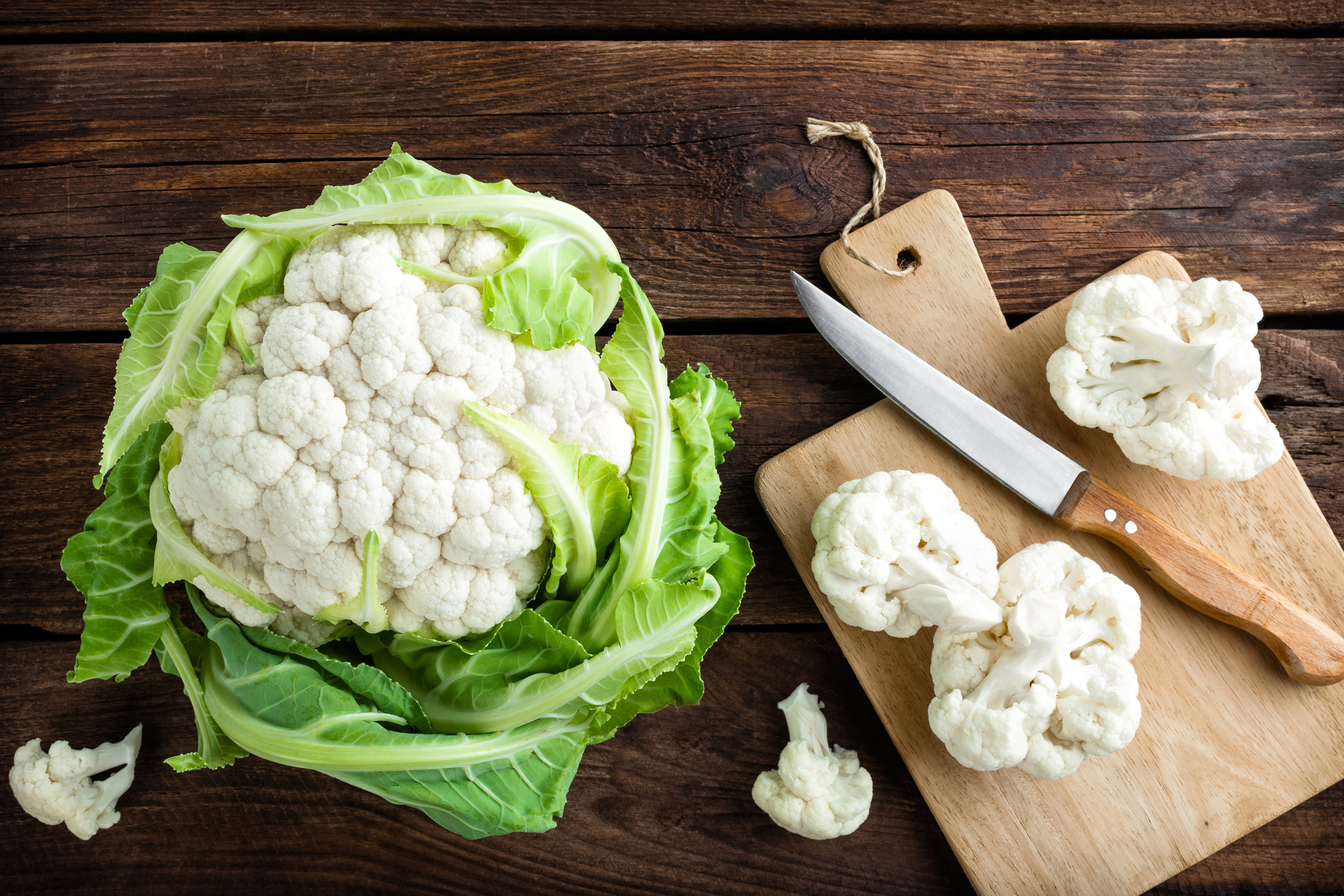
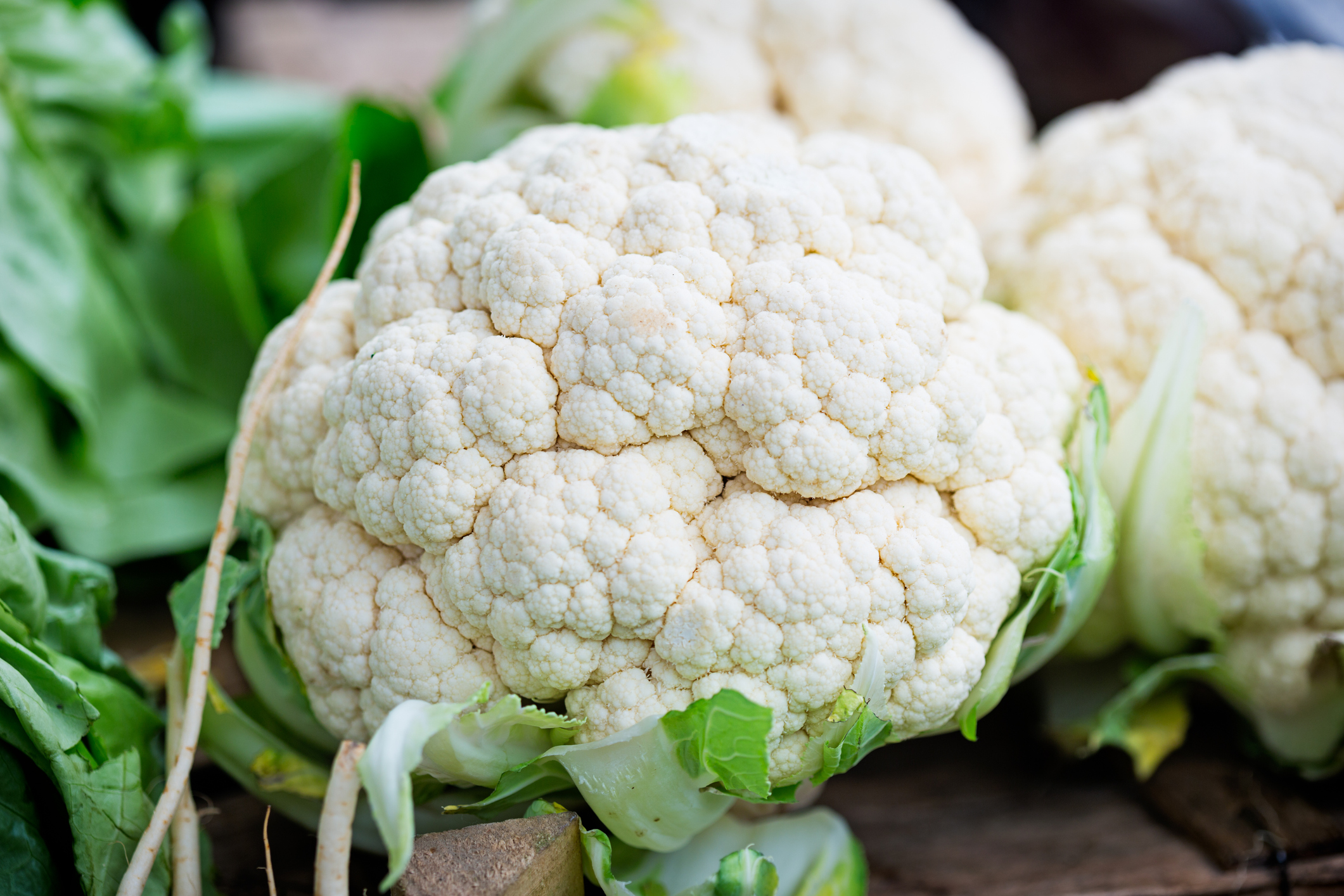
Move over, kale. The latest “It” vegetable has prompted headlines in publications as disparate as Forbes (Is Cauliflower the New Kale?), GQ (Please Stop Calling Things ‘The New Kale’), and even Teen Vogue (4 Reasons Why Cauliflower is the New Kale). Before it was “riced,” added to pizza crust and pretzels, made into gnocchi, and sliced into “steaks,” cauliflower was typically ignored—a victim of its own pale appearance and overall blandness. But now, cauliflower is the center of both a multi-million-dollar business and a controversy that involves a powerful food-industry group.
The perks of being a cauliflower
Like other cruciferous vegetables such as kale, cauliflower has some notable nutrition stats (see below). But its popularity in recent years seems to be less about what it offers than what it lacks—namely, a lot of calories and a strong taste. These qualities make cauliflower an attractive substitute for rice in dishes such as paella and risotto, where it absorbs the flavors of other ingredients, and as a flour alternative for use in pizza crusts, pancakes, muffins, breads, and other baked goods. Such “cauli-flour,” as one company has called it, is also promoted for people who need to avoid gluten because they have celiac disease or gluten intolerance.
These attributes don’t mean all cauliflower products and recipes are healthier in all ways than their non-cauliflower-containing counterparts, however. For instance, ounce for ounce, Caulipower Three Cheese frozen pizza has about the same calories and saturated fat as some other supermarket frozen pizzas—and all are typically high in sodium and not particularly rich in fiber. An online recipe from Green Giant for “Cauliflower Brownies” includes plenty of butter and sugar.
Big business
Some recipes that utilize cauliflower in unorthodox ways start with the fresh vegetable, which is then pulverized into grain-size particles with the help of a food processor. But for those who lack the time, equipment, or desire to tackle a whole head of cauliflower, food manufacturers are happy to do the work for you. A few years ago, Green Giant, the mega-purveyor of packaged produce, debuted its “original chopped cauliflower product,” called Cauliflower Crumbles, followed by a line of Riced Veggies that includes a version made with cauliflower.
Since then, other companies have capitalized on cauliflower’s popularity, including Caulipower, which, in addition to frozen pizzas and pizza crusts, sells cauliflower tortillas, cauliflower pastas, and cauliflower-coated chicken tenders. According to the market research firm Nielsen, dollar sales of products containing cauliflower increased 71 percent in 2017 alone.
“Rice pretenders”
Not everyone is on board with the cauliflower craze. USA Rice, which represents U.S. rice farmers, petitioned the FDA to create a standard of identity for its commodity that would prevent manufacturers of so-called “rice pretenders” from applying the word “rice” to finely chopped, or “crumbled,” cauliflower, which may look like rice but contains no rice at all. A formal complaint sent by the industry group to manufacturers and retailers of these products—and even to cauliflower recipe creators—states that “the way these ‘rice pretenders’ are being marketed, packaged, displayed, and sold trades on the good name, solid nutritional profile, and outstanding environmental record of U.S.-grown rice, intentionally creating consumer confusion that is doing harm to the U.S. rice industry.”
In 2018, the governor of Arkansas signed a resolution calling upon state legislators to establish a statewide standard of identity for rice (as there are for many other grains), which may be the first step toward setting a national standard of identity. A “truth in labeling” law was signed in that state in 2019, banning the use of the term “cauliflower rice” and subjecting manufacturers who mislabel their products to fines.
Cauliflower power
One cup of raw, chopped white cauliflower has about 30 calories, 2 grams of protein, 2 grams of fiber, and negligible fat. It’s an excellent source of vitamin C and a good source of folate and vitamins B6 and K (though less so than some of its cruciferous cousins like broccoli). Similar to other cruciferous vegetables, cauliflower also has an array of phytochemicals—compounds that give plants their color, flavor, and aroma and have potential health benefits. Among them are indoles, glucosinolates, and isothiocyanates, which have been found in lab studies to have anti-cancer properties. Purple cauliflower (see box below) is also rich in anthocyanins, while orange cauliflower has the most beta carotene.
Cooking considerations
As is true with most foods, cooking methods can affect cauliflower’s phytochemical and water-soluble vitamin content. Steaming, microwaving, and stir-frying lead to smaller nutrient losses than boiling. There are plenty of complicated cauliflower recipes on the internet, but you can also cook up this crucifer in simple ways using nutrient- preserving cooking methods. For instance, you can mash steamed or microwaved cauliflower with some low-fat milk, roasted garlic, and olive oil or a touch of butter as an alternative to mashed potatoes; combine mashed cauliflower with milk for a quick soup; or add steamed chopped cauliflower to pasta sauce.
- White cauliflower. To prevent the sun from turning white cauliflower yellow, farmers sometimes tie the biggest leaves over the head when it reaches the size of a tennis ball. Cooking white cauliflower in aluminum will cause it to turn yellow; cooking it in cast iron results in a brown or blue-green color.
- Orange cauliflower. This variety owes its color to a genetic mutation that allows it to hold more beta carotene than its white counterpart.
- Green cauliflower (broccoflower). This is a hybrid of broccoli and cauliflower. One variant is shaped like regular cauliflower; the other (Romanesco) has pointed, conical spiraling clusters of florets. Green cauliflower has more beta carotene than white cauliflower but less than orange cauliflower and broccoli.
- Purple cauliflower. Anthocyanins, the phytochemicals responsible for purple cauliflower’s vibrant hue, are also found in other red, blue, or purple fruits and vegetables, as well as in red wine.
- Caulilini. This newly available cauliflower spinoff has long green stems and pale yellow to light green flowery florets. Good either raw or cooked, it is sweeter and even milder in flavor than regular cauliflower and takes on the flavors of what is added to it. The florets crisp up easily in the oven or cook quickly in a stir-fry or can be served grilled or steamed.