
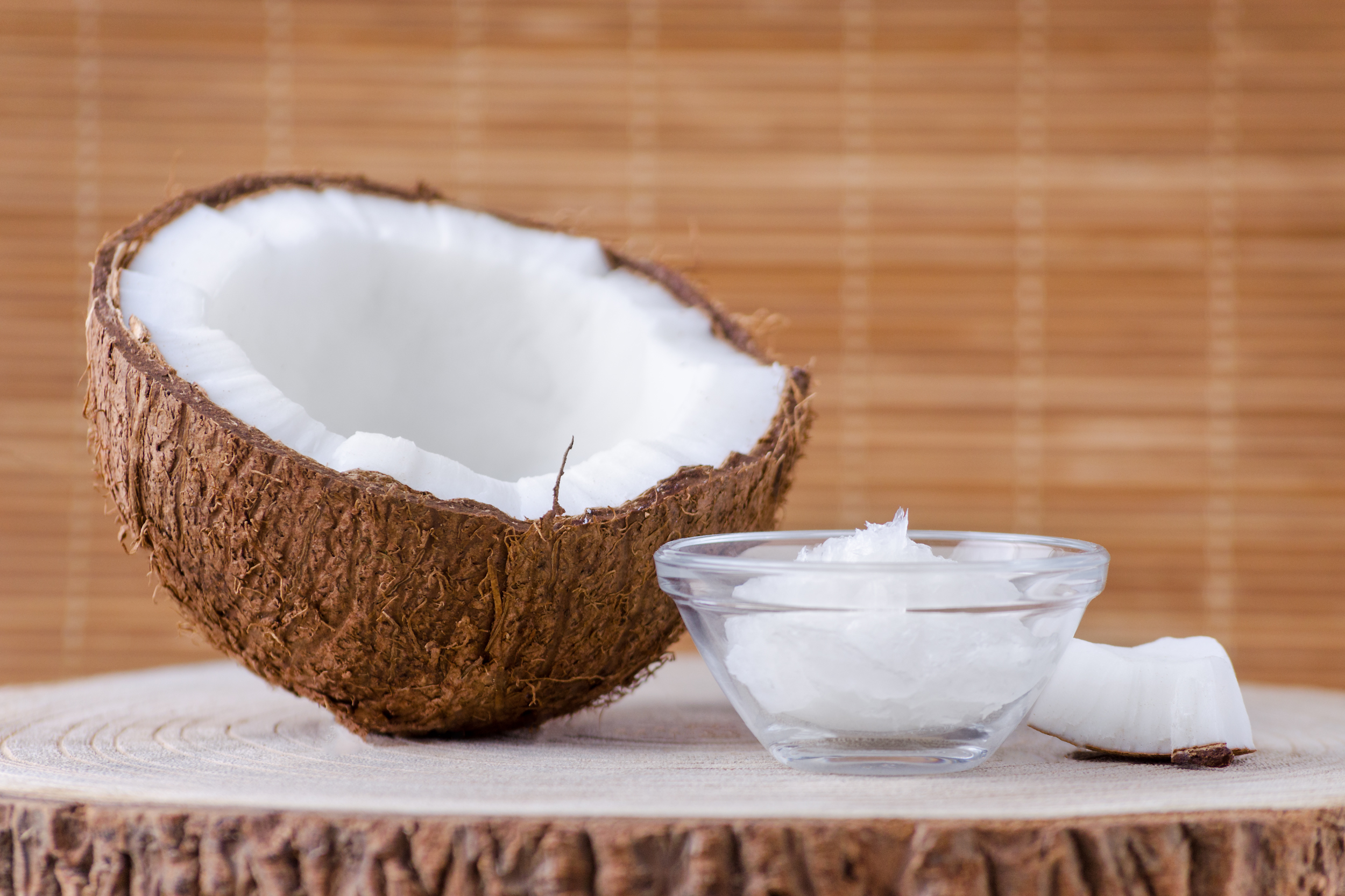
Over the past four decades, coconut oil has been on what you might call a reputation roller coaster. Once favored by manufacturers of processed foods because of its creamy texture, rich flavor, and shelf stability—features afforded by its high saturated fat content—it fell out of favor in the 1980s (along with other tropical oils) with the increased availability and promotion of less-expensive alternatives made from major domestic cash crops, like soybeans and corn. Unfortunately, those replacements turned out to be far worse than tropical oils, since the process used to make them, called partial hydrogenation, also created harmful trans fats (which have since been banned from the U.S. food supply).
Now coconut oil is back in many of the products from which it was previously booted, including crackers, cookies, pie crusts, energy bars, and spreads. It also picked up a reputation along the way as a miracle health food, and it’s a cooking staple in several trendy diet plans, such as Paleo, Whole30, and ketogenic (“keto”) diets.
But could the tide be turning yet again on this popular oil? It may be: Two large studies in early 2020 provided more evidence that coconut oil raises LDL (“bad”) cholesterol, which in turn increases the risk of heart disease.
A clearer look at coconut
The papers are meta-analyses, which combine data from many smaller studies to achieve greater statistical power. In the first one, which appeared in the journal Circulation, the researchers pooled data from 16 clinical trials that tested the effects of coconut oil (added to foods, in cooking, or taken as a supplement) on various cardiovascular risk factors. Compared to non-tropical vegetable oils, such as olive, soybean, safflower, or canola, coconut oil raised LDL cholesterol significantly. Even compared to palm oil, another tropical oil high in saturated fat, coconut oil raised LDL markedly.
Coconut oil had no effect, positive or negative, on other risk factors evaluated, including abdominal fat, blood sugar, and C-reactive protein (a marker of inflammation linked to heart disease risk), compared to other oils. Based on the results, the authors concluded that “coconut oil should not be viewed as healthy oil for cardiovascular disease risk reduction,” and “limiting coconut oil consumption because of its high saturated fat content is warranted.”
The second paper, in Nutrition Reviews, included 12 clinical trials comparing coconut oil to other fat sources—both plant- and animal-derived. It found that coconut oil was better than animal fats (butter, lard) but worse than non-tropical vegetable oils in terms of its LDL-raising effects. Coconut oil had no effect on triglycerides (other fats in the blood). The authors noted that unrefined, or “virgin,” coconut oil didn’t seem to raise LDL the way that standard (refined) coconut oil did.
In both studies, coconut oil raised HDL (“good”) cholesterol slightly in comparison to animal fats and other plant oils (including palm oil), as previous research has consistently found. But it’s not clear whether raising HDL through diet (or drugs) has an effect on cardiovascular disease risk.
The findings add support to an American Heart Association (AHA) advisory released in 2017, which recommends avoiding coconut oil “because coconut oil increases LDL cholesterol, a cause of CVD [cardiovascular disease], and has no known offsetting favorable effects.”
Our advice: These recent meta-analyses, combined with the AHA’s 2017 advice, provide good reason to be cautious about consuming coconut oil regularly, especially if you have risk factors for cardiovascular disease (particularly elevated LDL cholesterol). It’s fine to use sparingly if you like it, especially as a replacement for butter or lard—with unrefined coconut oil (sometimes labeled “virgin,” “extra-virgin,” or “cold pressed”) being a possibly healthier choice than refined versions. But you should rely on unsaturated plant oils, such as olive, canola, soy, and safflower, as your primary oils. Many of the packaged foods that con- tain coconut oil are high-calorie snacks that have little nutritional value anyway.
There is no convincing evidence to support the many and sometimes outrageous health claims made for coconut oil—for instance, that it promotes weight loss, improves digestion, treats AIDS and herpes infections, strengthens immunity, or prevents heart disease, diabetes, arthritis, or Alzheimer’s disease.