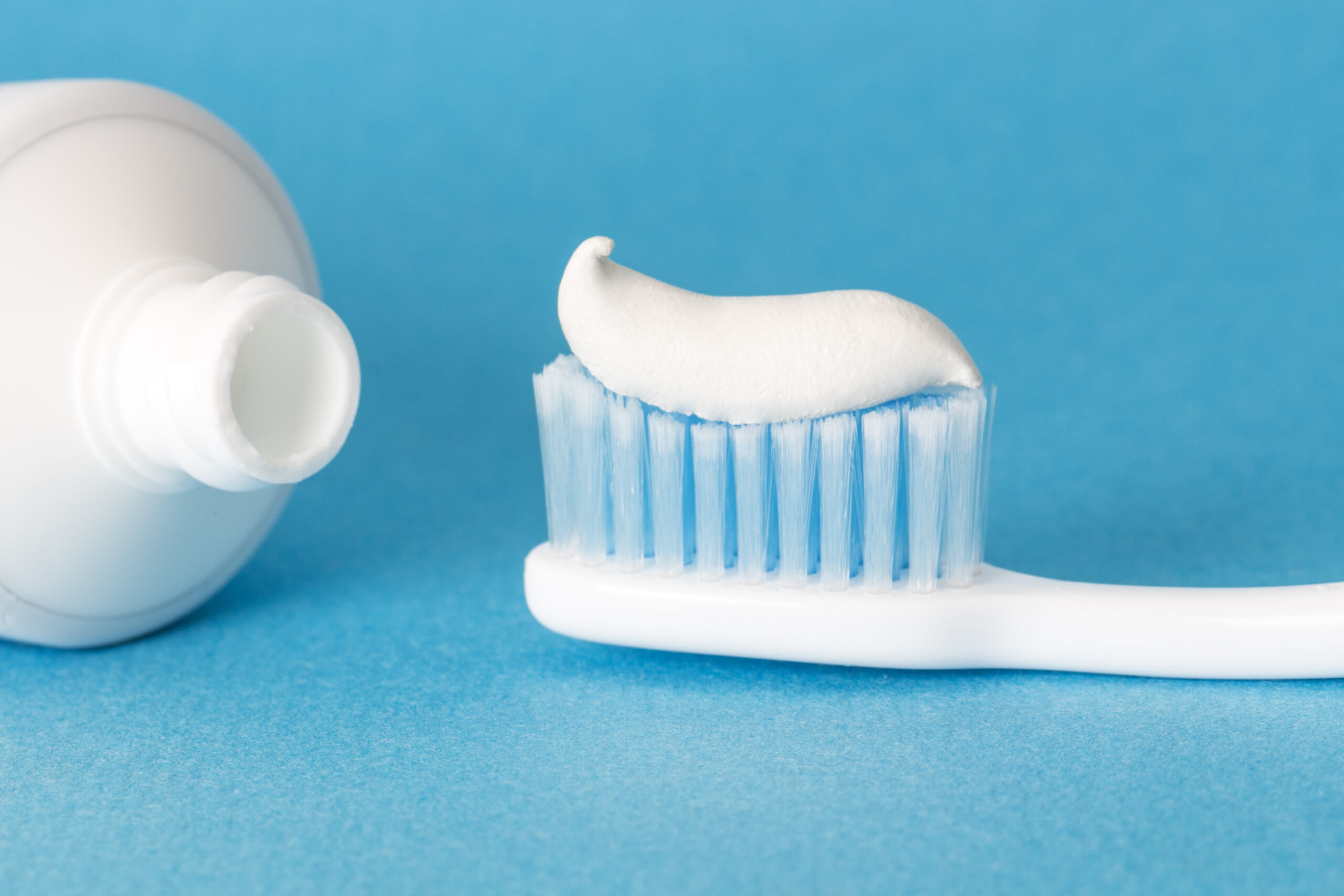
If your teeth hurt when you drink hot or cold beverages or eat icy or spicy foods, for instance, welcome to the hypersensitivity club. To combat the pain, dentists often recommend using toothpastes specifically marketed for sensitive teeth. But the choices can be overwhelming. When we checked the drugstore aisle ourselves, we found more than a dozen desensitizing toothpastes spanning four shelves, most from the brand Sensodyne, which has products named “Rapid Relief,” “Repair & Protect,” and “Complete Protection,” among others. So how do you know which one to buy? Here’s what to look for.
The root of the problem
Tooth sensitivity most often occurs when the dentin—the layer underneath the tooth’s enamel (which covers the crown of the tooth) and cementum (which covers the tooth’s root below the gum line)—becomes exposed, often as a result of gum recession from periodontal disease, overaggressive brushing, tooth grinding, smoking, or exposure to acids from acidic foods or acid reflux. It’s thought that once dentin is exposed, various triggers such as cold or hot foods—or even sweet or spicy ones—shift the balance of fluid in its microscopic channels, called tubules, thereby activating nerve endings in the tooth’s pulp.
What’s in these toothpastes?
Toothpastes for sensitive teeth generally contain stannous fluoride, strontium chloride, or potassium nitrate. Check the ingredients list to make sure at least one of these is present (and, unless you choose one with stannous fluoride, make sure that the toothpaste contains some type of fluoride for cavity protection).
Stannous fluoride works to desensitize by plugging the exposed dentinal tubules. Potassium nitrate is believed to work by acting directly on the nerve root inside the tooth’s pulp, inhibiting the transmission of pain signals to the brain. It’s not fully clear how strontium chloride works, but it may have a mechanism similar to that of stannous fluoride.
Science vs. marketing
The American Dental Association does not endorse one desensitizing ingredient over another or promote specific brands. And some of the names you see on products reflect marketing, not science. For instance, several Sensodyne toothpastes list the same active ingredient and concentration (0.454% stannous fluoride), despite that each one is marketed to do different things (such as provide rapid relief versus repair and protect).
As for proof that the Rapid Relief formula “is engineered for speed, providing fast relief in three days with twice daily brushing,” the company has cited its own data as a reference, not research results published in peer-reviewed scientific journals. That doesn’t mean it doesn’t work faster than other toothpastes formulated for sensitivity, but there are no independent scientific data to support this. The company did not return our e-mail or voicemail requests for further information. And a dental expert we consulted said nothing works in three days anyway.
There are few studies comparing toothpastes for sensitive teeth. In one study from 2011 with 150 participants, published in the Journal of Clinical Dentistry, Colgate Sensitive Pro-Relief, Sensodyne Rapid Relief, and Crest Cavity Protection toothpastes all reduced pain over several weeks of use, as evidenced through touching and blasting air on the sensitive spots. But according to this Colgate-funded study, the Colgate product was most effective.
What to do: Don’t make yourself too crazy over this. Choosing any toothpaste with at least one of the active ingredients for sensitivity should help. Used twice daily, it typically takes a few weeks for the full effects to be achieved (though that varies by the individual), and then the toothpaste has to be used regularly to maintain the benefit. For very sensitive teeth, some dentists recommend putting desensitizing toothpaste right at the gum line and spitting out the excess but not rinsing it out—and then leaving it on overnight. There are also desensitizing oral rinses and strips.
If these products don’t help enough—or if you have severe discomfort limited to just one or two teeth—your dentist can treat you with various topical desensitizing agents or apply a resin-type filling to the eroded or sensitive areas. Your dentist may also recommend a prescription toothpaste to help desensitize roots, which works especially well when other measures are adopted, including using proper brushing technique, eliminating or reducing certain acidic foods (such as citrus, ketchup, vinegar, and white wine), and wearing a nightguard if teeth-clenching is a contributing factor.