In my 50 years as an infectious disease specialist, I’ve more than once been humbled by concrete examples of the adage: The more you know, the more you know you don’t know. A few years ago this was driven home by the emergence of a tick-borne allergic reaction to a food we typically don’t associate with allergies: red meat.
Known as alpha-gal syndrome (AGS), the allergy is an IgE-mediated immune reaction to a type of sugar, galactose-α-1,3-galactose (alpha-gal), found in the tissues of most mammals, but not in humans (or other primates). A bit ironic—food reactions are not often caused by sugar, but by proteins. AGS is caused by a sugar (yes, meat has trace amounts of sugar) and triggered by consuming alpha-gal in some meats, including beef, pork, and lamb; it’s also been less commonly associated with milk and butter consumption. No need to worry about poultry or fish products—these don’t come from mammals.
AGS reactions can range from nuisance (itchy skin, hives), to more severe (diarrhea and vomiting), and even to life-threatening anaphylaxis, with impaired breathing and a drop in blood pressure. While most food-associated allergic reactions occur within 30 minutes of exposure, AGS typically emerges six to eight hours after consuming a substance containing alpha-gal.
We don’t know exactly how tick bites trigger AGS. One theory is that a tick bites an alpha-gal-bearing mammal, then transfers alpha-gal via its saliva to a human host, sensitizing them. It’s also possible that certain bacteria carried by ticks play a role.
AGS is still relatively rare, but reports of it have been growing in the past 15 years or so. Part of this has to do with physician recognition and documentation of AGS, but it’s also likely that case numbers are growing due to a number of intersecting factors.
One is climate change, with milder winters and longer summers making it easier for ticks to survive and reproduce and to expand their range. We’ve also seen increased deer populations—a favorite host for ticks—along with human expansion into wooded areas that brings us into closer contact with ticks, deer, and other wildlife. Since 2010, the Centers for Disease Control and Prevention have documented more than 110,000 suspected cases of AGS, but some experts think the number might be several times greater.
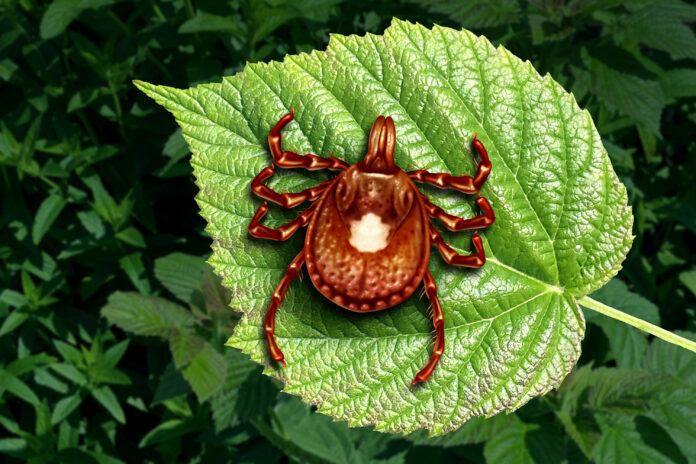
In the U.S., AGS is most closely associated with the aggressive tick Amblyomma americanum, also known as the lone star tick. Most cases have been documented in the mid-Atlantic, midwestern, and southern regions of the country.
Lately though, alpha-gal has been found in the saliva of tick species other than the lone star tick, and cases have been reported west of the previously identified range. With humans traveling the way we do, it’s hard to say the Oregonian with AGS didn’t pick it up in Delaware, but a case report describes AGS in a woman bitten by ticks in Washington who had no recent travel to states where lone star ticks are found.
Given the relatively long lag time between exposure and reaction, it may be challenging to suspect AGS, especially if you don’t remember or are not aware of having been bitten by a tick. But if you have a reaction several hours after eating meat, see your doctor, who may refer you to an allergist (of course, if you experience symptoms of anaphylaxis like difficulty breathing, you should seek emergency medical care immediately). The alpha-gal IgE blood test can help in diagnosis, but it should always be interpreted in the context of your symptoms and medical history. And if the test is inconclusive or negative, you should still avoid red meat if you’ve had a severe reaction to it, because we don’t have sufficient experience with this blood test to have it be the sole determinate of clinical advice.
Over time, avoiding alpha-gal–containing products (meat, dairy, and medications made with mammalian ingredients, including certain gel capsules) and preventing additional tick bites can improve AGS, and it may be possible to slowly reintroduce those items as antibodies decline. But the best plan of action is to not get bitten in the first place. While avoiding grassy or wooded areas can help, keep in mind that ticks can be in other places, too, including your own backyard. Thus, anyone who spends time outside should beef up (sorry, couldn’t resist) on how to prevent tick bites—including using insect repellent when out in nature, treating clothing with permethrin, staying in the center of trails, and checking for ticks after coming indoors. Other recommendations are to wear light-colored clothing (to better spot a tick if one lands on you) and long sleeves, and to tuck your pant legs into your socks.