I have these growths on my neck and under my arms. Is an at-home skin tag remover a safe way to get rid of them?
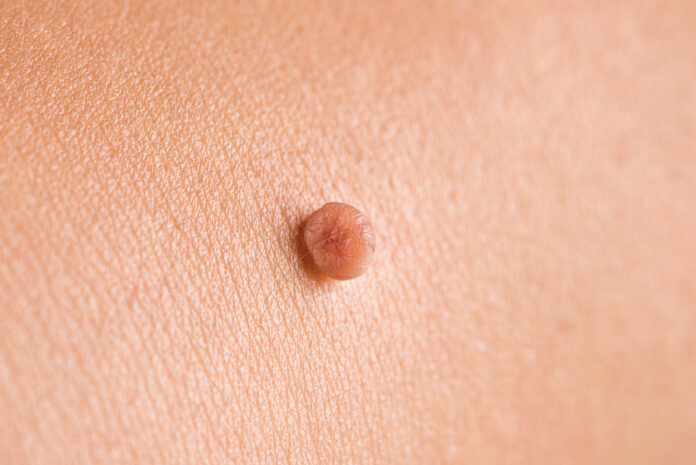
Skin tags (acrochordons) are extremely common, affecting more than half of the population. You’ll find these skin-colored growths in neck creases, under your arms, under your breasts, or on your eyelids. It’s understandable to want to remove them. Not only are they unsightly, but they can get irritated when they rub against your clothing or jewelry. Even so, a home skin tag remover that you buy at a drugstore or online isn’t the safest way to get rid of them. These do-it-yourself products could leave you with skin injuries and scars.
Skin tags form from the friction of skin rubbing against skin. They’re especially prevalent in people who are overweight or pregnant, or who have diabetes. While they might not be pleasing to look at, skin tags are harmless. They’re not cancer and they won’t turn into cancer (although they may sometimes be hard to tell apart from cancerous moles). You don’t need to remove a skin tag but may wish to if it’s irritated from shaving or from rubbing against your clothing, bleeding, or painful, or if it’s on your eyelid and obscuring your vision.
Many of the over-the-counter products work by freezing off the growth or destroying the tissue so that it falls off, but be aware that the FDA hasn’t approved any of them. In fact, the agency expressed serious concerns about their safety, and in 2020 and 2022, it sent warning letters about possible risks to some of the companies that sell them.
A 2023 report in the Journal of Clinical and Aesthetic Dermatology highlights some of the serious skin injuries linked to mole and skin tag removers sold on Amazon. Of particular concern are ingredients like Sanguinaria canadensis (bloodroot), zinc chloride, salicylic acid, and cashew and fig, which have been known to cause burns, pain, and skin sores. Some injuries caused permanent disfigurement. There was one report of a death from a self-treated growth (mole) that was ultimately confirmed to be melanoma skin cancer.
It’s important to note that manufacturers of these products often don’t report adverse events to the FDA, which means the true number of side effects is likely much higher.
Home skin tag remedies like tea tree oil, castor oil, and apple cider vinegar aren’t recommended either. There’s no evidence to confirm they work, and they can be irritating to the skin. Some people try to snip off a skin tag with a pair of scissors, but we don’t recommend that since it can cause infection if the scissors aren’t properly disinfected.
To avoid doing serious harm to your skin, see a dermatologist about any new or unwanted growths. The doctor can first confirm that what you have is a skin tag and not skin cancer. If you have many skin tags, your doctor might recommend other tests, since these growths can sometimes be a warning sign of metabolic issues such as insulin resistance, type 2 diabetes, high cholesterol, or high triglycerides.
Removing a skin tag is a simple in-office procedure that involves freezing it off (cryotherapy), zapping it with an electric current (electrodessication), or snipping it off with surgical scissors. Insurance generally won’t cover the cost unless it’s medically necessary (for example, because it’s causing symptoms or affecting your vision).
What to do. No matter how much a skin tag bothers you, don’t try to treat it at home. Never snip one off yourself. It’s always better to consult a dermatologist, who can make sure that what you have is really a skin tag and not something more serious, and then remove it without causing an infection or damaging the surrounding skin.