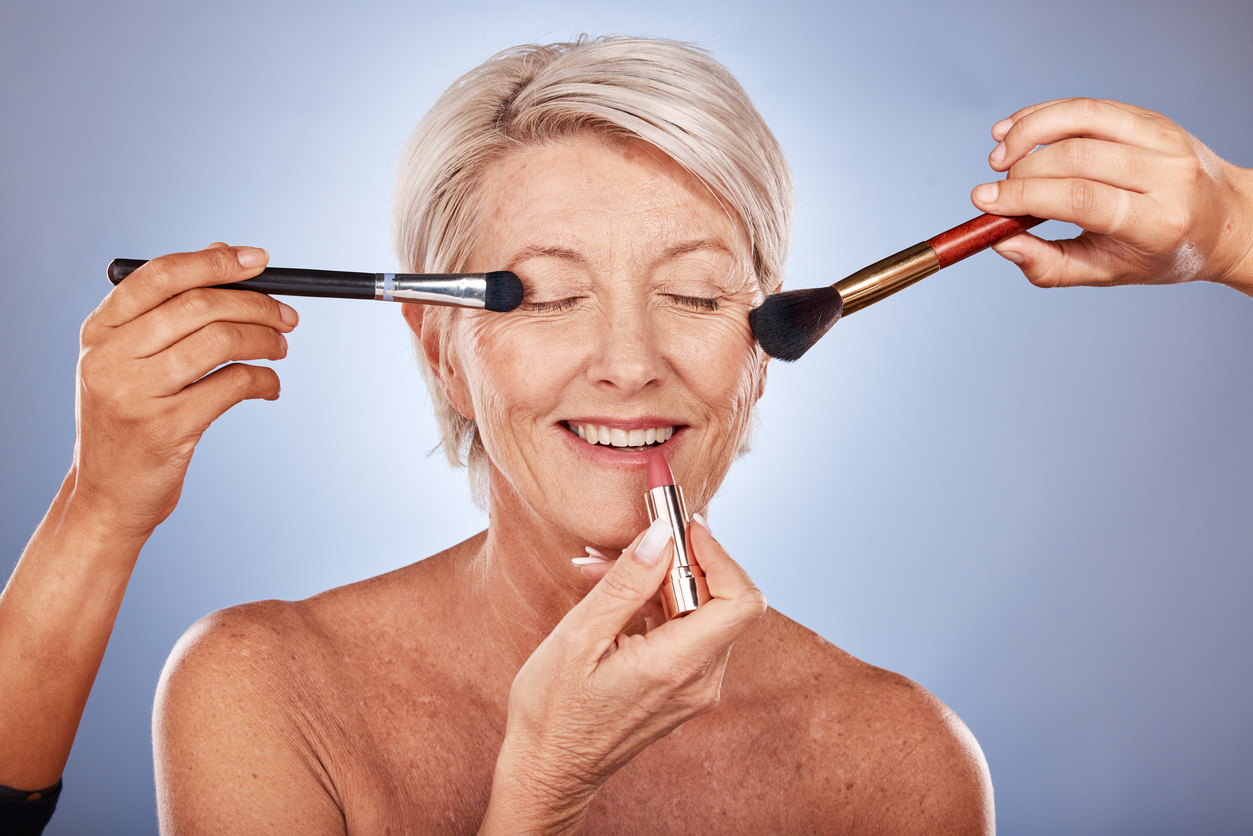
Our collective quest for glowing, age-defiant skin with perfect contour and just the right glow has spawned a $424 billion (and growing) global cosmetics market. Companies market their makeup brands, as well as hair care and skin care products, as a way to make us more attractive, restore a youthful look, and boost self-esteem.
In industry terms, “cosmetics” refer to beauty products that include makeup (like foundation, lipstick, blush, and mascara) and nail polish, along with other products like shampoo, conditioner, hair dyes, and lotions designed to help enhance one’s appearance. All fall under the category of personal care products.
But lurking in the midst of many cosmetics are dozens of chemicals that have been linked to harmful health effects. The average American adult uses 12 different personal care products each day, including cosmetics. These products could contain 112 different chemicals, some of which may pose health risks. Studies have confirmed the toxicity of some of these ingredients with a high degree of certainty. For other ingredients, the risk is still in question.
Short-term exposure to toxic substances can cause skin irritation and allergic reactions. Long-term exposure has the potential to disrupt hormones, damage the reproductive and nervous systems, and increase the risk for cancer, among other detrimental effects.
A little sleuthing can reveal whether any of the beauty products you use are toxic. Fortunately, alternatives with safer ingredients are available.
The “toxic 12”
The Environmental Working Group (EWG), a nonprofit organization focused on protecting human health from dangerous chemicals through research and advocacy, has compiled a list of toxic cosmetic ingredients and contaminants for consumers to avoid:
Phthalates. These oily liquids are also called “plasticizers” because they give products like nail polish and lotion a plastic-like durability and smoothness. Phthalates are known hormone disruptors, meaning they act like or alter the function of hormones in the body. High levels of exposure are associated with an increased risk for cancer, including hormone receptor–positive breast cancer. The concentration of phthalates that correlates with this risk is difficult to quantify because it varies by frequency of use, age, and other factors.
Formaldehyde. This chemical is an ingredient in some lotions, nail polishes, and hair straightening treatments. Formaldehyde exposure is linked to throat and nasal cancers, as well as to certain types of leukemia among people who are exposed on the job. Also included on EWG’s list are paraformaldehyde and methylene glycol, which are other forms of formaldehyde, as well as quaternium 15, a preservative that releases formaldehyde.
Parabens. The cosmetics industry adds these preservatives to lotions, shampoos, and conditioners to prevent bacterial growth. Parabens are associated with several harmful effects, including hormone disruption, reproductive problems, allergies, and cancer.
Mercury and other heavy metals. Mercury is an ingredient in skin lighteners and anti-aging creams designed to diminish age spots and wrinkles. It is highly toxic to the central nervous system and kidneys. The FDA doesn’t allow mercury in cosmetics, but it can be an ingredient in products made in other countries and sold online or illegally in the United States.
Other heavy metals, such as lead, arsenic, and cadmium, are found in some moisturizers, nail polishes, concealers, lipsticks, and eyeliners. These metals are also dangerous, even at low doses and after brief exposures. Lead exposure has been linked to learning disabilities and developmental delays in children, as well as to reduced fertility in men and women. Cosmetics manufacturers often add lead to products like lipstick as a colorant. According to the FDA, more than 99 percent of lipsticks contain lead levels below 10 parts per million (ppm), which is below the 10 to 20 ppm threshold allowed, but they could still be dangerous when used regularly because lead accumulates in the body.
PFAS. Better known as “forever chemicals” because they don’t break down in the body or the environment, perfluoroalkyl and polyfluoroalkyl substances (PFAS) are a group of nearly 15,000 chemicals, some of which are associated with increased cancer risks. Manufacturers put them in lipsticks, eyeshadows, moisturizers, and nail polish to make these products shiny. The FDA banned PFAS from food packaging in 2024. California now prohibits the sale of cosmetics containing PFAS, and other states are following suit (some states are also banning these chemicals from nonstick cookware)—but the patchwork of regulations governing these substances across the country makes PFAS difficult to track.
M- and o-phenylenediamine. Used in hair dyes, these color precursors are linked to an increased risk for allergic reactions, gene changes, and possibly bladder cancer.
You might assume that beauty products labeled “natural” are better for you, but that’s not necessarily the case. Even naturally derived ingredients could be harmful, especially if you’re sensitive to them. For example, essential oils can irritate the skin. And some natural ingredients interact with human-made chemicals in ways that increase their toxicity. To be safe, consult with a dermatologist about any cosmetics you’re unsure about before using them.
Who’s minding the store?
Although the FDA regulates color additives (with a few exceptions), it doesn’t approve cosmetics before they’re sold, as it does medications. And it doesn’t require companies to test the safety of their products or the ingredients those products contain before putting them on the market. According to the FDA, the responsibility for ensuring product safety lies with the manufacturers.
One exception is cosmetics that prevent or treat a condition, which the FDA does regulate. An example is makeup with sun protection.
Manufacturers are supposed to ensure their cosmetics are safe for consumers during typical use, label them with a list of ingredients (although some chemicals—including phthalates—may not have to be listed individually if they’re components of fragrance), and report any adverse events (such as serious allergic reactions) to the FDA. However, the government doesn’t set limits on the amount of chemicals contained in these products, even if they are known or suspected to increase health risks.
Only 11 ingredients are banned in the U.S., including chloroform and methylene chloride (solvents), hexachlorophene (a preservative), bithionol (an antimicrobial), mercury compounds, and unapproved color additives. By contrast, the European Union prohibits or restricts more than 1,300 cosmetic ingredients, and Canada has banned around 500 ingredients.
Safety over beauty
How do you sort through the thousands of beauty products on the market to determine which ones are safe and which ones aren’t?
You could read the labels, but it may be hard to distinguish safe from unsafe ingredients without a medical or scientific background. Also, some ingredients are disguised by generic terms like “fragrance,” which indicates a blend of components that companies aren’t required to disclose.
The good news is that a few organizations have done the investigative work for you.
- EWG’s Skin Deep database is a free resource that includes ingredient safety information on more than 137,000 personal care products (including makeup and other beauty products), 2,434 of which have been verified safe by the organization’s team of scientists. EWG gives each ingredient and product a score from 1 (least hazardous) to 10 (most hazardous), based on whether it is linked to cancer, allergies, harm to the brain and nervous system, organ toxicity, irritation, or other health risks. Products meeting the organization’s strict standards, meaning they don’t contain any ingredients EWG deems “unacceptable” and they follow good manufacturing practices to ensure safety, are labeled with an “EWG Verified” mark. Critics of EWG state that it sometimes cherry-picks data, and it shouldn’t be the final word on cosmetics safety. It’s best to cross-check the products you use with other review organizations.
- The Cosmetic Ingredient Review (CIR) is a program that evaluates the safety of ingredients used in cosmetics sold in the U.S. Although it’s funded by the cosmetics industry, CIR has an independent review panel made up of experts in dermatology, toxicology, and pharmacology. CIR offers a free searchable database of cosmetic ingredients.
- Ecocert is a global company that certifies organic and natural products. It guarantees that cosmetics with the COSMOS label are free from ingredients like parabens, perfumes, and artificial colors.
- Products with the “Made Safe” seal have been screened through an independent scientific process to ensure they either avoid or limit over 15,000 potentially hazardous substances. Made Safe’s free, searchable certified catalog includes hundreds of personal care items (and other products).
- INCIDecoder is another helpful tool for deciphering the safety of your favorite cosmetics. Type in the name of an ingredient, and the database will bring up a description of its benefits and risks.
BOTTOM LINE: You don’t have to give up your beauty routine, but consider alternatives made without the questionable ingredients. Search organizations that track cosmetic ingredients (those listed above) before you buy. If you are partial to a certain makeup or other beauty product brand that contains potentially risky ingredients, contact the company about your concerns, learn their justification, and use the product sparingly, since frequent use translates into greater exposures.