I’ll never forget hugging my grandparents as a child and catching a whiff of something reminiscent of mothballs and musty wet leaves. Now that I’m in my early 80s, I feel like I have taken on that smell myself. Is “old person smell” really real, and can I do anything about it?
The odor that popular culture has described as “old person smell” is no myth. The Japanese even have a name for it: kareishu. While you can’t wash off or mask the scent, there are things you can do to smell more like your former self again (see below).
Body scent later in life is so distinctive that in one study, blindfolded young people were able to distinguish older (75 to 95 years old) adults from younger (20 to 30 years old) and middle-aged (45 to 55 years old) adults by the scent of their sweat alone.
Why does our smell change with age? Human body odor differs from one stage of life to another. Those changes are why parents have to hold their noses when entering their teenager’s bedroom, and why some older adults may develop the distinct smell that’s sometimes associated with nursing homes.
Scientists have pinpointed the cause of these scent changes. The sebaceous glands in the skin produce sebum, an oily substance that helps retain moisture. As we age—and natural antioxidant levels decline—the fatty acids in sebum oxidize, leading to the formation of a compound called 2-nonenal, which has a grassy or greasy, slightly musty odor. In addition, because older skin sheds dead cells more slowly—and molecules like 2-nonenal tend to linger—the scent can stay on the skin longer. Hormonal changes with aging can also affect the amount and composition of skin oils, further influencing body smell.
If you, or the people around you, have noticed a change in your body odor, showering or bathing more frequently won’t get rid of it. Poor hygiene has nothing to do with “old person smell,” which isn’t caused by dirt or bacteria (though laundering clothing more often could help by removing buildup of n-nonenal). Drowning yourself in perfume or cologne won’t work either. It will only add another strong aroma to the one you already have.
Rather, experts suggest combating the issue from inside (not outside) your body, by making a few changes to your diet.
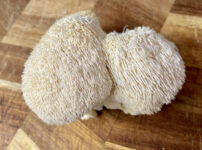
One suggestion is to eat more mushrooms. These edible fungi have the potential to neutralize body odor because they block substances like ammonia nitrogen that form in the body as metabolic byproducts and contribute to the smell. A study from Japan that was published in the Journal of Traditional and Complementary Medicine involving 80 men and women ages 50 to 79 found that those who took 50, 500, and 1,000 milligrams a day of champignon (mushroom) extract tended to have improved body odor (based on the scent of their pillow and pajamas), as well as fresher-smelling breath and less-stinky poop. It’s important to note that this study was small, which makes it difficult to draw any firm conclusions.
Mushrooms don’t just help you smell better. Some of them (such as shiitake and Lion’s mane) may also be especially good for your health, thanks to plant compounds with antioxidant, anticancer, and immune-regulating effects. In addition, mushrooms are a natural source of spermidine, a substance that helps to remove damaged cells and may have anti-aging benefits.
Another suggestion is to limit foods that contribute to body odor. Garlic, onion, cruciferous vegetables like broccoli and Brussels sprouts, and spices like curry and cumin can infuse sweat, skin, and breath with an unpleasant funk.
BOTTOM LINE: “Old person smell” is real—but it isn’t necessarily unpleasant. If diet changes don’t help, it might be best to make peace with it and accept it as something that comes with the good fortune of a long life.