The idea that pollution is harming human health is nothing new. Scientists have long warned that exposure to fine particulate matter from industrial and vehicle emissions increases the risk for cancer, lung disease, cardiovascular disease, and other conditions.
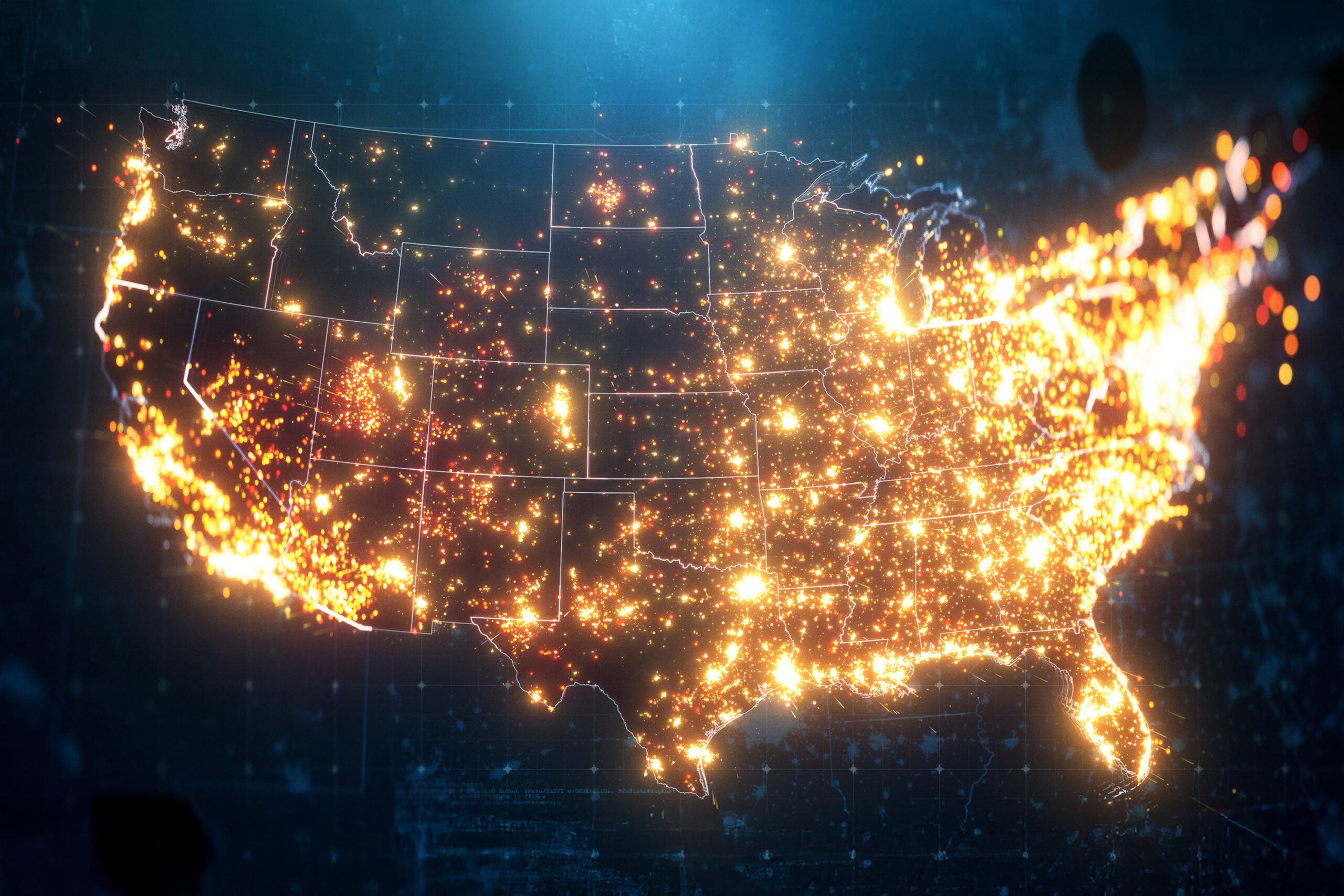
Less publicized, but also concerning, are the risks of light pollution—the excessive use of artificial light at night (LAN) to illuminate our world. Around 80 percent of the world’s population, and more than 99 percent of those living in the United States and Europe, are exposed to light-polluted skies, according to a 2016 study in Science Advances. Our exposure to light pollution has been increasing by 3 to 6 percent each year in recent decades.
For much of the world, electric light from homes, businesses, and public areas obscures the night sky, disrupts circadian rhythms, and potentially contributes to several health risks, including cancer, obesity, sleep disorders, and depression.
Light and circadian rhythms
For most of human existence—roughly the past 300,000 years—light and dark were controlled by nature. As the Earth spun on its axis toward the sun, there was daylight. As it rotated away from the sun, it was dark.
Our internal clocks synced with this 24-hour cycle of light and dark in a pattern called circadian rhythms. These rhythms govern many of the body’s internal processes, such as sleep, hormone release, temperature regulation, and cell division.
Exposure to even low levels of LAN—both outdoor and indoor (including from smartphones, TVs, and other devices)—disrupts the circadian clock in ways that may be detrimental to our health.
Cancer
The circadian clock regulates cell growth and division, ensuring that cells only replicate when needed. Researchers have theorized that a disruption in this clock might affect biological pathways that play a role in cancer development—for example, by altering hormone signaling, cell proliferation, DNA repair, and inflammation.
The earliest research done on LAN and cancer risk was conducted in shift workers, whose jobs require them to be awake at night. So far, the best evidence of a potential link is with breast cancer, according to a 2020 review in the International Journal of Molecular Sciences. The relationship to other cancers in humans isn’t as well established, but studies done in mice and rats have shown a more significant association between LAN and cancer growth.
Cardiovascular disease
Exposure to light at night may have detrimental effects on the cardiovascular system, including the heart. For a 2021 study that was published in the European Heart Journal, researchers in Hong Kong looked at health data from 58,692 adults ages 65 and older for an average of 11 years, and estimated participants’ LAN exposure based on their address. The risk of coronary heart disease hospitalizations was 23 percent higher, and the risk of dying from heart disease was 29 percent higher, in the group that had the highest levels of outdoor light at night outside their homes.
Experts say a disruption in circadian rhythms may harm the heart by promoting inflammation, damaging blood vessels, and increasing the risk for blood clots that cause heart attack and stroke. But light pollution can’t be solely responsible for these effects—rather, it likely acts in tandem with other environmental factors such as air pollution and noise pollution.
Weight gain
Obesity is a global health crisis that has reached epidemic proportions. In the U.S., more than 40 percent of adults are obese. Many factors have been implicated in excess weight gain, including LAN.
A study published in Environmental Health in 2020 included health data from nearly 240,000 people (ages 50 to 71) who initially weren’t obese. The authors found that those with the highest exposure to LAN were 15 percent more likely to develop obesity over the 10-year study period than the participants who had the lowest exposure. One possible reason for the increased risk is the effect that circadian rhythm disruptions have on hormones like leptin, cortisol, and insulin, which play a role in satiety and weight gain.
Sleep
Melatonin is a hormone released by the brain when it gets dark outside and suppressed when daylight arrives. It helps regulate the sleep–wake cycle by signaling your body when it’s time to sleep and wake. Artificial light at night—particularly sources that emit short-wavelength blue light, such as many LEDs and screens—can suppress melatonin because the circadian system is highly sensitive to these wavelengths. This can reduce both the quantity and quality of sleep.
A 2024 JAMA Network Open study from China—a country that has seen the most growth in artificial nighttime light of any country—illustrated the effects of light exposure on sleep by using data from social media. The researchers found that there were more insomnia-related posts over a one-year period in areas with higher artificial light exposure at night.
Mood disorders
The drop in melatonin levels and disruption of circadian rhythms from light pollution might also be affecting our mental health. According to a 2024 review in Brain Sciences, people living in areas with higher outdoor light levels at night were more likely to exhibit symptoms of depression and suicidal behaviors. More intense light exposure was associated with more severe depression symptoms. Light pollution also appears to contribute to manic episodes in people with bipolar disorder.
Early death
Excessive light exposure has even been linked to premature death. In a study published in BMC Medicine in 2023, researchers in China looked at daily records of artificial light at night between 2015 and 2019 and found an association between higher daily artificial light exposure and deaths from natural causes.
The greatest effects were on deaths caused by neurological disorders like Parkinson’s disease and Alzheimer’s disease. Circadian rhythm disruptions have been associated with the buildup of harmful proteins and nerve damage in the brain that contribute to these conditions. The authors also found a higher risk of dying from cancer, urologic disorders, and digestive, cardiovascular, and respiratory diseases.
It’s important to note that the studies cited above were all observational. They don’t prove that artificial light exposure, and not other environmental or socioeconomic factors, caused these outcomes. While researchers try to control for such factors, they can’t control for all of them.
Most people around the world live under light-polluted skies, according to researchers who used “dedicated light pollution propagation software” to create a “world atlas of artificial sky.”
Still, while it’s difficult to find places in the U.S. with zero light pollution, states in the western part of the country, including Utah, Arizona, and Nevada, offer some of the lowest levels and the best stargazing opportunities. Nineteen states, from Arkansas, California, and Connecticut to Florida, Maryland, and New York, have passed various laws aimed at reducing light pollution.
Snuffing out the light
Light pollution is a global problem that requires big solutions. While you can’t dim all the lights in your town or neighborhood, you can control your immediate nighttime environment. Here are some tips.
- Reduce outdoor lighting. Limit the number of outdoor lights around your home. For the lights you do install, use warm-colored light-emitting diodes (LEDs). They emit less blue light so they won’t affect circadian rhythms as much as white LED lights, and they’ll save energy. Make sure all lights point down instead of up into the sky. And turn off outside lights—for example, by using timers or motion sensors—when you don’t need them.
- Dim indoor lights. Also use dimmers, motion sensors, and timers to turn off inside lights when you’re not in the room. Close blinds and shades or use blackout blinds to prevent outdoor light from seeping in and indoor light from seeping out.
- Limit night driving. Headlights contribute to light pollution.
- Use night mode on devices. Adjust your phone, computer, and tablet displays to night mode to reduce brightness and shift screen lighting to warmer tones in the evening. Not only will this cut down on light pollution in your home, but it will reduce eye strain and make it easier to fall asleep. Better yet, turn off your screens a couple of hours before bedtime.
- Wear protective glasses. To shield yourself from the effects of artificial lighting, put on blue light-blocking glasses if you work a night shift or use your electronic devices a lot at night.
BOTTOM LINE: Whether you live in the city, the suburbs, or a small town, you’re likely surrounded by some degree of light pollution. You may not be able to eliminate it all, but you can reduce your exposure by dimming lights, closing shades, and turning screens off at night. Though not proven, limiting your light exposure at night might help prevent a range of health conditions—as well as help you sleep better.