
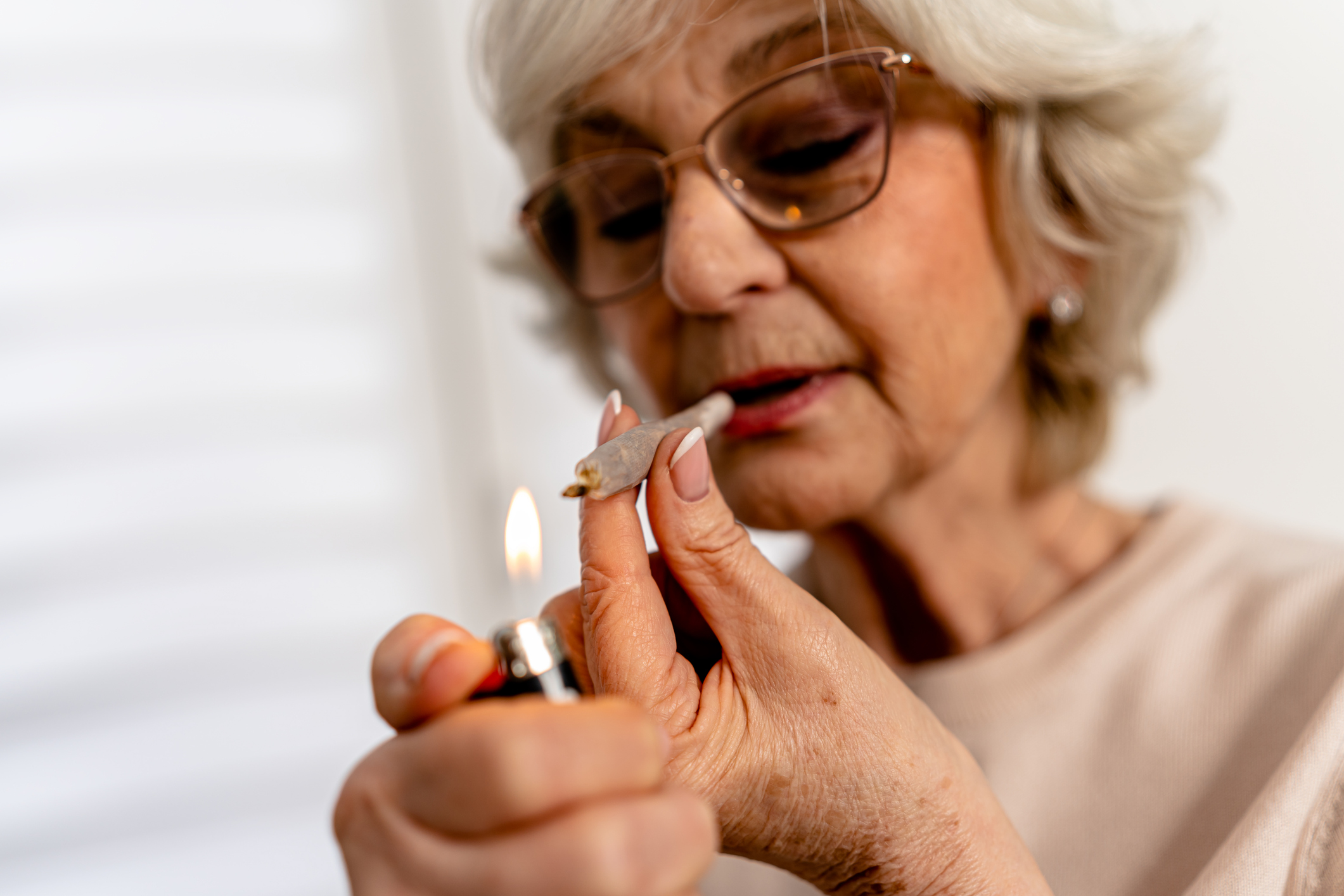
A good night’s sleep can feel even more elusive as we age. Many people turn to sleeping aids or alcohol to help them fall and stay asleep. Nearly all states (47, plus the District of Columbia) allow medical marijuana use, and 24 plus D.C. allow it recreationally. With this increase in access and acceptance, some older Americans are using various forms of this drug before bedtime, at least every now and then.
The 2024 National Poll on Healthy Aging, conducted by the University of Michigan in partnership with AARP, found that more than 10 percent of adults ages 50 and older had used marijuana at least once a month in the previous year. Among those with any marijuana use in that time, “to help with sleep” was the second-most common reason, reported by nearly 70 percent of them.
And a 2025 survey of 1,300 adults by the National Sleep Foundation found that 9 percent currently use marijuana as a sleep aid, 17 percent have ever used it, and 23 percent are likely to try it.
In another survey, of 1,216 adults who use marijuana for sleep, participants said they awakened feeling more refreshed and focused, compared to when they use prescription or OTC sleep aids.
Is marijuana something that might actually help you get a quality night’s sleep—or should you just say no?
Sleepy substances
Marijuana (from the cannabis plant) contains more than 100 cannabinoid compounds, including tetrahydrocannabinol (THC) and cannabidiol (CBD), which act similarly to natural substances in the brain that are linked to pain sensations, appetite, and mood.
The buzz comes from the THC component of marijuana, while CBD, which is also marketed for sleep/insomnia, does not have psychoactive properties.
It’s thought that THC and CBD, along with the other cannabinoids, can increase levels of adenosine (a neurotransmitter that helps signal the need for sleep) and suppress the brain’s arousal system, making you feel sleepy. The amounts of THC and CBD vary among cannabis plants, and the ratio matters, says Jana Cooke, MD, of the Sleep Diagnostics NW clinic in Arlington, Washington, and a member of our editorial board.
“Patients should educate themselves about the differences between THC and CBD,” says Dr. Cooke. “The ‘bud master’ at a dispensary should be able to help people determine what’s best for them. Some studies show that use of higher-than-average doses of CBD in older adults may decrease how long it takes to fall asleep and how many times you wake up during the night, while lower doses actually increase wakefulness.”
What’s the evidence?
Research into using marijuana for better-quality sleep has been inconsistent. A 2023 review article in the Journal of Clinical Sleep Medicine that looked at 28 articles found that 18 percent reported improved sleep with marijuana use, 50 percent reported worse sleep, 14 percent reported mixed results, and 18 percent saw no effect.
A small Canadian study, published in Canadian Pharmacists Journal in 2022, looked at 38 people who were taking or began taking medical marijuana for insomnia at the start of the study. Fifteen of them (39 percent) were able to discontinue prescription sleep aids, and three months later, 27 participants (71 percent) reported improvements in sleep. Eight participants (21 percent) reported experiencing negative side effects, but these were manageable without them needing to stop their use of marijuana.
An analysis of data from the National Health and Nutrition Examination Survey (NHANES), conducted between 2005 and 2018, found that adults who reported using marijuana in the previous 30 days (“recent users”) were more likely than non-users to report both short sleep (less than six hours a night) and long sleep (more than nine hours). Heavy marijuana users (20 or more times in the previous 30 days) were even more likely to be at either extreme of sleep duration. The researchers speculate that the dose of marijuana may play a role, and some trial and error may be required to achieve an optimal sleep duration.
From oils to edibles: Does the delivery system matter?
Marijuana is often inhaled by smoking or vaping, which has the benefit of a quick onset of action and is largely controllable in terms of the amount being taken (for example, one hit versus two hits). Marijuana that is smoked is relatively short-acting as well. But although people do not smoke the same volume of marijuana per day as they might with tobacco, says Dr. Cooke, marijuana does contain the same cancer-causing chemicals as tobacco cigarettes.
“Smoking anything can lead to airway inflammation, resulting in cough, chest congestion, and mucus,” she says. “It may also increase a person’s risk for airway infections like colds and pneumonia by damaging the airway’s lining.”
Vaping is often perceived as being healthier than smoking because you inhale vapor, rather than smoke. And what comes out of a vaporizer contains fewer harmful chemicals than are in marijuana cigarettes. But much less is known about the risks of vaping, and some current research is pointing to vaping ingredients like vitamin E acetate that were once thought harmless but may contribute to lung injury.
Edibles can be longer-lasting, but they’re also less predictable. Everyone’s metabolism is different, so some people will feel the effects sooner. It takes longer for the body to metabolize the drug when it is ingested compared to when it is smoked, so you will not notice the effects immediately. Sometimes people will think they have not taken enough and take more (for example, someone might eat half a cookie and feel no effect after an hour, then eat the other half and feel too much later on).
The health risks of getting high
However helpful marijuana may be for your sleep, that could be countered by adverse effects on your cardiovascular system and brain.
Heart attack and stroke. A 2024 study in the Journal of the American Heart Association suggested that smoking marijuana may take a toll on the cardiovascular system, similar to that of smoking cigarettes. The study, which looked at nearly 435,000 American adults, found that those who used marijuana every day (mainly smoking it) were more likely than non-users to have a history of heart attack and stroke. Possible reasons include the fact that marijuana smoke contains many of the same toxins as cigarette smoke, which could do gradual damage to the blood vessels feeding the heart and brain. Also, THC is known to raise heart rate and blood pressure, which could potentially trigger a heart attack or stroke in some people. Although the study focused mainly on smoking, marijuana users who vaped or consumed edibles were also at increased risk.
In the latest study, published online in JAMA Cardiology in May, chronic marijuana use in 55 people, who either smoked it or consumed THC in edibles, was associated with impaired blood vessel function, which increases the risk of hypertension, heart attack, and stroke. The effect was comparable to that of tobacco smoking (none of the participants used nicotine). Chronic use was defined as at least three times a week for at least a year, but the average period for marijuana smokers was 10 years and for edible consumers, five years. The researchers, from UC San Francisco and other institutions, concluded that their study “provides more evidence that cannabis use is not benign.”
Effects on the brain. Marijuana can have significant negative effects on the brain, mainly in the areas of cognition (decreasing memory, attention, learning, and reaction time) and emotions (worsening depression and anxiety). Much depends on the amount, frequency of use, and the age of the person using it, says Dr. Cooke, while pointing out that it’s very clear that use of marijuana in those under the age of 18 can negatively affect brain growth and development.
A 2018 review article of 56 studies in the American Journal of Drug and Alcohol Abuse found that although cognitive impairment associated with marijuana use may be subtle, it can persist for at least seven days after heavy use. A 2025 article in JAMA Network Open found that a history of heavy cannabis use in young adults (average age, 29) was associated with lower brain activation during a working memory task.
According to a 2022 Scientific Statement from the American Heart Association, long-term use of marijuana may affect brain health, including an increased risk of stroke and cognitive impairment. This is especially concerning given that marijuana is “perceived as a harmless drug.”
Marijuana/medication interactions
Depending on what other medications you’re already taking, adding marijuana to the mix may be a bad idea. Certain drugs (like some antifungals, antibiotics, antidepressants, and meds for high blood pressure or arrhythmias) can increase the concentration of THC and CBD in the blood, making the effects of marijuana stronger. Conversely, cannabinoids can increase the potency of some medications, including the anti-clotting drug warfarin.
When marijuana is taken together with stimulants, the result can be a racing heartbeat and elevated blood pressure; if it’s taken with depressants like alcohol or opioids, you might experience drowsiness or impaired coordination. Other medications may have interactions as well, so talk with your doctor before combining marijuana with any other drugs.
Is marijuana dependence a concern?
Yes—and highly likely if you use marijuana on a regular basis, says Dr. Cooke. If you develop a dependence, you may feel like you can’t sleep without it. And the withdrawal symptoms can be very unpleasant, with sleep issues being the main symptom. According to Dr. Cooke, sleep-related withdrawal symptoms can last up to 45 days, resulting in many people returning to marijuana use after initially trying to stop.
BOTTOM LINE: We don’t recommend using marijuana as a sleep aid on a regular basis (occasional use is okay as long as it doesn’t become a habit). There are many unknowns, and much more research is needed to determine safety and effectiveness. Keep in mind also that marijuana use can increase daytime drowsiness—already a problem for many people who suffer from insomnia. Most importantly, though, you shouldn’t continually need any sleep aid (including herbal supplements or over-the-counter or prescription drugs) to get a good night’s sleep. All purported sleep aids really only treat the symptoms of insomnia and not the root cause. See your doctor or consult with a sleep specialist for help in figuring out the core problem.
A final caution: If you use marijuana or other types of cannabis—especially edibles—be sure to keep them away from children (preferably locked up or in places kids can’t get to). Cases of toxic exposure are on the rise as more states legalize medical and recreational marijuana. Reports of cannabis-induced intoxication in pets have also increased, so never leave any cannabis products unattended when Fido and Fluffy are around, either.