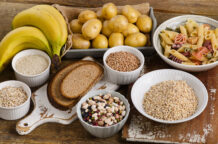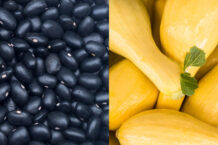

You probably know that fiber is good for digestion. Simply put, this “plant roughage” helps keep you “regular,” as well as overall supporting a healthy gut microbiome (the population of microorganisms that live in the gastrointestinal tract). Fiber can also aid in weight management and may even lower the risk of heart disease, type 2 diabetes, certain cancers, and other conditions.
But what about the fiber powders, pills, and even gummies lining drugstore shelves? While they should never replace vegetables, whole grains, legumes, and other dietary sources of fiber, these products can certainly be useful for many people. Here’s how to choose the best kind for you.
Fiber’s many faces
Dietary fiber is a largely indigestible component of the carbohydrates found in plant foods. (Animal products do not have any fiber.) Unlike other types of carbohydrates (starches and sugars), fats, and proteins, most fiber is not broken down as it passes through the small intestine; hence it supplies no (or few) calories.
Fiber is not actually a single substance but a variety of compounds with different effects in the body. There are two general types of fiber, however—soluble and insoluble—and many foods contain both, albeit in different proportions. Insoluble fiber (parts of plant cell walls, like cellulose) adds bulk to stool, thereby speeding up its transit through the digestive tract. It’s abundant in wheat bran, nuts, dark leafy greens, and the skins of fruits and vegetables like potatoes and kiwis.
Generally speaking, soluble fiber—found in foods like oats, apples, barley, beans, and carrots—is the type that absorbs water, forming a gel in the digestive tract that delays absorption of glucose (sugar) in the intestines and helps prevent cholesterol absorption. Soluble types include gums (such as guar), pectins, mucilages (such as psyllium), beta-glucan, and oligosaccharides (such as inulin)—and some are more viscous than others. Gel-forming fibers also help us feel fuller for longer, and they hydrate stool so that bowel movements are easier to pass.
Adding to the complexity of “fiber,” both soluble and insoluble types can be fermentable. Readily fermented fibers are found in foods like garlic, onions, Jerusalem artichokes, barley, beans, and asparagus. Gut bacteria feed on fermentable fibers to produce short-chain fatty acids, a key source of energy for cells in the colon—but they also produce gases, which can trigger discomfort if too much is consumed, especially in more sensitive people.
Long story short, a fiber’s unique properties influence how it functions in the body—and can help you identify which type of supplement, if any, may be right for you.
Fiber up?
Not everyone needs a fiber supplement, but adding one to your diet might help if:
- You have chronic diarrhea or constipation
- Your doctor has advised limiting the amount of fiber you should consume from food (including after intestinal surgery), or you simply don’t consume enough fiber (along with nearly all Americans)
- You have been diagnosed with irritable bowel syndrome (IBS), type 2 diabetes, heart disease, or diverticulosis
- You have a high risk of colorectal cancer
- You are trying to lose weight (or at least not gain weight)
Which to choose?
There are four popular types of fiber supplements that you can buy over the counter at drugstores and online. Most are available as powders or in capsules (or both); some come in chewable form. Follow the directions on the packages for dosing. If you have a medical condition that you want to help treat with a fiber supplement, ask your doctor what type and what dose is best for you.
Note: It’s best practice to take viscous fiber supplements like psyllium husk at least three hours before or after any medications since these soluble fibers can slow the body’s absorption of drugs. And while staying well hydrated is always encouraged, drinking enough water becomes even more essential when starting any fiber supplement. Adding more fiber to your diet without sufficient fluids may exacerbate constipation, not improve it.
Psyllium husk
Psyllium husk is a soluble, gel-forming fiber and “stool normalizer” that can help treat both constipation and diarrhea. Its ability to absorb water helps soften stool in the case of constipation. By slowing down how quickly contents move through the digestive system, psyllium can also help firm up stool, which is beneficial for those dealing with diarrhea.
Because of psyllium’s gel-forming properties, this fiber is also good for cardiometabolic health. A study in Nutrition Journal in 2016, for instance, found that people with type 2 diabetes who supplemented with psyllium (10.5 grams daily) for eight weeks had significant reductions in their body mass index, fasting blood sugar, and hemoglobin A1C levels compared to a control group, even when they didn’t make any other changes to their diets. The same daily dose has also been shown to lower total and LDL (“bad”) cholesterol levels.
While psyllium husk is the primary ingredient in Metamucil, the brand’s products also contain added sugars or noncaloric sweeteners like aspartame and stevia, synthetic food dyes like yellow 6 or natural ones like paprika and turmeric, and other additives, including the texturizer maltodextrin. If you prefer to avoid additives altogether, other psyllium products like Kate Naturals or Organic India contain only psyllium husk powder.
A caution: As a powder, psyllium thickens fast, so you’ll want to add it to a large glass of water, mix it well, and drink it sooner rather than later before it becomes too sludgy. You can also blend the powder into smoothies or stir it into oatmeal or yogurt, though it will thicken up in these foods too. Psyllium capsules should also be swallowed with ample water as they could potentially “swell” and increase choking risk if taken without sufficient fluids.
Methylcellulose
Methylcellulose is a low-viscosity soluble fiber primarily recommended to manage constipation. It’s a good option for those with constipation-predominant irritable bowel syndrome, or IBS-C, as it’s nonfermentable and therefore unlikely to exacerbate symptoms like gas and bloating.
If you’ve heard of Citrucel, you’ve heard of methylcellulose (its active ingredient). However, like Metamucil, Citrucel contains artificial flavors, synthetic colorants, added sugars, and preservatives. Options for pure methylcellulose supplements are limited.
Inulin
Inulin is a highly fermentable, nonviscous fiber. While it’s naturally found in foods like asparagus, Jerusalem artichokes (a.k.a. sunchokes) oats, leeks, onions, and garlic, it’s also extracted from agave and chicory root plants and used as an additive in processed foods like protein bars and low-calorie ice creams. Manufacturers often use isolated inulin in place of fat because it helps improve the texture and mouthfeel of processed foods without compromising their nutritional content. (See box below on fiber-fortified foods.)
Supplement manufacturers are also getting in on the inulin action: MiraLAX, for instance, now sells MiraFIBER gummies, which deliver 8 grams of inulin per (four-gummy) serving, along with B vitamins, vitamin E, and the mineral chromium.
Here’s the catch: If you have IBS, an inulin supplement is not your best bet. Because inulin is so readily fermented by gut bacteria, it can cause or exacerbate gastrointestinal symptoms like abdominal distention (or bloating) and flatulence.
If you don’t normally have gastrointestinal symptoms or any GI-related disorder and are simply looking for a way to support the health of your gut microbiome, you could consider getting inulin from a supplement. Research suggests that inulin supplementation may increase the amount of beneficial Bifidobacterium in the gut microbiome, though responses vary by individual. Better yet, eat more whole foods naturally rich in inulin, including those mentioned above. Be warned, however, that consuming an excess of inulin-rich foods (particularly Jerusalem artichokes) can cause extreme and unpleasant bloating and gas.
Partially hydrolyzed guar gum (PHGG)
PHGG is a nonviscous soluble fiber that’s fermentable yet uniquely well tolerated. A randomized controlled trial published in Nutrition & Metabolism in 2016, of 121 people with IBS, found that those who supplemented with PHGG (6 grams daily, for 12 weeks) experienced less severe bloating and gas compared to those who took a placebo. PHGG has also been shown to improve both constipation and diarrhea related to IBS.
Because PHGG isn’t viscous (that is, it doesn’t form a thick gel) and is tasteless, it tends to be better tolerated than psyllium husk. That said, its nonviscous nature means it won’t offer the same metabolic benefits, such as lower LDL cholesterol levels in the blood. Look for products like Tomorrow’s Nutrition Sunfiber, which is made from just one ingredient: organic PHGG.
It’s become increasingly common for food manufacturers to fortify products with isolated or synthetic fibers that are either extracted from foods or produced commercially. These ingredients allow companies to slap a “high-fiber” label on products that normally lack fiber. Examples include pectin, chicory root (inulin), agave fiber, and guar and locust bean gums added to yogurts, ice creams, plant-based milks, coffee creamers, low-carb bagels and tortillas, protein bars, and more. Usually, if something sounds too good to be true, it is. While fiber-fortified processed foods may offer some benefits, don’t consider them on par with pears, oats, barley, chickpeas, or chia seeds—the kinds of whole foods that naturally deliver multiple forms of fiber, along with a range of health-promoting vitamins, minerals, and phytochemicals.
What about laxatives?
Laxatives are technically not fiber supplements, but over-the-counter products like MiraLAX and Dulcolax address gastrointestinal issues, too. Here’s what to know about each:
- Polyethylene glycol. MiraLAX is the best-known source of polyethylene glycol, but many generic options are available. Polyethylene glycol is an osmotic laxative that helps draw water into the bowel. It’s essentially a stool softener that makes bowel movements easier to release. According to the American College of Gastroenterology (ACG), there is moderate evidence behind polyethylene glycol as a treatment for chronic constipation. It is useful as an addition to dietary fiber and fiber supplements.
- Magnesium citrate. This is another gentle, osmotic laxative that helps with bowel regularity, but you shouldn’t take it on an ongoing basis without consulting your doctor—especially if you have any kidney dysfunction.
- Senna, bisacodyl. Ingredients like senna (found in Senokot, Ex-Lax, Smooth Move tea, and other products) and bisacodyl (in Dulcolax, as well as many generic preparations) are stimulant laxatives that cause the colon to forcefully contract, thereby producing bowel movements. The ACG recommends using these under the direction of a medical provider and only for a short time, as they may alter your colon’s ability to contract on its own. Over time, your body can become dependent on these medications, and their long-term safety is unknown. Prolonged use could also result in risky electrolyte imbalances in the body.
BOTTOM LINE: Fiber supplements aren’t necessary for everyone. If you’re considering using one to manage constipation, you’ll first want to ensure you’re eating enough fiber from real food and drinking sufficient water. If that doesn’t do the trick (and your healthcare provider approves it), a fiber supplement or OTC laxative may be warranted, but you’ll want to be intentional about which one you try. Each type of fiber functions differently in the body; loading up on the wrong type may exacerbate your symptoms rather than improve them. Talk with your doctor or a registered dietitian nutritionist (RDN) to determine whether you would benefit from a fiber supplement or gentle laxative and, if so, which option is best for you.
Getting fiber from food first is generally the best way to go. Unless you have a medical condition that prevents you from consuming enough, make it a point to fill your plate with fiber-rich foods before turning to a supplement. The Dietary Guidelines for Americans recommend getting 14 grams of fiber for every 1,000 calories consumed. For a person consuming 2,000 calories a day, for instance, that amounts to 28 grams of fiber. For a 2,500-calorie diet, that would be 35 grams of fiber a day.
Here are 15 foods that can help you hit your goal:
| Food* | Portion size | Fiber content |
| Black beans | ½ cup, cooked | 8 grams |
| Lentils | ½ cup, cooked | 8 grams |
| Raspberries | 1 cup | 8 grams |
| Shredded wheat cereal | 25 mini biscuits | 8 grams |
| Pear with skin | 1 medium | 6 grams |
| Pasta, whole wheat | 2 ounces, dry | 5–6 grams |
| Broccoli | 1 cup, cooked | 5 grams |
| Avocado | ½ California avocado | 4.5 grams |
| Peas, green | ½ cup, cooked | 4.5 grams |
| Apple | 1 medium | 4 grams |
| Artichoke hearts | ½ cup, canned | 4 grams |
| Oatmeal | 1 cup, cooked | 4 grams |
| Almonds | 1 ounce / 23 nuts | 3.5 grams |
| Banana | 1 medium | 3 grams |
| Popcorn | 1 ounce / about 3 cups | 3 grams |