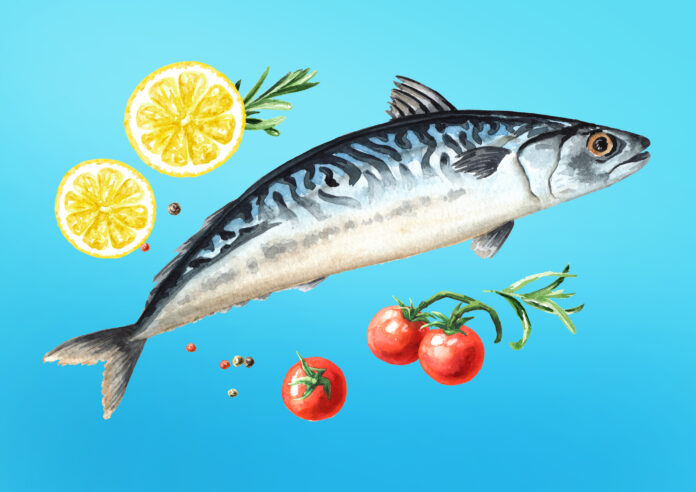
This rich-tasting fish—an excellent source of omega-3 fatty acids—is not only good for you, it’s also considered a more sustainable source of seafood. A little bit of sugar in the spice rub that goes on the mackerel helps deepen the flavor of the grilled fish (but can be left out if you prefer). Though the mackerel is delicious on its own, it goes particularly well with a sweet and tangy chutney, such as Tomato-Orange Chutney (see box).
- 2 teaspoons paprika
- 2 teaspoons cumin
- 1 teaspoon sugar
- ¼ teaspoon salt
- ½ teaspoon pepper
- 4 skinless mackerel fillets (5 ounces each)
- In a small bowl, combine the paprika, cumin, sugar, salt, and pepper. Rub the mixture into both sides of the mackerel fillets.
- Preheat the broiler. Place the mackerel on a broiler pan and broil 4 inches from the heat until the fish just flakes when tested with a fork, about 5 minutes. Serve the fish with the chutney.
Makes 4 servings; per serving: 180 calories, 7g total fat (2g saturated), 0g dietary fiber, 2g carbohydrate, 25g protein, 230mg sodium.
Grated orange and lemon zests add fresh citrusy flavors to this thick tomato chutney. To lower the sodium content, use no-salt-added canned tomatoes. Serve with grilled fish, or use as a sandwich topping.
- 1 can (14½ ounces) stewed tomatoes, chopped with their juice
- 2 tablespoons sugar
- 2½ teaspoons grated orange zest
- 1 teaspoon grated lemon zest
- 1 tablespoon distilled white vinegar
- 1½ teaspoons coriander
- ¼ teaspoon salt
- ¼ teaspoon pepper
- In a medium nonaluminum saucepan, combine the tomatoes and their juice, sugar, orange zest, lemon zest, vinegar, coriander, salt, and pepper. Bring to a boil over medium heat.
- Reduce to a simmer and cook, uncovered, stirring occasionally, until the chutney is the consistency of jam, about 15 minutes.
- Cool to room temperature. Store the chutney in the refrigerator.
Makes 1 cup; per ¼ cup: 60 calories; 0.3g total fat (0g saturated), 2g dietary fiber, 14g carbohydrate, 1g protein, 370mg sodium.