Having good balance is more complex than you may realize. It involves the integration of various sensory and motor systems, including vision (to perceive direction and motion), the vestibular system in the inner ear (which monitors motion and provides orientation clues, such as which way is up), and what’s called “proprioception” (the ability to sense where your body is in space). To stay steady, you also need good muscle strength and sufficiently quick reaction time.
If any of these systems are not functioning properly, you can lose your balance even while just walking or standing. In fact, one in four older adults (ages 65 and up) in the U.S. fall at least once a year, according to the CDC (that’s 14 million people)—and some 37 percent of these falls result in injuries serious enough to require medical treatment or curb activity for a day or more.
Older people often have poor balance due to loss of muscle strength and joint flexibility, as well as reduced vision and reaction time. And the risk of inner ear dysfunction, which can throw you off balance, increases with age. Lack of exercise, alcohol use, obesity, neuropathy (nerve damage) in the lower legs, certain drugs or medical conditions, and even wearing the wrong eyeglasses, can also interfere with balance at any age.
From tai chi to trampolines
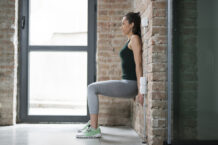
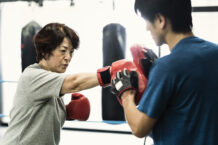
Exercise—such as brisk walking, running, and strength training—helps improve balance. Any activity that increases strength, especially in your lower limbs, as well as agility, is worthwhile. Even golf, aquatic exercise, interactive dance video games, and Feldenkrais (a movement therapy) have been shown to help.
In particular, you may want to try tai chi. Studies have documented its ability to improve balance and decrease falls in both healthy and ill people. And the more you do it, the greater the benefit. Originally a Chinese martial art, this ancient practice involves slow, balanced, low-impact movements done in sequences; it builds neuromuscular coordination, muscle strength, postural stability, and confidence. Classes are often available at health clubs and adult education centers. The International Taoist Tai Chi Society can also help you find instructors and classes in your area.
Below are some other good things you can do for your balance. The equipment needed is sold at sporting goods stores and online. But before you start: If you have serious balance problems, it’s a good idea to begin with a trainer at a gym or a physical therapist. At home, have someone “spot” you or have something to hold onto (or something you can quickly grab), such as a railing or a high table, so you don’t fall (or in case you start to fall).
- Balance on a board. Also called wobble or rocker boards, balance boards are wooden or plastic devices that sit on a short base that acts as a fulcrum. By shifting your weight from side to side or front to back, you try to balance without rocking too much. For more of a challenge, do it with your eyes closed.
- Have a ball. Made of vinyl and filled with air, a large exercise ball (also called a stability ball or physioball) is another handy helper for improving balance. At home, be sure you have plenty of room so you don’t tumble onto a piece of furniture. The balls come in different sizes (based on your height). One simple exercise you can do is a lunge: Standing with an exercise ball behind you and your hands on your hips, raise one leg behind you and place it, shin down, on top of the ball. Lower your body until your thigh is horizontal to the floor (or at least until you feel a stretch in your rear leg); return to original position; repeat 10 times and then switch legs.
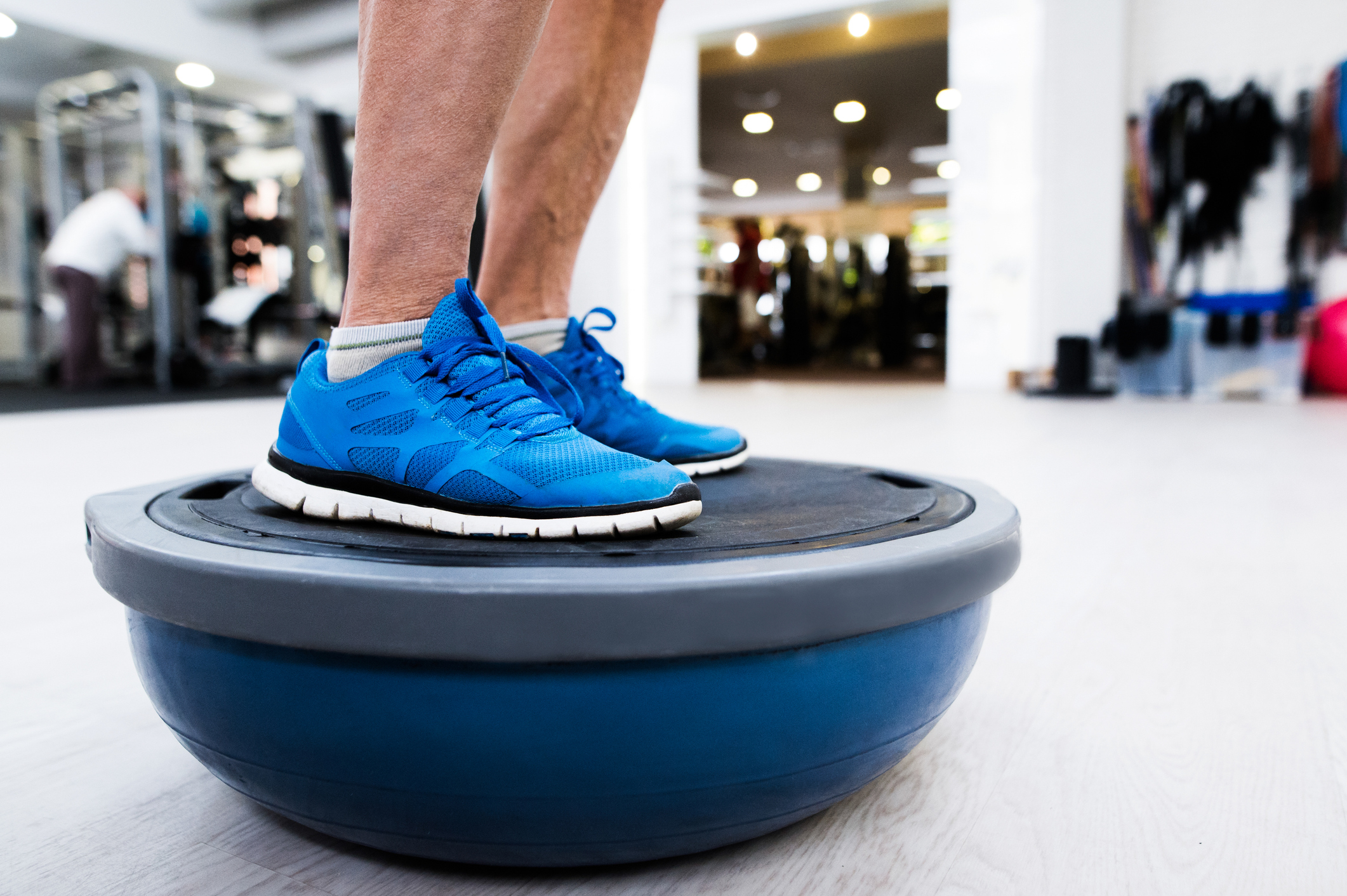
- Go half-ball with a BOSU ball. Short for “BOth Sides Up” or “BOth Sides Utilized,” this piece of exercise equipment has an inflated vinyl half-ball on one side and a rigid flat platform on the other. The unstable surface helps improve balance, whether you stand on the domed surface or on the flat platform with the dome facing down. Pretty much any exercise you do on the floor or on a balance board can be done on a BOSU ball, including squats and lunges.
- Mix it up on a mini-trampoline. Training on a mini-trampoline for 14 weeks increased balance, a study in the Journal of Electromyography and Kinesiology in 2011 found. After participating in the program, older people were better able to regain their footing in a forward fall experiment—an ability that can help prevent a serious injury in real life. A more recent randomized controlled pilot study, published in Clinical Interventions in Aging in 2019, found that a 12-week mini-trampoline training program increased balance, mobility, strength, and gait performance, and decreased fear of falling, in older women with osteopenia. If you are very unsteady on your feet, though, this may not be a good choice.
BOTTOM LINE: If you are over 60, ask your doctor to check your sense of balance and talk with him or her about what strategies for fall prevention may be best for you. In addition to exercises, there is mixed evidence about the use of vitamin D to prevent falls; a supplement could be considered if you have a low vitamin D blood level. A large meta-analysis in Frontiers of Endocrinology in 2022, for instance, found that high-dose vitamin D (700 to 2000 IU daily) prevented falls, compared to placebo, though the benefit was small. According to another meta-analysis, in Clinical Nutrition in 2021, vitamin D supplementation had a benefit on fall prevention but only in adults with lower vitamin D blood levels (below 50 nmol/L).
Here are some balance exercises you can do at home that require no special training or equipment. Stand near something you can grab for support, if needed, or do them with a partner.
- First, test your balance by seeing how long you can stand on one foot with your eyes closed. Most people over 40 can’t go past 15 seconds. Even if you can, try to improve your time.
- Without holding onto anything, rise up on your toes 10 times. Repeat with your eyes shut.
- Stand on one leg, bending your other knee slightly, for 10 to 15 seconds; switch legs; repeat 10 times. Then do again with your eyes closed.
- Walk a straight line, placing the heel of one foot directly in front of the toes of the other foot.
The American Council on Exercise offers six other balance exercises to try. Another good source is the UK’s National Health Service, which describes how to do such balance exercises as sideways walking, heel-to-toe walking, and one-leg stands.